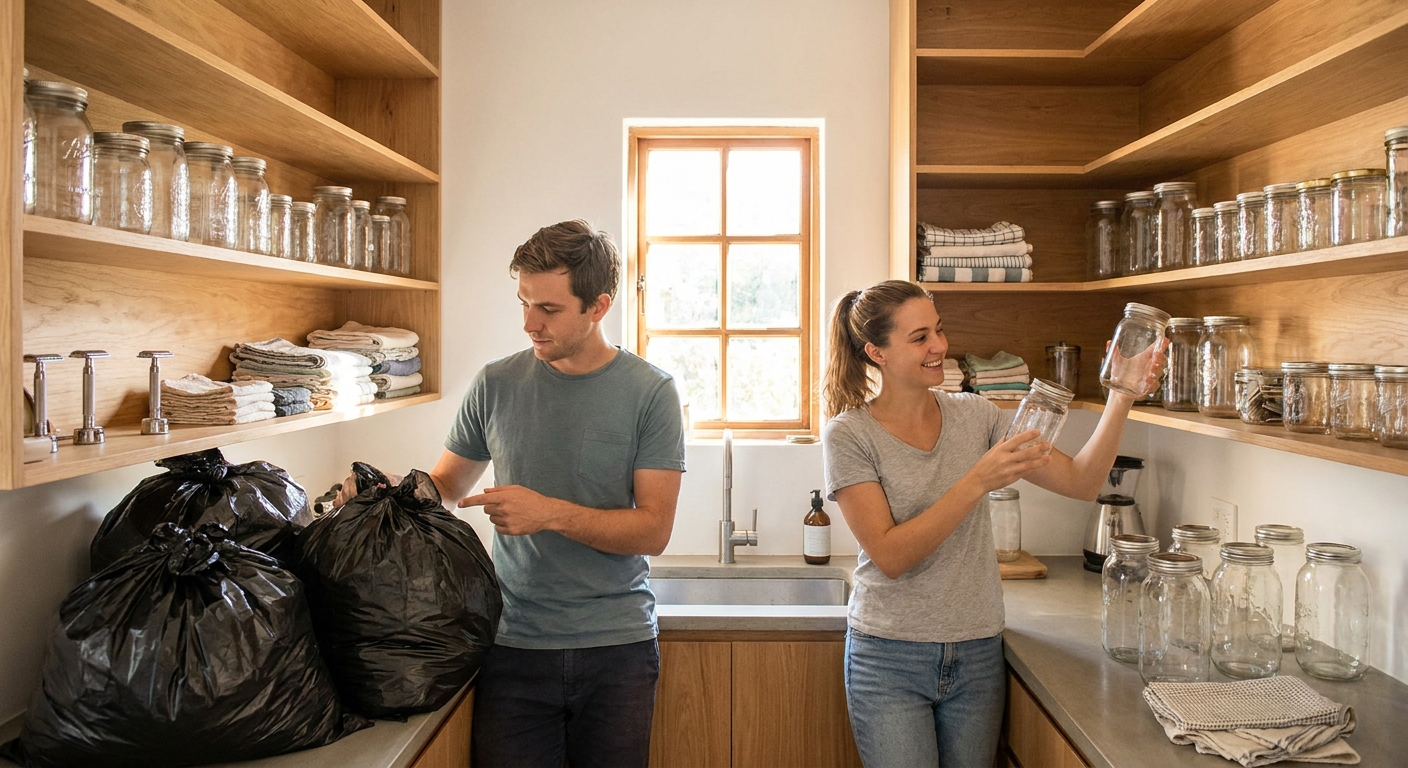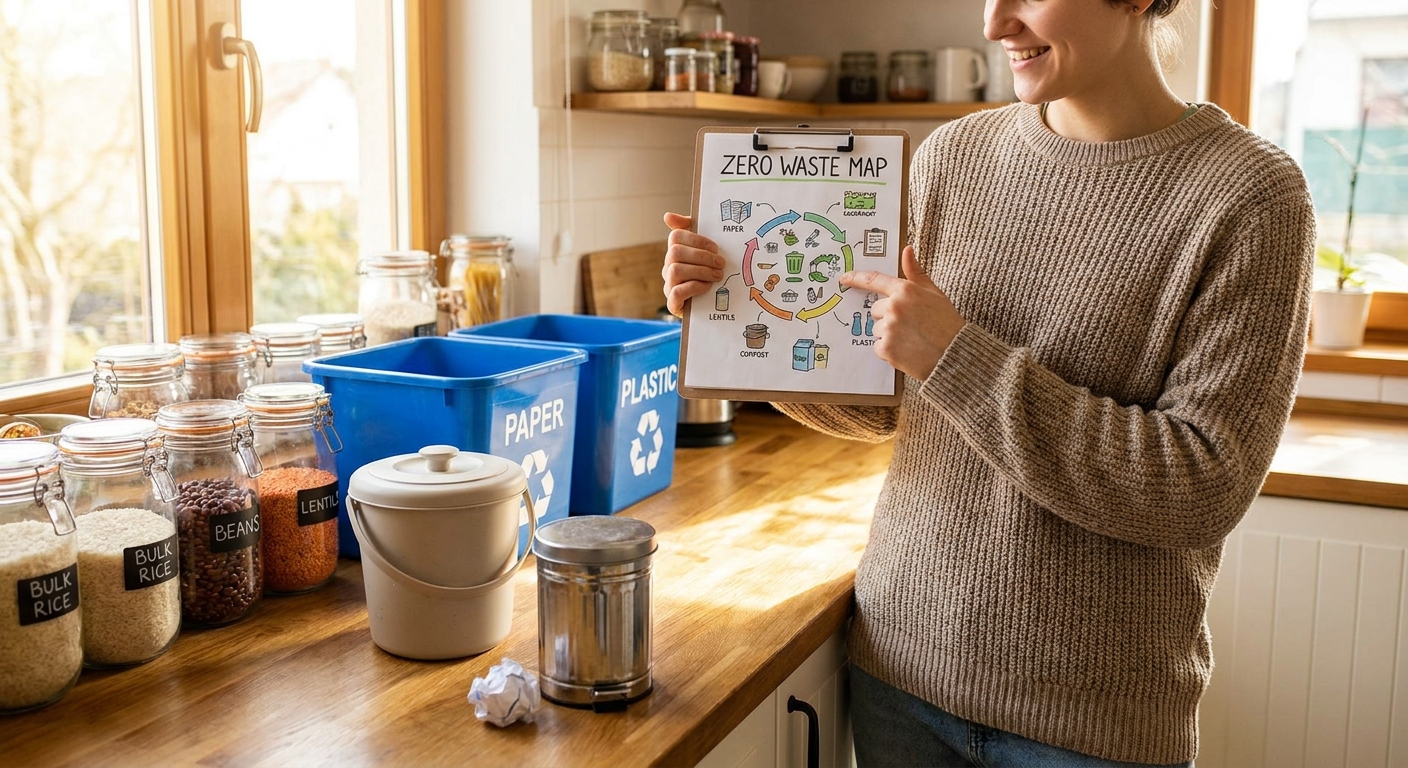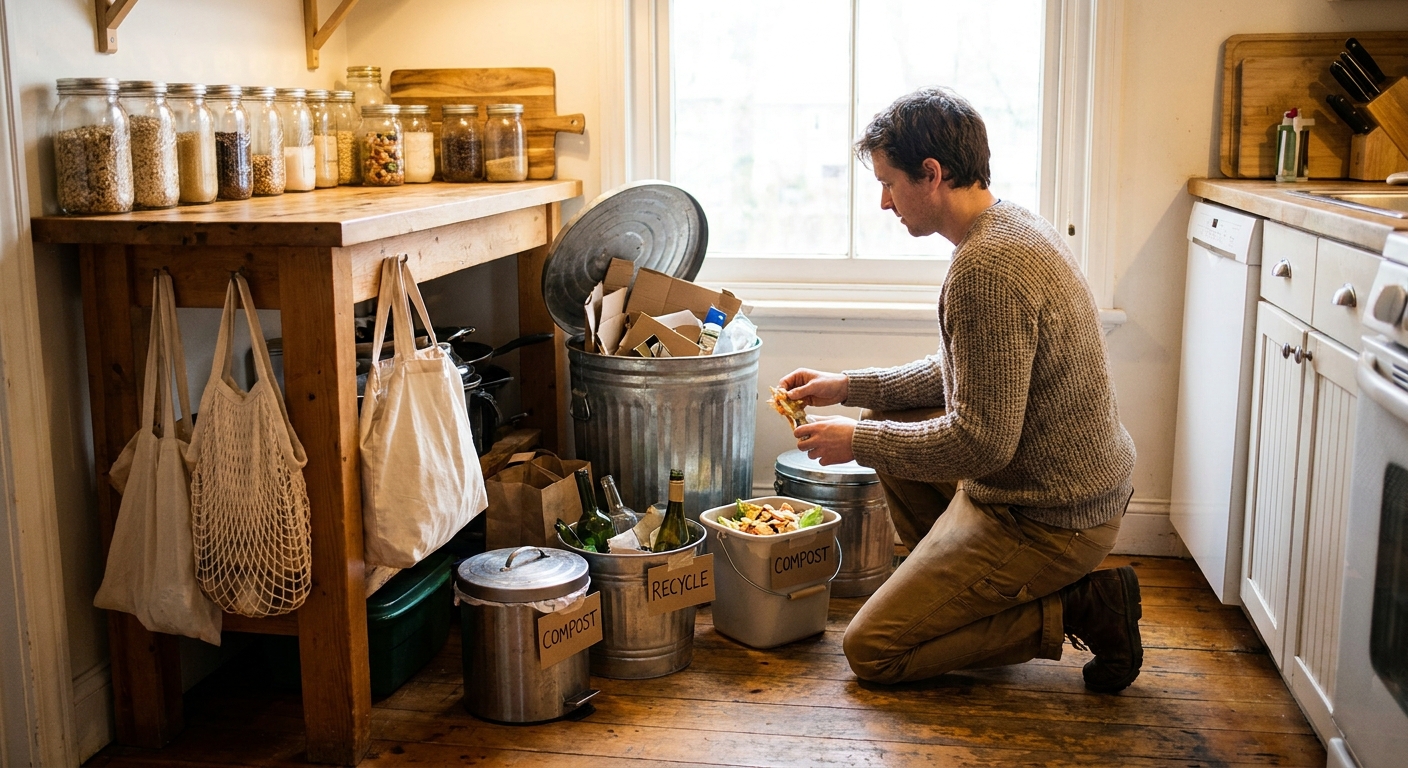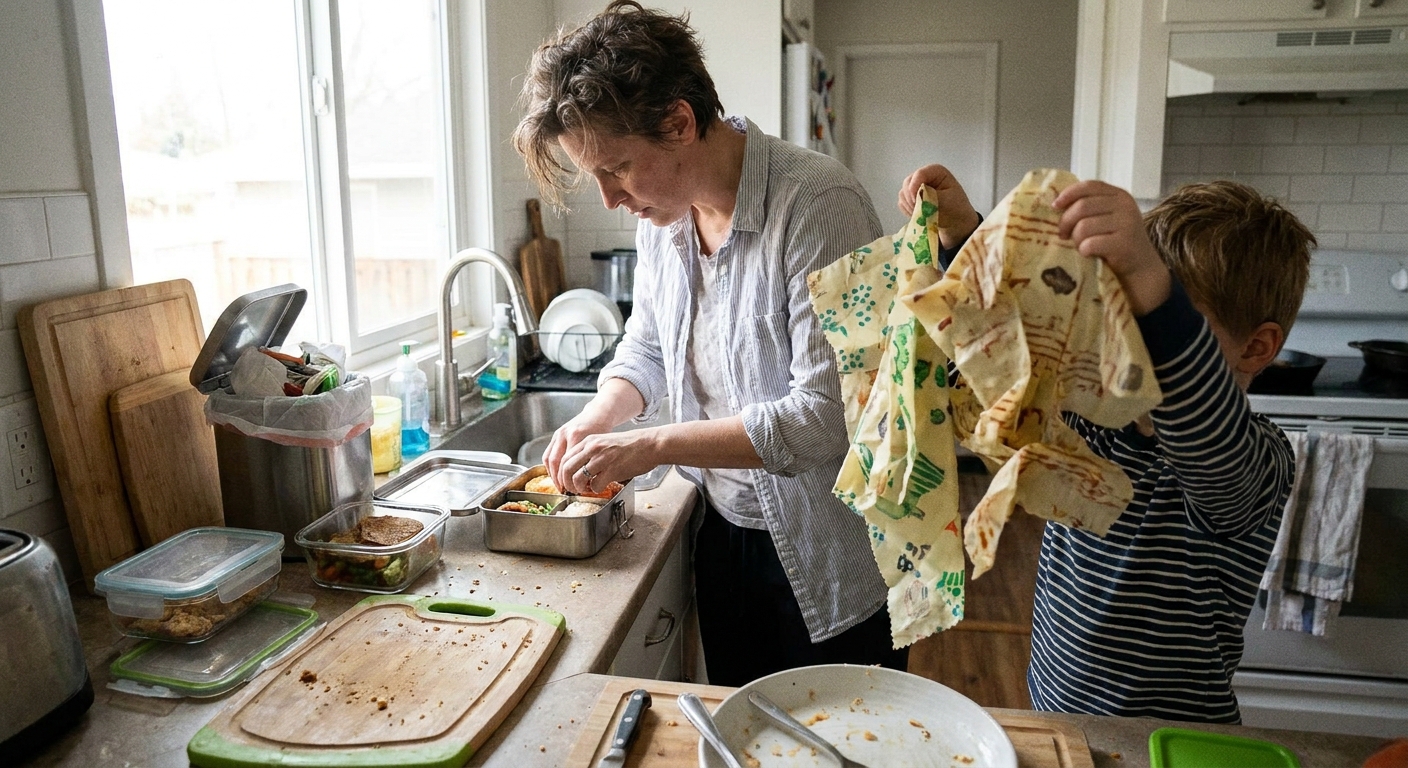
If the term Zero Waste makes you picture a perfectly curated mason-jar-of-trash life, pause right there. That image is inspiring for some and paralyzing for many. Real talk: unless you live off-grid and grow your own oats, you’re not going to make zero trash.
Why “Zero” Waste Isn’t Really the Goal
And that’s okay.
Zero Waste, in real life, is about reducing waste as much as you reasonably can, not erasing it. Think of it as:
A direction, not a destination.
You still might get takeout. You might forget your tote bag. You might buy that bag of pre-washed salad because your week is on fire. You’re still allowed to care about the planet.
This guide is for people who want to tread lighter without burning out or going broke.
Start With the Big Wins, Not the Perfect Wins
Before you buy fancy jars or bamboo cutlery sets, tackle these unsexy but powerful areas:
1. Food Waste (Huge Climate Impact)
Food waste is one of the biggest personal climate levers. A few low-effort steps:
- Shop your kitchen first: Check your fridge and pantry before going to the store. Plan 2–3 meals around what’s already there.
- Love the “Ugly” Drawer: Keep a clear box or front-and-center space in your fridge for “eat me first” foods.
- Freeze leftovers: Didn’t finish that soup? Freeze single portions in jars or containers instead of letting it die in the back of the fridge.
Cost reality check: Wasting food = wasting money. The average household throws away hundreds of dollars of food a year. Reducing food waste often saves more than any eco-product ever will.
2. Trash Audit (No spreadsheets required)
You don’t need a spreadsheet or a label maker. Just one trash bag, one curious brain.
Over 1–3 days, notice what keeps showing up in your bin:
- Takeout containers?
- Coffee cups?
- Snack wrappers?
- Paper towels?
- Shipping packaging?
Pick one recurring item and ask: What’s one realistic way to reduce this?
Some options:
- Buy a bigger size (one large bag instead of 10 small ones)
- Find a reusable swap
- Find it in bulk or with less packaging
- Decide it’s a “for now” compromise and move on
You are not applying for Eco Saint of the Year. You’re troubleshooting, like a normal person.
Simple Swaps That Don’t Suck (or Cost a Fortune)
You don’t have to replace everything at once. Use what you have. When something runs out or wears out, then consider a lower-waste option.
Kitchen Swaps
Paper towels → Reusable cloths
- Low-cost version: Cut up old t-shirts, towels, or sheets. - Savings: If you usually spend $10–15/month on paper towels, switching to cloth can save $120+ a year.
Plastic wrap → Containers or plate-on-bowl
- Use: bowls with plates on top, jars, old takeout containers. - Only buy beeswax wraps or silicone lids if you really need them.
Dish soap in plastic → Concentrate or bars (if available)
- Look for refill stations or concentrated dish soap in minimal packaging. - Concentrates often last longer and can reduce plastic.
Bathroom Swaps
Liquid soap → Bar soap
- Usually cheaper per use and comes in paper. - A quality bar can last weeks to months.
Disposable razors → Safety razor (when you’re ready)
- Upfront: $20–40 one-time purchase. - Blades: pennies per blade vs. $2–4 per cartridge. - Long-term: big savings and less plastic.
Shampoo in bottles → Larger bottles or bars
- If bars don’t work for your hair, buy the largest bottle you can afford and recycle it. Less plastic per use is still a win.
On-the-Go Swaps
Coffee cups → Reusable mug (when you remember)
- Keep one at work, one in your bag or car. - If you forget? It’s fine. Enjoy the coffee. Try again next time.
Bags → Whatever tote you actually use
- Free event tote, backpack, gym bag – doesn’t need to be “eco-chic.”
Honest Cost Comparisons
Let’s compare a few common swaps:
Swap 1: Paper Towels vs. Reusable Cloths (1 Year)
- Paper towels:
- 1–2 rolls/week at ~$2/roll = $104–$208/year
- Cloths:
- Cut from old textiles = $0
- Or buy 12 reusable cloths for ~$15–20, lasting years
Outcome: Reusables pay off quickly, especially when you wash them with your regular laundry.
Swap 2: Disposable Razors vs. Safety Razor (2 Years)
- Disposable cartridges:
- Handle: $10
- Cartridges: ~$20 for 8 (assuming 12 packs over 2 years) = $300+ total
- Safety razor:
- Handle: $30 (one-time)
- Blades: ~$10 for 100 (can last 1–2 years depending on use)
Outcome: After the first few months, it’s significantly cheaper and lower-waste.
Swap 3: Bottled Water vs. Reusable Bottle (1 Year)
- Bottled water:
- $1–2/bottle, even 3 bottles/week = $156–312/year
- Reusable bottle:
- $15–30 one-time, tap water cost is tiny in comparison
Outcome: The reusable option almost always wins on both cost and waste.
Beginner-Friendly Steps: Pick One Lane at a Time
To avoid overwhelm, focus on one lane for a month:
- Lane 1: Kitchen – food waste, paper towels, plastic wrap
- Lane 2: Bathroom – soap, razors, shampoo
- Lane 3: On-the-go – bags, bottles, coffee cups
- Lane 4: Shopping – bulk buys, secondhand, less impulse
Month 1: Kitchen
- Cook at home 1 more night per week than usual.
- Create an “eat me first” box in your fridge.
- Swap paper towels for cloth at least 50% of the time.
Month 2: Bathroom
- Switch to bar soap for hands and body.
- When your razor cartridges run out, consider a safety razor.
Month 3: On-the-Go
- Keep a tote bag in your coat, car, or backpack.
- Carry a reusable bottle whenever you remember.
Perfection Is a Terrible Sustainability Strategy
Here’s what doesn’t work:
- All-or-nothing thinking: “If I can’t do everything, why bother?”
- Shame-based motivation: You’ll burn out and resent the whole idea.
- Comparing yourself to influencers with spotless pantries.
Here’s what does work:
- Curiosity: “What’s one thing I could try this week?”
- Compassion: Some days you will forget your bag and buy salad in a plastic box. You’re still trying.
- Progress tracking: Notice your wins. Smaller trash bags, fewer takeout containers, more home-cooked meals.
When Zero Waste Feels Like Too Much
If you’re stressed, overwhelmed, caring for family, working multiple jobs—your capacity matters.
On tough weeks, maybe:
- You compost less but recycle.
- You buy more packaged foods but still cook one meal from scratch.
- You order takeout but skip the plastic cutlery and napkins.
This is still part of your sustainability journey. You’re allowed to flex.
Zero Waste as a Long Game
You don’t need a picture-perfect life to make a difference. What matters more:
- The habits you can stick with for years
- The conversations you start (gently) with friends and family
- The signals you send to companies through what you choose to buy, and not buy
Zero Waste isn’t about your trash jar. It’s about your trajectory.
So start where you are. Use what you have. Do what you can. And if you’re reading this while eating takeout from a plastic container—same.
You still belong here.