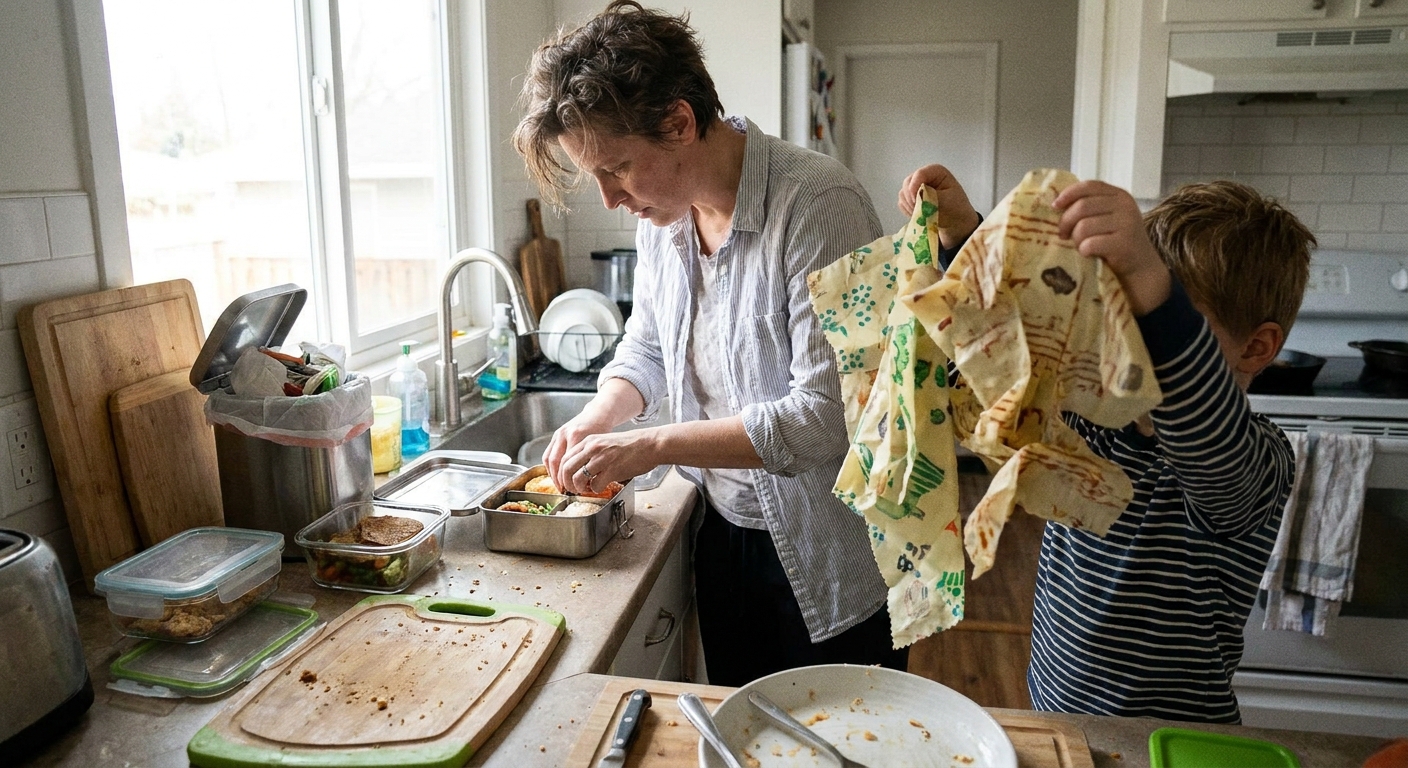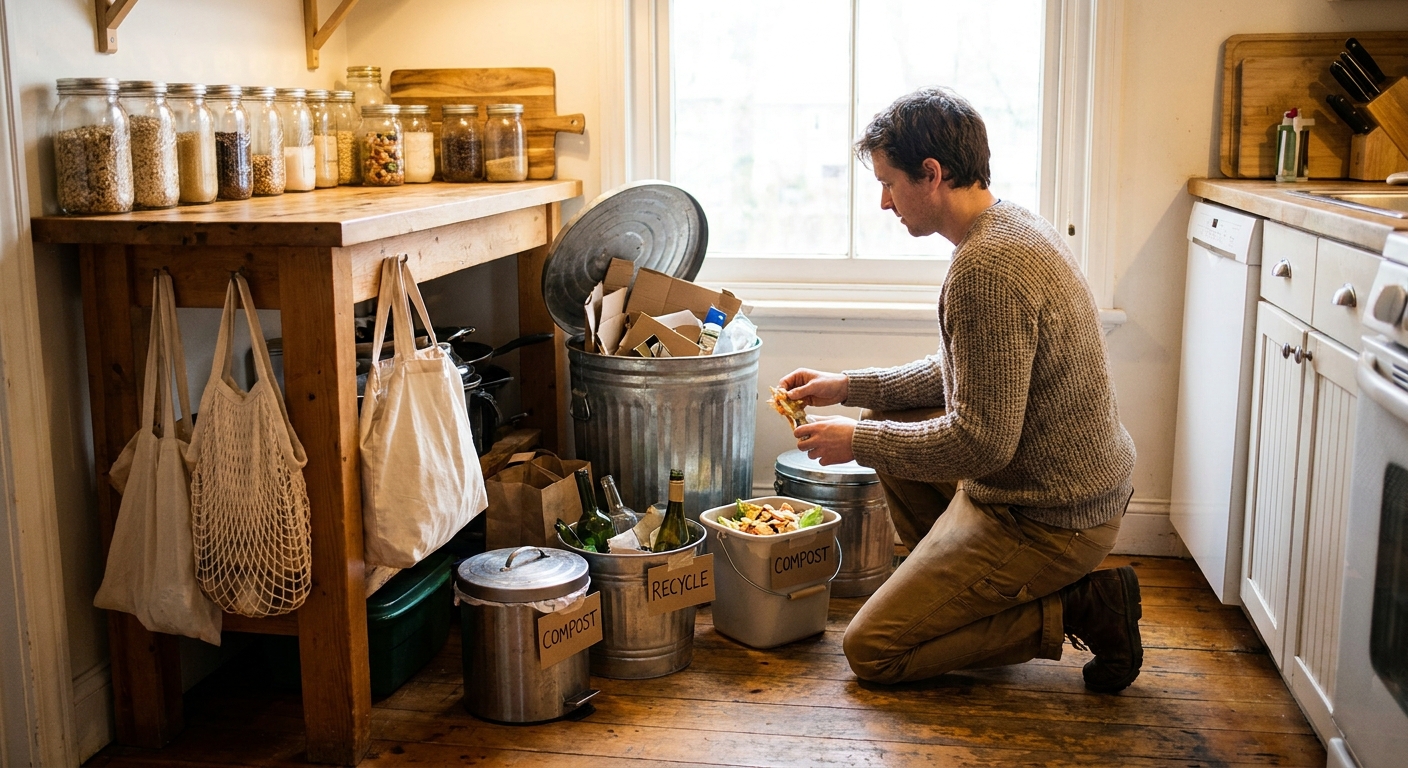
If someone dumped out your trash bag right now, they’d see a story:
Your Trash Is a Story, Not a Judgment
- Busy week? More takeout containers.
- New baby? Diapers and wipes everywhere.
- Stressful season? Snack wrappers and frozen dinners.
Zero Waste sometimes pretends we can rewrite that story overnight. We can’t. But we can edit it.
This article is a friendly walkthrough of what your trash might be trying to tell you—and small, practical edits you can make that don’t demand a totally different life.
No judgment. Just curiosity, some honest math, and realistic options.
Scene 1: The Food Waste Pile
What it looks like: wilted greens, moldy leftovers, half a loaf of bread, takeout containers with a few bites left.
What it might be saying:
- You’re more aspirational than realistic with meal planning.
- Your schedule changed and your food didn’t.
- You don’t have a system for using things up.
Gentle Fixes
- Plan fewer meals, not more.
Instead of 7 dinners, plan 3–4 anchor meals that make good leftovers.
- Create a “Use-Me-Now” zone.
- Clear bin or plate in your fridge.
- Anything nearing the edge of life goes there.
- Before you cook new food, check that zone.
- Embrace “fridge clean-out” meals.
- Stir-fries
- Soups
- Omelets or frittatas
- Grain bowls with random toppings
Optional upgrade: If you have access, start with a small compost bin or community drop-off. But remember: preventing food waste beats composting it.
Scene 2: The Convenience Packaging Mountain
What it looks like: snack wrappers, frozen meal boxes, instant noodle cups, salad kits, individually wrapped everything.
What it might be saying:
- You’re tired. Like, actually tired.
- You don’t have time or energy for from-scratch meals.
- You need convenience, not another project.
Gentle Fixes
Instead of shaming the convenience, dial it down one notch.
- Shift from “ultra” convenient to “medium” convenient.
Examples:
- From instant noodle cups → bigger bag of noodles + jar of sauce + frozen veggies.
- From single-serve snacks → bigger bags you portion out at home.
- From full meal kits → pre-chopped veggies you toss with pre-cooked protein.
- Choose concentrated convenience.
- Family-size packs instead of individual portions.
- One big tub of yogurt instead of 12 minis.
- Set a “packaged nights” budget.
- Decide how many packaged convenience meals fit your week (e.g., 3 dinners).
- On other nights, make ultra-simple stuff: eggs on toast, beans and rice, pasta.
You’re still allowed to be tired and feed yourself. Lower waste shouldn’t come at the cost of your mental health.
Scene 3: The Bathroom Bin
What it looks like: shampoo and conditioner bottles, body wash, toothpaste tubes, cotton rounds, disposable razors, plastic floss containers.
What it might be saying:
- You like products that feel good.
- Your self-care routine is something you don’t want to mess up.
Gentle Fixes
Bathroom changes can be surprisingly painless.
- Swap one liquid for a bar.
- Body wash → bar soap in paper.
- Hand soap at one sink → bar soap.
Cost note: Bars usually last longer than liquids and are often cheaper per wash.
- Go big, not small.
If bars or refills aren’t accessible:
- Buy the largest bottles you can afford.
- One big bottle = less plastic per use than several small ones.
- Choose one “upgrade” product.
When something runs out, try:
- A bamboo toothbrush (use until it’s worn out, then compost the handle if possible).
- A safety razor (after you’ve used up your current cartridges).
- Reusable cotton rounds or a soft washcloth.
Start with the switch that feels least risky for your routine.
Scene 4: The On-the-Go Bundle
What it looks like: coffee cups, plastic lids, straws, napkins, takeout boxes, disposable cutlery, to-go bags.
What it might be saying:
- You’re often out and about.
- You rely on coffee shops and quick meals.
- You value your time (and maybe your sanity) more than cooking every meal.
Gentle Fixes
Think of a small “support kit” for Future You.
The Bare-Minimum Kit
- A reusable bottle
- A tote bag
That’s it. Keep them near your keys, in your car, or at work.
The Nice-to-Have Kit (if you’re ready)
- A reusable mug
- A lunch container or jar
- A fork + spoon
- Script some simple asks.
- “No straw, please.”
- “No cutlery or napkins, thank you.”
You won’t remember every time. You won’t say it perfectly. You’re still trying.
Scene 5: The Cardboard and Bubble Wrap Explosion
What it looks like: shipping boxes, padded mailers, plastic wrap, foam.
What it might be saying:
- You shop online a lot (welcome to modern life).
- Local options might be limited or more expensive.
Gentle Fixes
- Batch your orders.
- Keep items in an online cart for a few days.
- Order once a week or month instead of many tiny orders.
This usually:
- Reduces packaging
- Cuts impulse buys
- Saves money
- Choose slower shipping when you can.
Slower shipping gives companies more flexibility to combine packages.
- Reuse what you can.
- Boxes for storage, gifting, or donating items.
- Bubble wrap for fragile items or passing along through local groups.
Cost Reality: Where Zero Waste Saves (and Where It Doesn’t)
Often Saves Money
- Reducing food waste
- Cutting paper towels and disposable wipes
- Buying fewer but better clothes
- Choosing concentrates or refills
- Drinking tap water instead of bottled
Neutral or Mixed
- Some plastic-free swaps can be similar in cost over time (e.g., bar soap vs liquid)
Sometimes Costs More
- Specialty low-waste brands and boutique products
- Eco-labeled items that are more about marketing than substance
You don’t have to buy into every “green” trend. Focus on the habits that lower your trash and your expenses first.
When Your Trash Story Is Complicated
There are realities that shape your bin:
- Food deserts or limited grocery options
- Disability or chronic illness
- Caregiving responsibilities
- Budget constraints
- Renting vs owning (limited control over infrastructure)
None of these disqualify you from caring.
Your version of Zero Waste might look like:
- Buying the most affordable food, even if it’s packaged—but wasting as little as possible.
- Using disposable items for accessibility—but reducing packaging where it’s easy.
- Focusing on advocacy (like voting and local policy) more than personal trash.
Your context is real. Any steps you take still matter.
Editing the Story, Not Erasing It
Your trash will probably never be a tiny jar. It doesn’t need to be.
What matters is:
- You become more aware of the story.
- You make edits where you have power.
- You let go where you don’t—for now.
You can compost and still order delivery. You can swap to bar soap and still buy chips in a bag. You can bring your own mug most days and forget it on the day you really needed coffee.
That’s not hypocrisy. That’s being a person.
If you want a starting point, try this: look in your trash tonight and pick one recurring item you feel ready to reduce by, say, 20%. Not eliminate—just reduce.
Then be curious, not judgmental, about how it goes.
That’s how a bin full of habits slowly becomes a story you’re proud to tell.