You do not have to wake up one day, declutter your whole life, and emerge with a single jar of trash to be “Zero Waste.” Real life doesn’t work like that.
Zero Waste as a Journey, Not a Personality
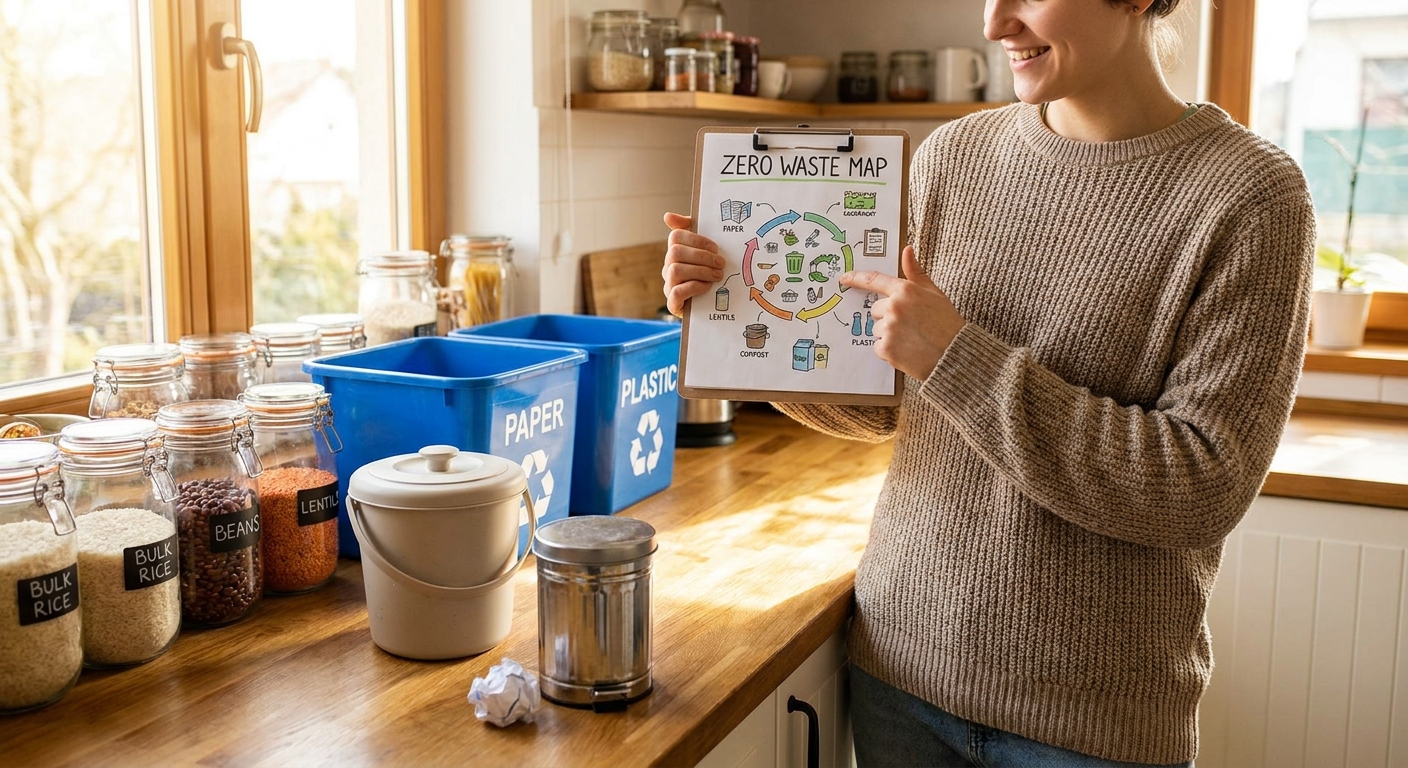
Think of Zero Waste more like a map than a makeover. You move through it in stages, sometimes forward, sometimes sideways, sometimes backwards when your week falls apart and you’re living on takeout and instant noodles.
This guide lays out four stages you can move through at your own pace:
Notice
Simplify
Swap
Advocate
You’re probably already doing pieces of each.
Stage 1: Notice – Get Curious About Your Trash
Before buying anything “eco,” pause and look at what’s actually leaving your home.
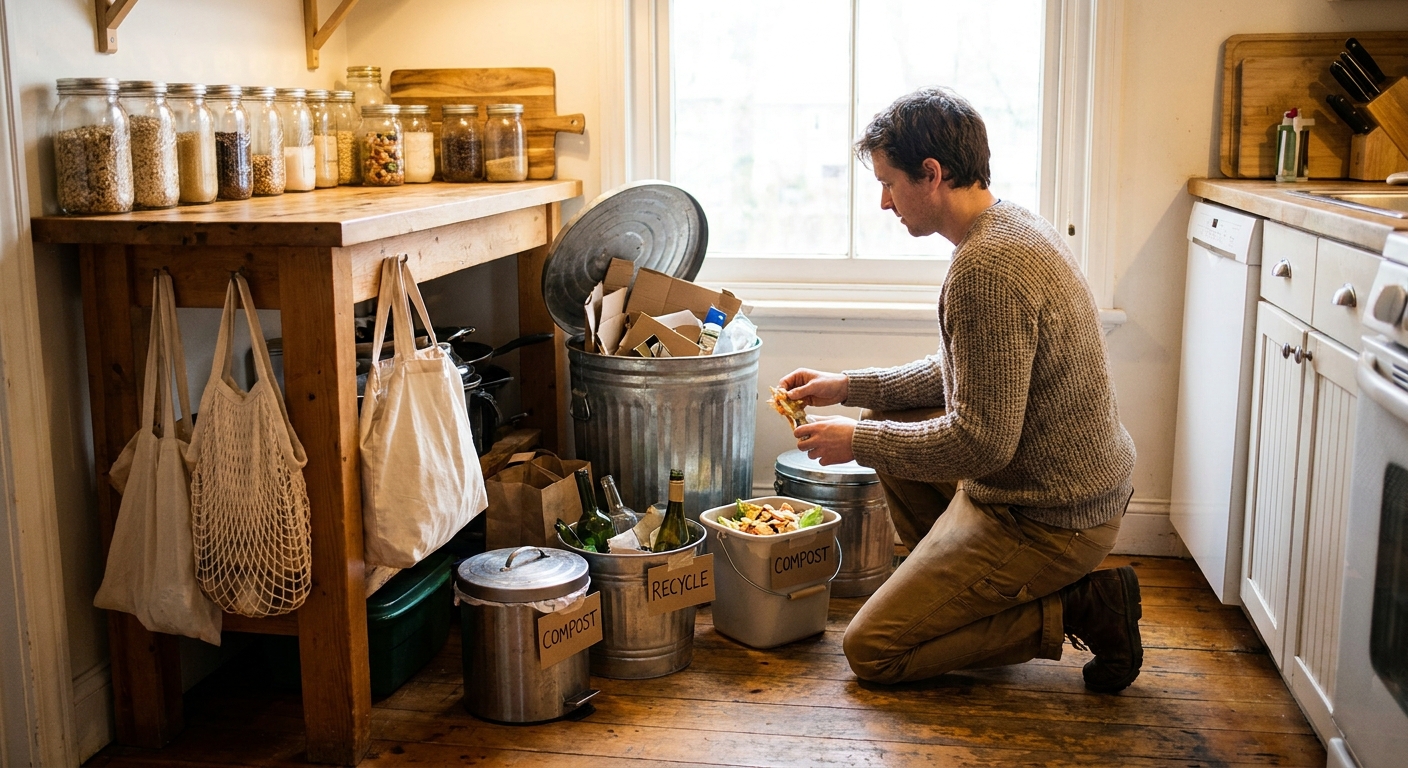
Do a Gentle Trash Scan
Over 2–3 days, notice:
- What fills your trash can the fastest?
- What types of packaging repeat constantly?
- Are there particular habits driving the waste? (e.g., late-night snacks, rushed lunches)
Don’t overcomplicate this. No spreadsheets required. Just notice.
Common patterns:
- Food scraps and spoiled food
- Plastic packaging from snacks and convenience meals
- Paper towels and tissues
- Shipping boxes and bubble mailers
Why This Stage Matters
If you skip straight to buying “sustainable products,” you can end up with:
- Extra stuff you don’t use
- Higher costs
- The same level of waste, just in nicer colors
Noticing gives you direction. You’re not trying to be perfect—you’re trying to be informed.
Stage 2: Simplify – Use Less Before You Buy Better
Once you notice patterns, the second stage is simplifying what you consume.
Ask: Can I Just Use Less of This?
Examples:
- Paper towels – Reserve for truly gross messes; use cloth for everyday spills.
- Single-use plastics – Buy bigger family-size instead of many small packs.
- Cleaning products – Use one all-purpose cleaner instead of five specialized ones.
- Takeout – Batch your takeout to a couple of days a week instead of most nights.
Each of these steps reduces waste without buying anything new.
Simplify Your Food Flow
Food is where a lot of waste hides.
Try:
- Planning just 3 anchor meals per week rather than a strict daily schedule.
- Cooking double batches and freezing portions so future-you has options.
- Building “leftover nights” into your week.
Money note: Simplifying often saves more than eco-swaps. Less food wasted, fewer random cleaning products, fewer impulse buys.
Stage 3: Swap – Lower-Waste Options That Fit Your Life
Now that you’ve reduced where you can, this is the stage where swaps make sense.
Rules for Sane Swapping
- Finish what you have first. A half-full bottle of shampoo in the trash is not Zero Waste.
- Replace only as things run out. This spreads out costs and lets you experiment.
- Start with your top trash items. Swap where you’ll see the biggest difference.
Beginner-Friendly Swap Ideas
Pick one from each category to start.
Kitchen
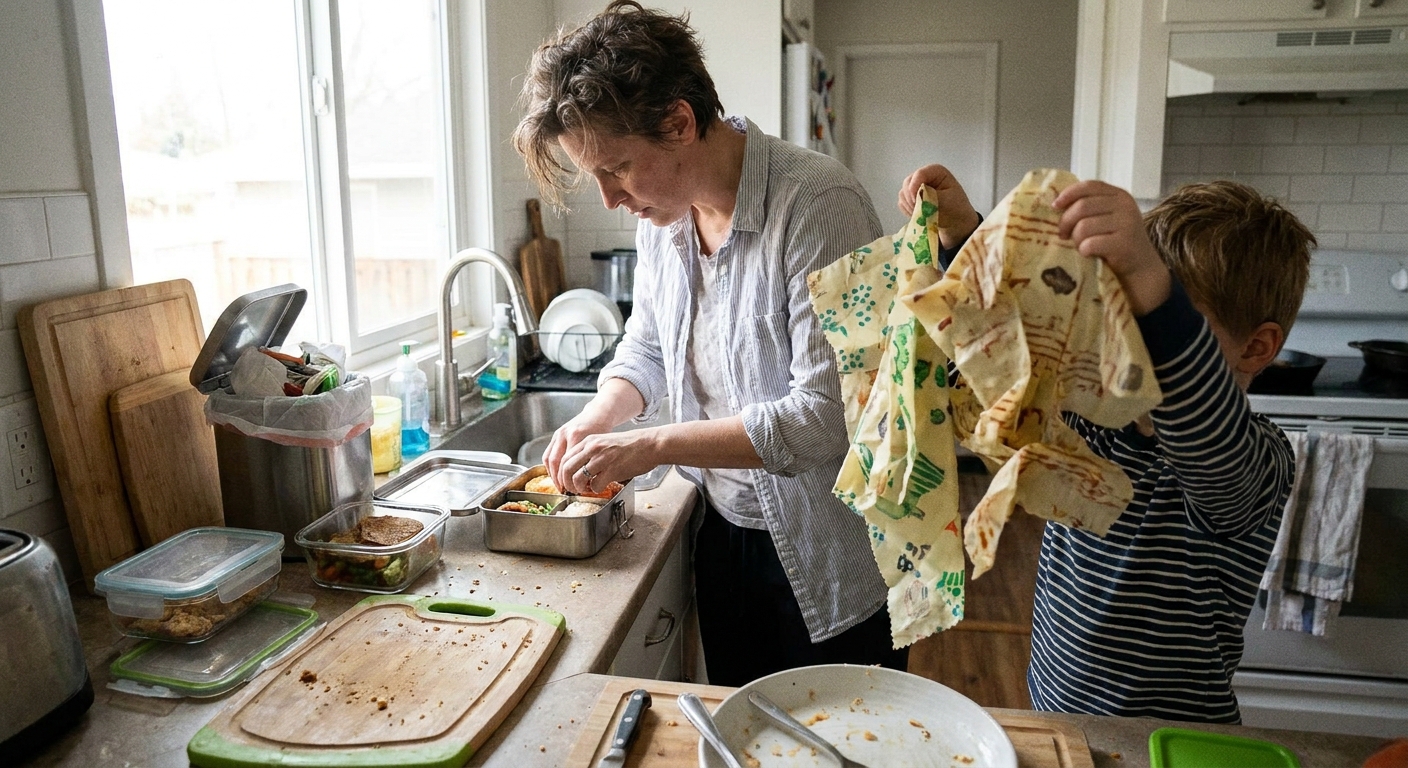
- Plastic wrap → containers, jars, or plates over bowls
- Zip bags → reusable containers + a small set of silicone bags (only if you’ll wash them)
- Paper napkins → cloth napkins or cut-up fabric
Bathroom
- Body wash → bar soap in paper packaging
- Shampoo in small bottles → larger bottles or a bar (if it works for your hair)
- Cotton rounds → washable cloth rounds or a soft washcloth
On-the-Go
- Disposable water bottles → reusable bottle
- Takeout cutlery → keep a fork and spoon at work/in your bag
- Single-use shopping bags → a small foldable tote
Honest Pros and Cons
Not every swap is win–win.
- Shampoo bars: great for some hair types, terrible for others. If they don’t work for you, that’s not a moral failure.
- Compostable packaging: only helpful if you have access to composting.
- Reusable items: great if you actually wash and reuse them; clutter if you don’t.
It’s okay to “break up” with a swap that doesn’t work.
Stage 4: Advocate – Light-Touch Ways to Multiply Your Impact
Once you’ve built habits that work at home, you can quietly ripple them outward—without turning into the sustainability police.
Micro-Advocacy You Can Do Without a Megaphone
Vote with your receipts
- Support brands that offer refills, repairs, or take-back programs. - Buy more secondhand when you can.
Ask gently
- “Hey, is it okay if I use my own container?” at the deli or bulk store (where allowed). - “Could you skip the cutlery and napkins?” when ordering takeout.
Normalize reusables
- Bring your bottle, mug, or lunch to work; no speech required. - Swap recipes or low-waste tips when people actually ask, not as a lecture.
Community moves
- Join or start a Buy Nothing or swap group. - Support local composting, refill shops, or farmers markets if available.
You’re not responsible for single-handedly fixing the system. But your actions and questions help push it in the right direction.
What If You Slide Back a Stage?
Life happens:
- Moving
- New baby
- Heavy workload
- Illness
- Caregiving
In messy seasons, you might:
- Eat more packaged food
- Compost less (or not at all)
- Use more disposables for sheer survival
This doesn’t erase your efforts. Sustainability needs to be sustainable for you, too.
Try this mindset:
- “This is a high-load season; I’m in maintenance mode.”
- “I’ll keep 1–2 habits that feel easy and let go of the rest for now.”
When life stabilizes, you can pick up where you left off—no guilt tax.
Building Your Personal Zero Waste Map
Here’s a simple way to chart your own path.
Step 1: Pick One Area
- Kitchen
- Bathroom
- On-the-go
- Closet
Step 2: Identify Your Stage in That Area
Ask:
- Do I need to notice my habits here first?
- Could I simplify before I buy anything?
- Is it time for a practical swap?
- Am I ready to gently advocate at work, home, or in my community?
Step 3: Set a Tiny, Boring Goal
- “This month, I’ll use cloth for half my spills.”
- “I’ll bring my own bag to the store 3 out of 5 trips.”
- “I’ll try one bulk buy and see how it goes.”
Track progress in the simplest way possible:
- A note on your fridge
- A tally in your notes app
- A quick check-in with a friend who’s also trying
You’re Allowed to Be Inconsistent and Still Care
Zero Waste isn’t a religion. It’s a set of choices you revisit, adjust, and occasionally abandon when life demands it.
You can:
- Compost and love it—but still order takeout in plastic.
- Thrift your clothes—but buy new running shoes.
- Swap to bar soap—but keep your favorite conditioner in a bottle.
That in-between space is where most of us live. And from a climate perspective, millions of people doing “Zero Waste-ish” imperfectly matters way more than a tiny group doing it flawlessly.
So map your own route. Take breaks. Take shortcuts. And when you’re ready, take the next small step toward a life that sends a little less to landfill—without losing your sanity along the way.