It can feel like “sustainable living” is only for people who can afford $40 water bottles, organic everything, and matching pantry containers. That’s not only discouraging—it’s misleading.
You Don’t Need a Full Paycheck of Mason Jars to Go Zero Waste
Zero Waste at its core is about using resources wisely. That includes money.
This guide focuses on ways to:
- Lower your waste without raising your costs
- Choose swaps that actually pay off
- Avoid the trap of expensive “green” products you don’t need
And yes, there’s room for frozen pizza and takeout nights in here.
Step 1: Use What You Already Have (The Cheapest Zero Waste Hack)
Before buying anything labeled “eco,” look around your home.
Free Zero Waste Tools Hiding in Plain Sight
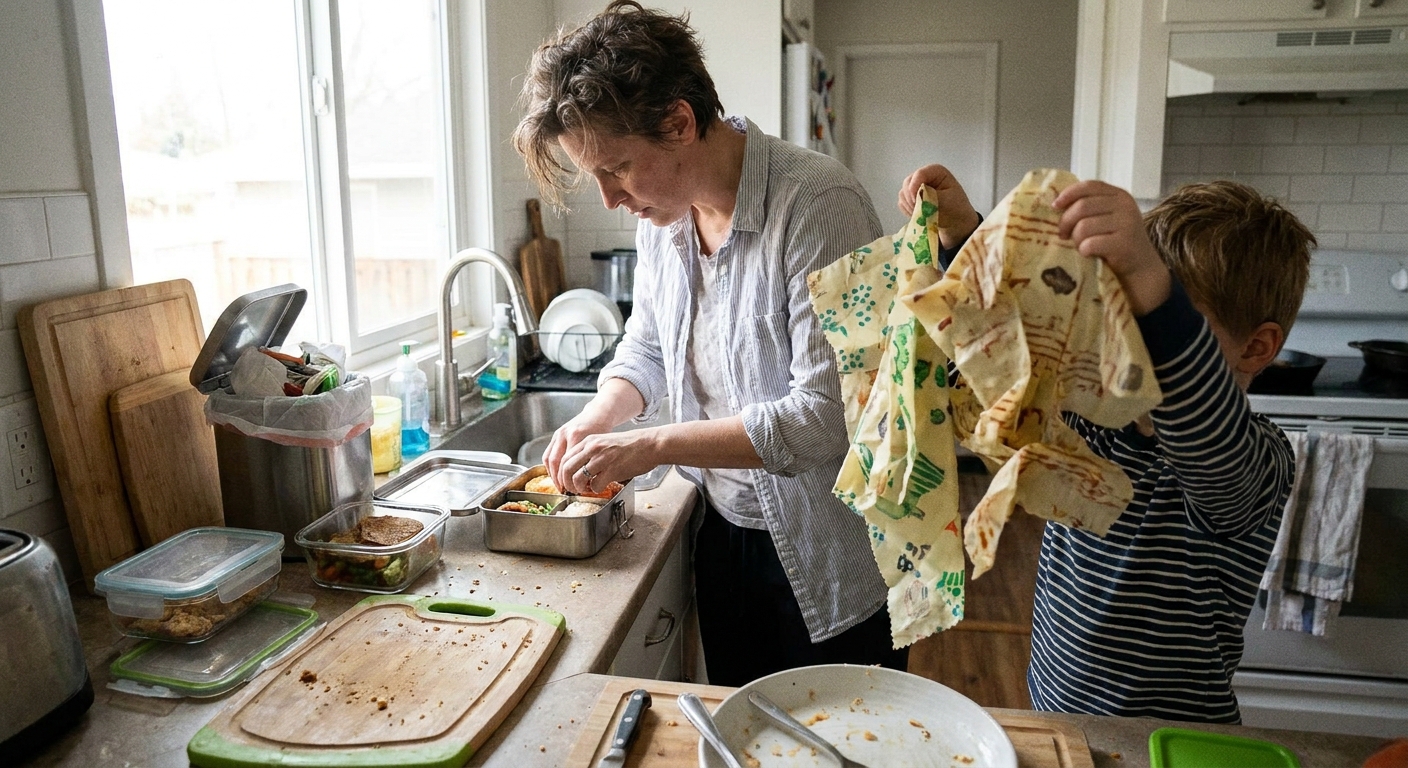
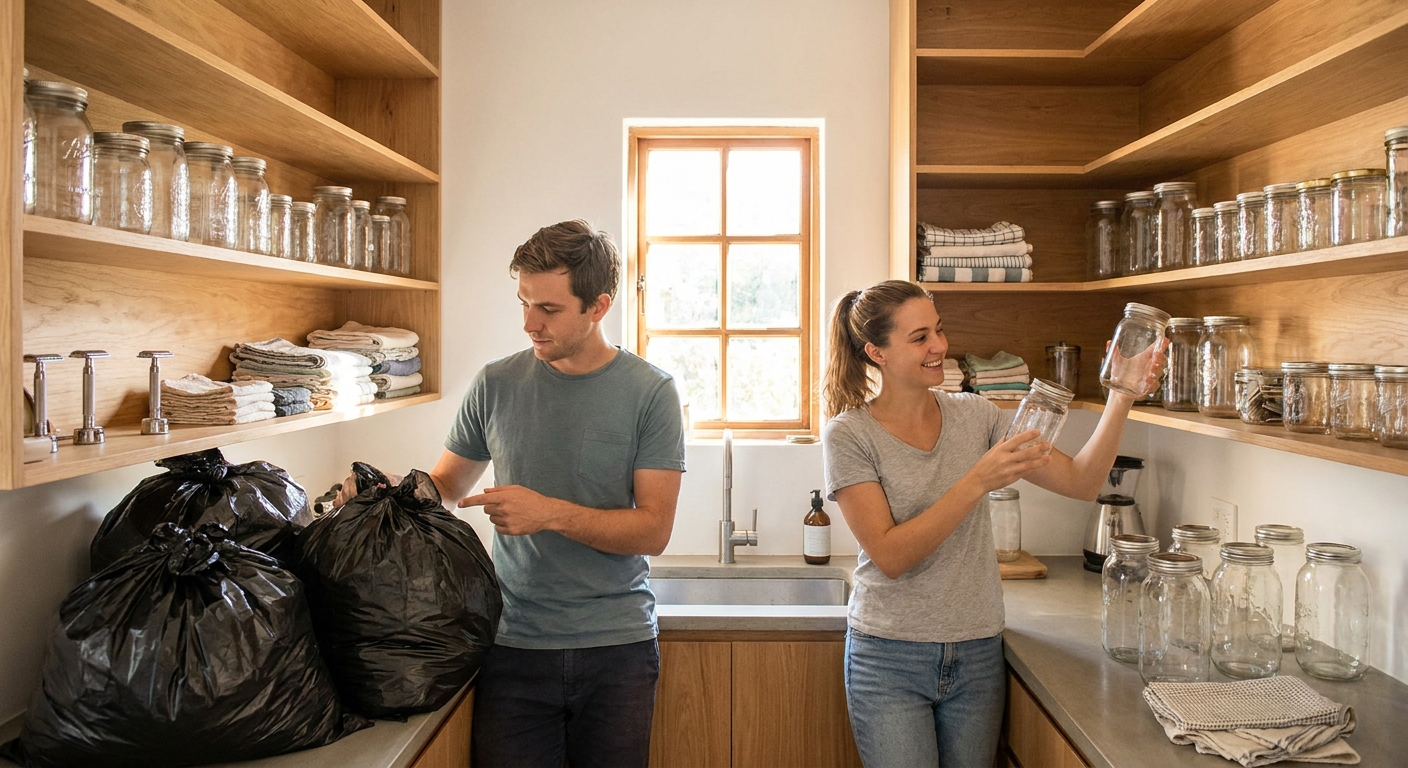
- Glass jars from pasta sauce, pickles, nut butters → storage, cups, meal prep, bulk shopping.
- Old t-shirts and towels → cleaning cloths, napkins, un-paper towels.
- Takeout containers → lunch boxes, freezer storage, leftover bins.
- Old mugs and bottles → reusable drinkware.
Every reused item is one less thing to buy.
Mindset shift: Zero Waste is not about replacing all your stuff with a “sustainable” version. It’s about stretching what you already own.
Step 2: Focus on High-Impact, Low-Cost Changes First
You don’t have to overhaul everything. Start where you’ll save both waste and money.
Big Win #1: Food Waste
Food waste is like throwing cash in the trash.
Low-budget strategies:
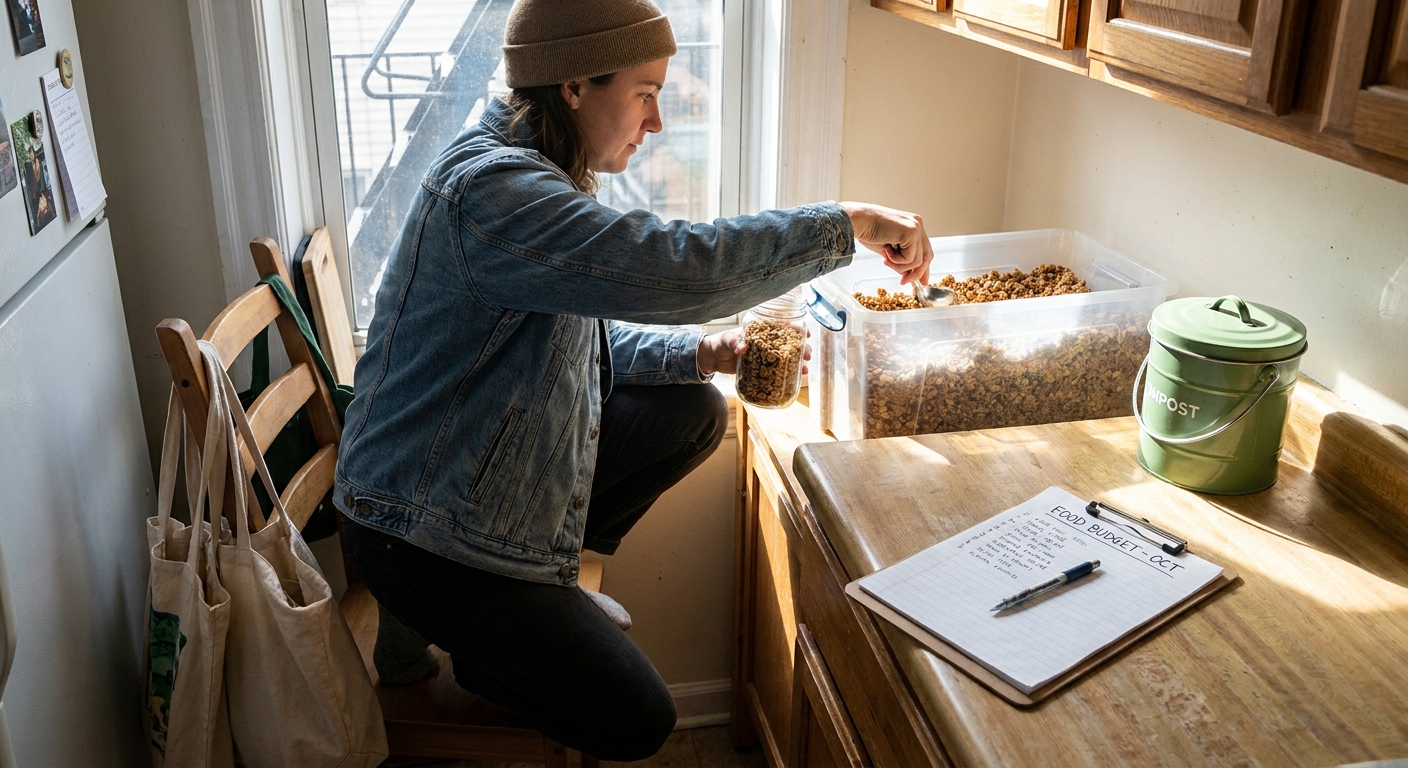
- Plan around sale items and what you have at home.
- Freeze extra bread, cooked rice, or leftovers.
- Make “scrap soup” or stir-fry with veggies that are starting to wilt.
Even cutting your food waste by 25% can save a noticeable amount each month.
Big Win #2: Paper Products
Paper towels, napkins, tissues—they add up.
Budget-friendly swap:
- Cut up old clothes or towels into cloths.
- Use them for cleaning, drying hands, and most spills.
- Keep a roll of paper towels for truly gross jobs.
Big Win #3: Bottled Beverages
Soda, bottled water, canned drinks—these are sneaky budget drains.
Budget swap ideas:
- Switch some bottled drinks to tap water, tea, or coffee at home.
- If you love fizz, consider a soda maker if it fits your budget long-term.
Step 3: Smart Swaps with Real Cost Comparisons
Here’s where we put some numbers to common Zero Waste advice.
Swap 1: Coffee Shop Habit
Current:
- Coffee in disposable cups: $3–5 each, often daily
Lower-waste budget moves:
- Brew at home 2–3 days/week.
- Cost per cup at home: often under 50¢.
- Bring your own mug when you do buy out.
- Some shops give 10–25¢ discounts.
Yearly impact (example):
- Brew at home 3 days/week, buy out 4 days → you save roughly 156 purchased coffees/year.
- Even at $3 each, that’s $468/year saved.
Swap 2: Disposable Razors
Current (2 years):
- Handle: $10
- Cartridges: ~$20 per pack of 8; ~12 packs = $240
- Total ≈ $250
Swap: Safety razor
- Razor: $30 (one-time)
- Blades: $10 for 100 (1–2 years)
Result: Save around $200 over two years, plus less plastic.
Swap 3: Cleaning Supplies
Current:
- Multiple specialty cleaners (glass, bathroom, kitchen, floor) at $3–6 each.
Budget-friendly low-waste option:
- One all-purpose cleaner concentrate (~$10–15, makes many bottles)
- Or DIY: white vinegar, a bit of dish soap, water (pennies per bottle)
Refilling one bottle is cheaper and creates less waste than buying five different products.
Step 4: Avoid the “Green Shopping Spree” Trap
Here’s where a lot of well-meaning people accidentally spend too much.
Expensive Things You Probably Don’t Need Right Away
- Matching glass jar sets
- Designer reusable bags and mugs
- Specialized “zero waste” gadgets for every scenario
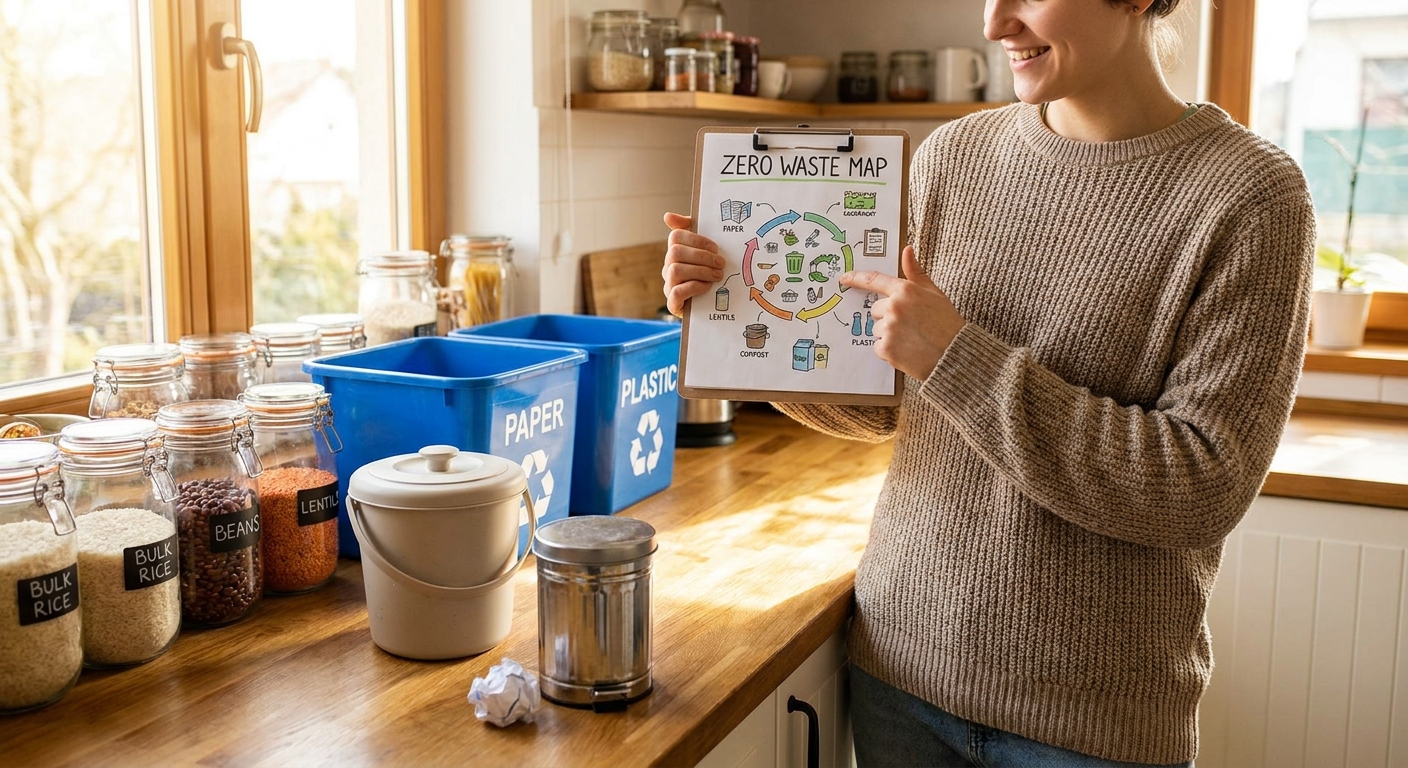
- Full pantry decanting projects
Ask this before you buy:
Can something I already own do this job well enough?
If the answer is yes, you just saved money and avoided creating demand for more stuff.
When Paying More Makes Sense (If You Can)
Sometimes, spending a bit extra upfront saves money later.
Examples:
- A durable water bottle instead of buying plastic bottles weekly
- A good-quality lunch container so you bring food from home more often
- A solid pair of shoes or jeans instead of replacing cheap ones constantly
If your budget is tight, pick one upgrade at a time when something truly wears out.
Step 5: Low-Effort, Low-Cost Beginner Moves
Here are simple ways to start that won’t require a lifestyle reboot.
1. One Reusable Bag Strategy
- Keep a folded bag in your backpack, purse, or coat.
- Store extras by the door.
If you forget sometimes and end up with plastic bags, reuse them as trash liners or pet waste bags. It’s still better than buying new ones.
2. The “Leftover Night” Tradition
- Pick one day each week to eat whatever is in the fridge.
- Combine bits into bowls, wraps, or omelets.
This reduces food waste and grocery costs.
3. Secondhand First Rule
- Need something? Check thrift stores, online marketplaces, Buy Nothing groups.
- If you can’t find it used or it doesn’t make sense (like underwear), then buy new.
This works especially well for:
- Kids’ clothes and toys
- Furniture
- Kitchen tools
- Sports gear
4. Tiny Takeout Tweaks
You don’t have to stop ordering in.
You could:
- Ask for no plastic cutlery/napkins.
- Order from places that use recyclable or compostable containers (if that infrastructure exists near you).
- Bulk-order for multiple meals instead of separate small orders.
When Zero Waste Advice Conflicts with Your Reality
Sometimes the “eco” option is:
- More expensive
- Less accessible
- Not practical for your health or mobility
Examples:
- Pre-cut veggies may be essential if you have chronic pain or limited time.
- Disposable period products might be what works for your body.
- Packaged gluten-free or allergy-safe foods might be non-negotiable.
In those cases, focus on:
- Reducing waste where you do have flexibility.
- Advocating for better systems (like community composting or recycling) instead of punishing yourself.
You are not failing at Zero Waste because your life has constraints.
A Sample “Zero Waste on a Budget” Week
Here’s what a realistic, not-perfect week could look like:
Monday
- Make oatmeal from bulk oats or a large bag.
- Brew coffee at home; bring in a reused jar or old travel mug.
- Dinner is pasta with jarred sauce and frozen veggies. Jar becomes future storage.
- Wash and reuse takeout containers as lunch boxes.
- Use cloth instead of paper towels for non-gross spills.
- Takeout night. Ask for no cutlery, recycle what you can.
- Freeze leftovers, bread heels, and ripe bananas.
- “Leftover night” or soup from fridge odds and ends.
Tuesday
Wednesday
Thursday
Friday
Saturday
Sunday
Total cost difference from a regular week? Possibly less. Total waste? Likely lower.
Progress Over Perfection (Especially on a Budget)
If you:
- Are paying your bills
- Caring for yourself or others
- Navigating health challenges
- Working with limited time or money
…then any step toward less waste is admirable.
Zero Waste is not a luxury lifestyle. At its best, it’s a way of living that respects both your bank account and the planet.
Start with what’s free. Move to what saves you money. Leave the fancy stuff for if and when it truly makes sense.
And if you’re reading this while eating budget frozen lasagna out of a plastic tray, you’re still welcome in this conversation. You’re already doing the work by paying attention—and that’s where change always begins.