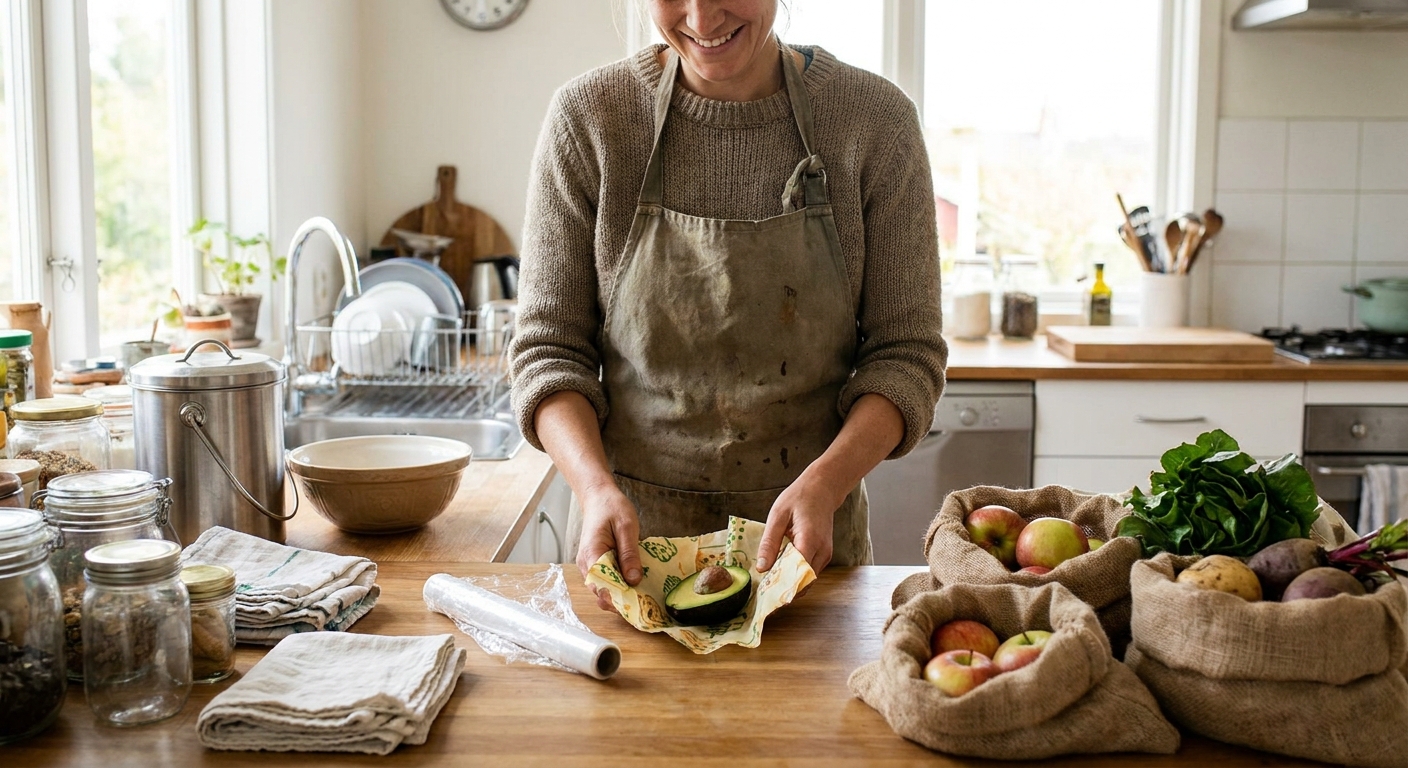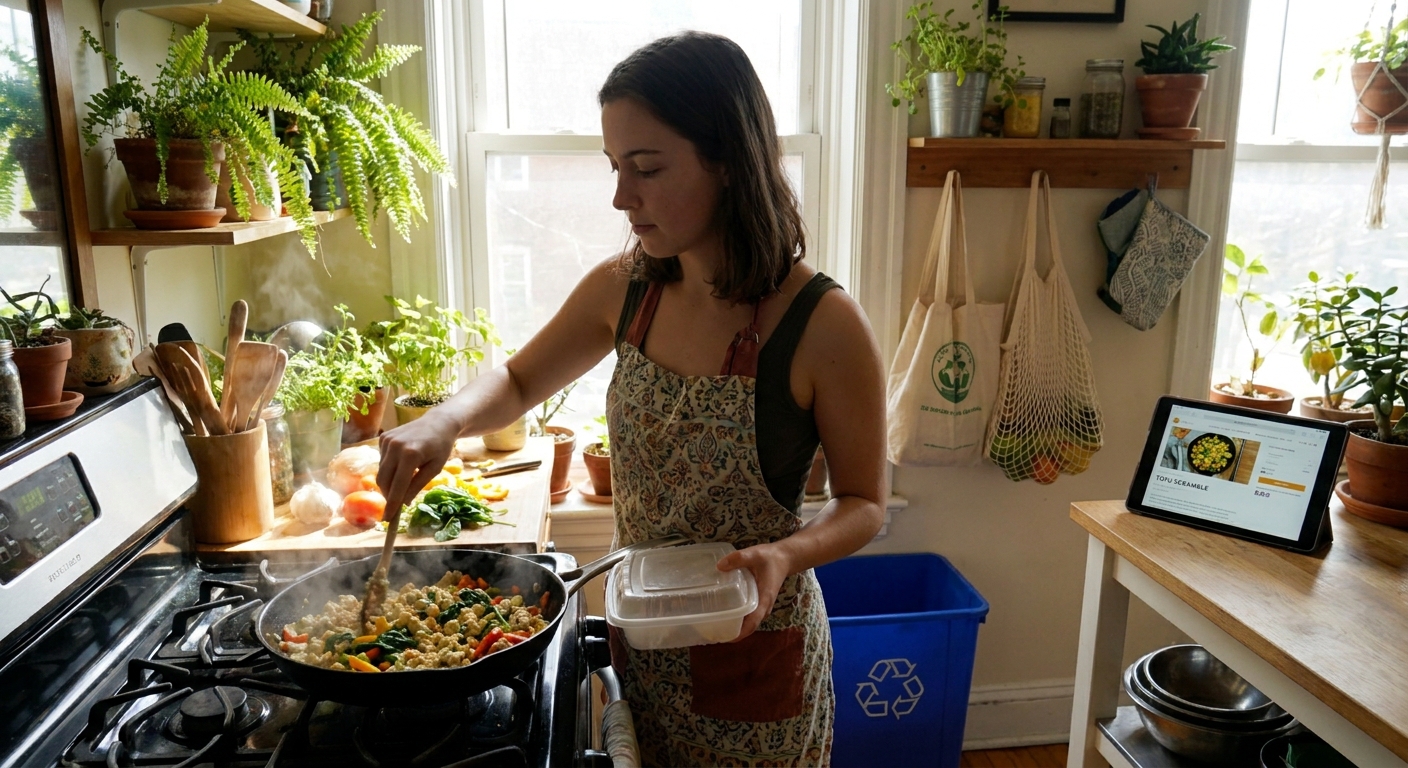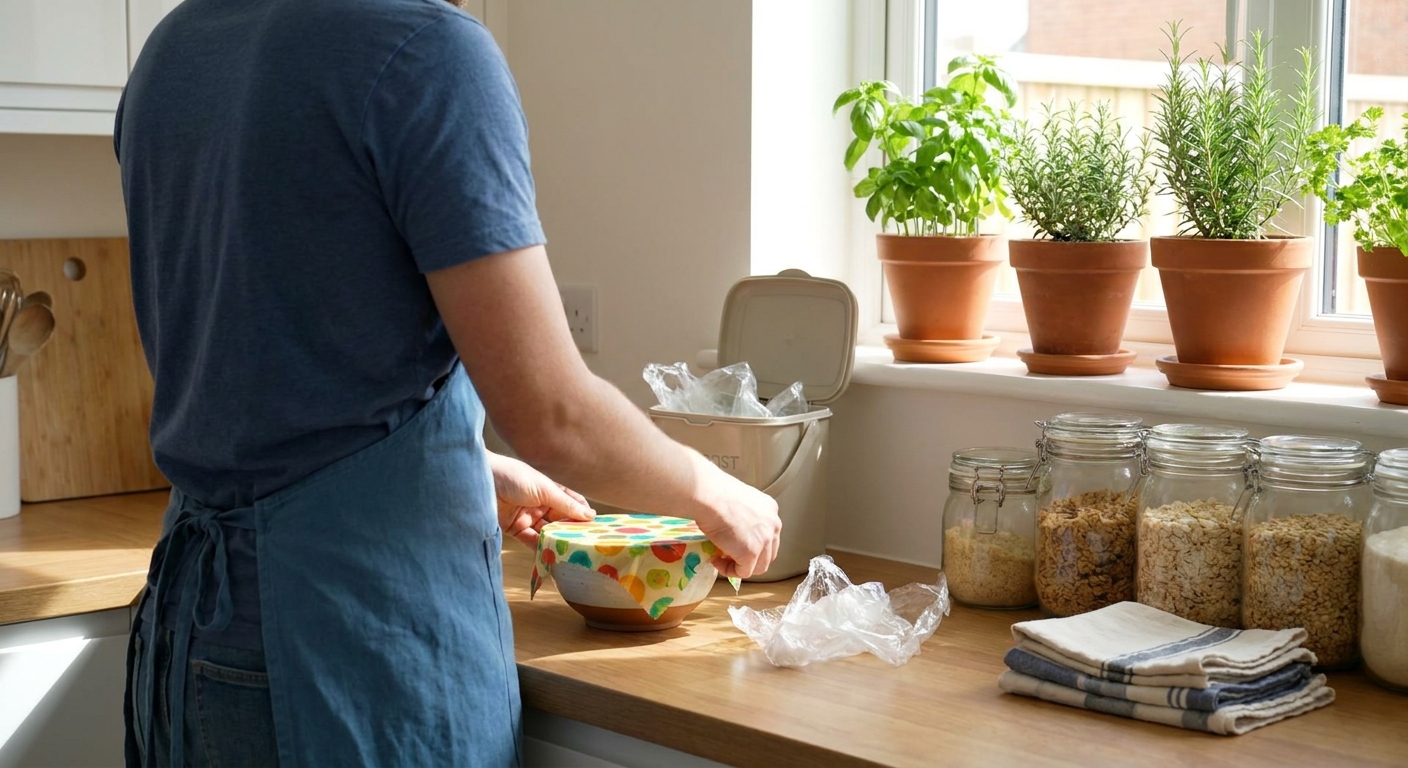
You know the one: grows their own herbs, has a color-coded pantry, and somehow keeps glass containers spotless. That’s great—for them. For most of us, a green kitchen has to coexist with spilled coffee, late-night snacks, and the occasional forgotten leftovers.
You Don’t Need to Become “That Person” Overnight
This article is your realistic starter kit: 10 green kitchen swaps that are gentle on your wallet, your schedule, and your sanity. Mix and match. You don’t have to do them all, and you absolutely don’t have to do them perfectly.
Swap 1: New Pantry Aesthetic → Using Up What You Have
Instead of: Buying matching jars and starting from scratch.
Try: A “use this first” shelf or box.
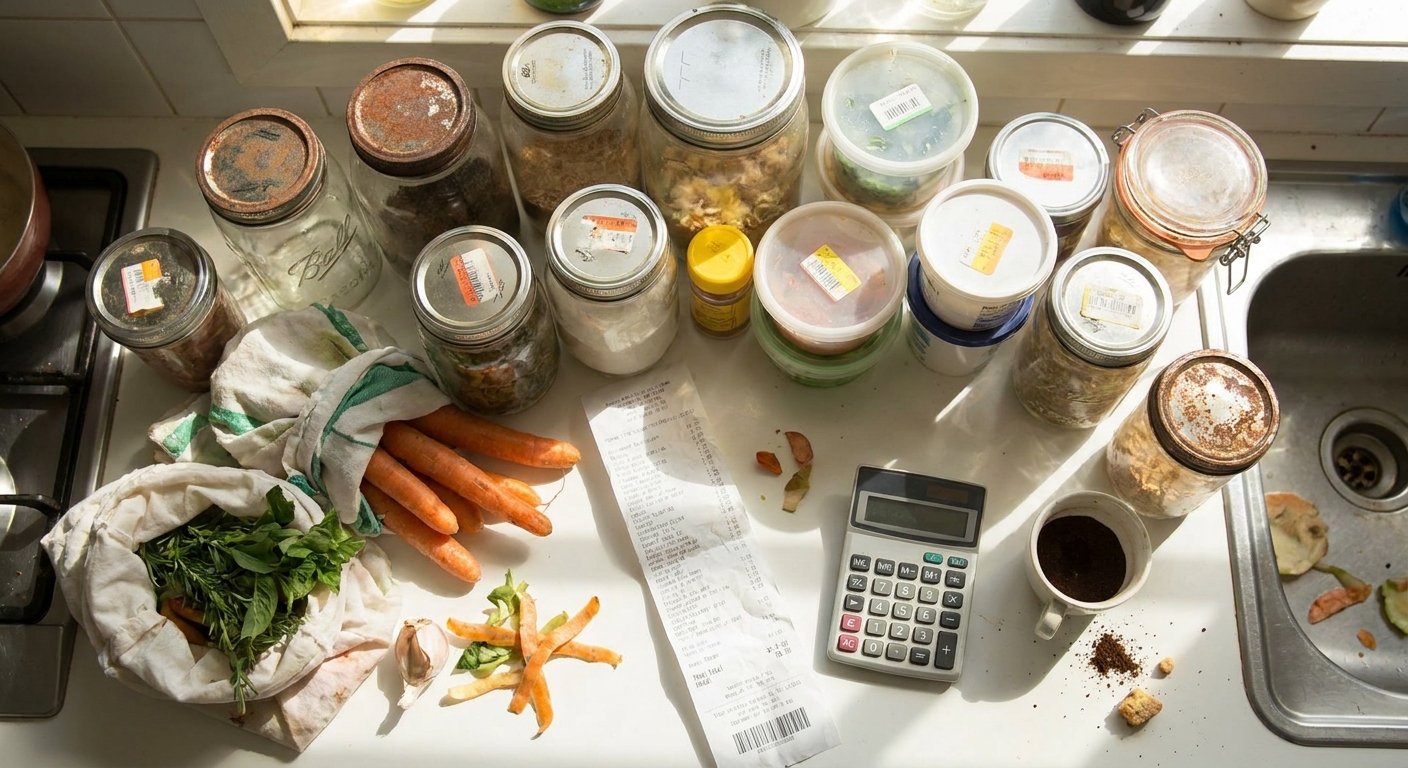
- Collect half-used bags, open jars, and “mystery grains.”
- Dedicate 1–2 nights a week to building meals from this stash.
Why it’s green: You slash food waste and avoid buying more than you need.
Money check: Using up a bag of rice and a couple of canned goods you already own can easily save $10–20 in a week of avoided impulse buys.
Swap 2: Single-Use Paper Towels → A Hybrid Cloth System
Instead of: Quitting paper towels cold turkey.
Try: A mix of cloth + a backup roll.
- Cut old towels or tees into squares.
- Use cloth for spills, counters, and drying hands.
- Save paper towels for grease or pet messes.
- Heavy paper towel use: $50–80
- DIY cloth rags: $0 + a bit of extra laundry (negligible in most households)
Cost snapshot (per year):
You don’t need to be all-or-nothing here. A 50% reduction in paper use is already a win.
Swap 3: Fancy “Eco” Containers → Jars & Takeout Tubs
Instead of: Buying a full set of new glassware.
Try: Reusing jars and sturdy plastic containers.
- Jam jars become overnight oat jars.
- Pasta sauce jars hold dry goods.
- Takeout containers work for leftovers and freezer meals.
Green bonus: You delay or avoid buying newly manufactured items, which saves resources and emissions.
Upgrade later: Once some old containers break or stain, replace only those with durable glass or stainless steel.
Swap 4: Buying Specialty “Green” Cleaners → Simple Refills & Concentrates
Instead of: A cabinet full of niche eco-branded sprays.
Try: One multipurpose cleaner you can refill.
Options:
- Refill stations at local stores.
- Concentrated cleaners that dilute with water.
- DIY simple mix: vinegar + water + a few drops of dish soap (test on surfaces first).
- Branded single-use cleaner bottles: $4–7 each.
- Concentrate/refill: often ~$1–2 per bottle equivalent.
Cost comparison (approx.):
You cut plastic waste and keep your routine simple.
Swap 5: “All Organic Everything” → Strategic Organic & Local When Possible
Instead of: Trying (and failing) to buy 100% organic.
Try: Prioritizing where it matters most for you.
Options:
- Choose organic for what you eat most often (like apples or leafy greens) rather than every item.
- When available and affordable, buy local produce—often less travel, fresher, and sometimes cheaper.
- Frozen veggies and fruit can be a smart compromise: less spoilage and still nutritious.
Perfection is expensive. Targeted choices add up without wrecking your budget.
Swap 6: Cooking Elaborate Zero-Waste Recipes → Easy, Flexible Meals
Instead of: Intense meal plans that collapse by Wednesday.
Try: 2–3 low-effort meal templates.
Green-friendly templates:
Grain + Veg + Protein Bowl
Rice/quinoa + any roast/sauteed veg + beans/tofu/eggs + sauce.
Soup or Stew from Scraps
Onion/garlic + aging veg + broth + lentils/beans.
Wraps or Quesadillas
Tortillas + leftovers + cheese or beans.
These patterns are forgiving—great for using up what you have instead of letting it rot.
Swap 7: Tossing Scraps → Beginner Compost or “Almost Compost” Habits
Instead of: Forcing yourself into a complex compost system overnight.
Try: One of these lighter options:
- A freezer bag of veg scraps you turn into broth monthly.
- A small countertop bin for food waste if your city collects organics.
- Taking a sealed container of scraps to a community garden or drop-off site when convenient.
Cost: Usually minimal or free, especially if local programs exist.
If full composting never fits your life, focusing on preventing food waste is still incredibly impactful.
Swap 8: Bottled Drinks → A Reusable Bottle & Home Beverages
Instead of: Regular soda, juice, or water in plastic bottles.
Try:
- A reusable bottle you actually like using (lightweight, easy to wash).
- Making iced tea, infused water, or coffee at home in batches.
- Daily bottled drink: $2–3 → $60–90/month.
- Loose tea/coffee at home: often under $10–20/month.
Money snapshot:
Less plastic, less clutter, less cost.
Swap 9: Oven for Everything → Smarter Appliance Choices
Instead of: Defaulting to the oven.
Try:
- Using toaster ovens or air fryers for small batches.
- Using lids on pots to cook faster.
- Cooking double portions and eating leftovers cold or reheated.
Why it matters: Smaller appliances usually use less energy for small meals. Batch cooking saves both time and power.
You don’t need new gadgets; just choose the right tool for the job.
Swap 10: All-or-Nothing Mindset → “Better Than Before” Mindset
This one is mental, but it changes everything.
Instead of:
- “I ate takeout twice this week, I’ve failed.”
- “Last month I cooked once a week. Now it’s twice. That’s an improvement.”
- Fewer plastic bags this month than last.
- More meals from your pantry.
- Less food thrown away.
Try:
Track progress in rough terms:
Sustainability is a spectrum, not a scoreboard.
Putting It Together: A Sample Low-Stress Week
Here’s what an imperfect but greener kitchen week might look like:
- Monday: Make a grain + veg + protein bowl using what’s in the “use first” box.
- Tuesday: Takeout (you say no to plastic cutlery and keep the container for reuse).
- Wednesday: Soup from aging veggies + pantry beans.
- Thursday: Leftovers or quesadillas with whatever’s left.
- Friday: Takeout again. No guilt.
- Weekend: Wash rags, refill cleaner, plan 2 easy meals for next week.
You’re not living off kale smoothies. You’re living your real life—with slightly better defaults.
Start With Just One Swap
Look back at the ten swaps and pick the one that feels laughably easy. That’s your starting point. Not the one that sounds most impressive, or most Instagrammable, or most “green”—the one you are 90% sure you’ll actually do.
Over time, these small changes snowball. Your trash shrinks. Your grocery bills stabilize. Your kitchen feels calmer and more aligned with your values, even if there’s still a roll of paper towels on the counter and takeout menus in the drawer.
That’s what a real, livable green kitchen looks like.