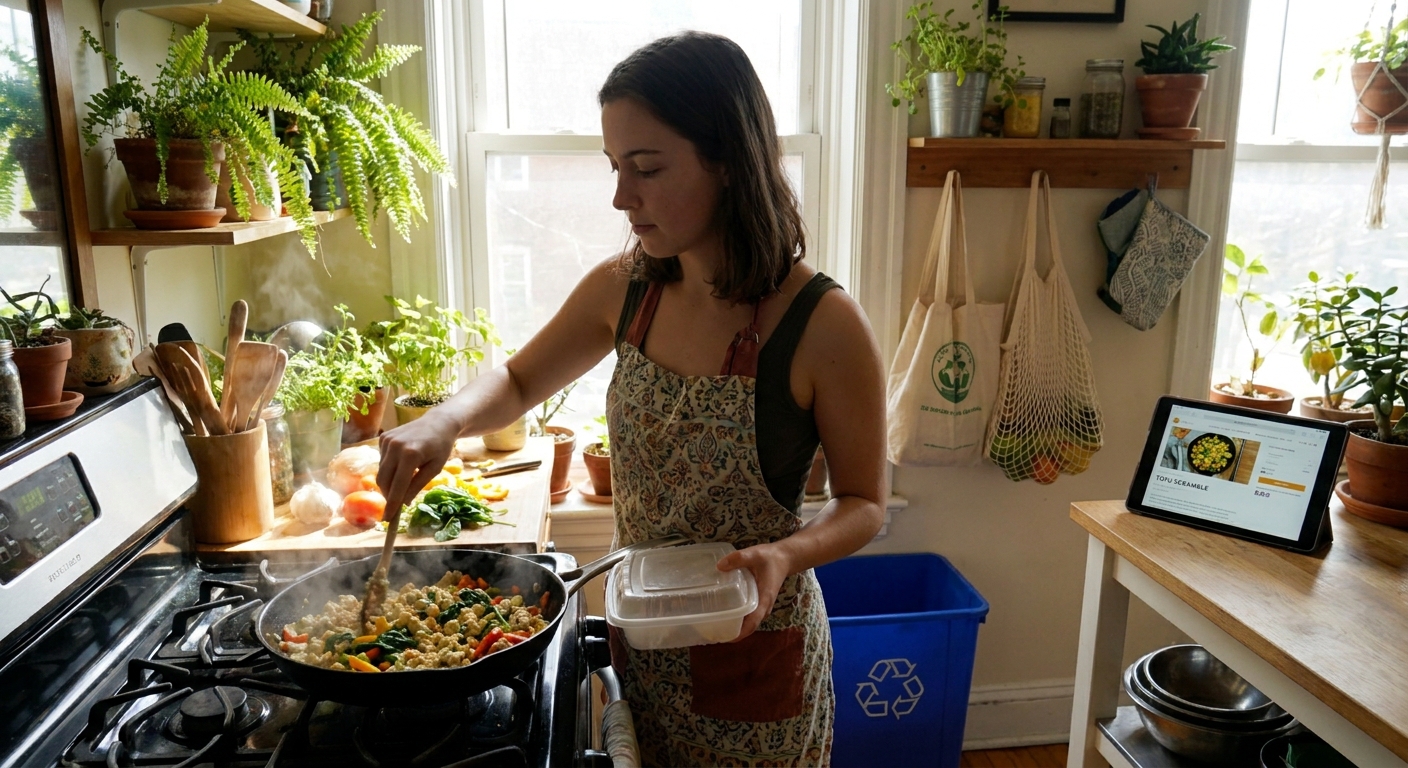
If you cook, snack, or even just reheat leftovers, your kitchen is already one of the most powerful places to make your lifestyle more sustainable. The good news: you don’t need a Pinterest‑perfect pantry, glass everything, or zero trash to make a difference.
Why Your Kitchen Is the Best Place to Start Going Green
Think of a green kitchen as a direction, not a destination. You’ll find reusable containers sitting next to the occasional plastic takeout box, and that’s okay. Progress over perfection.
In this guide, we’ll walk through realistic swaps, honest cost comparisons, and beginner-friendly steps that feel doable even when you’re tired after work and tempted to order takeout. (Which, by the way, you still can.)
Step 1: Use What You Already Have
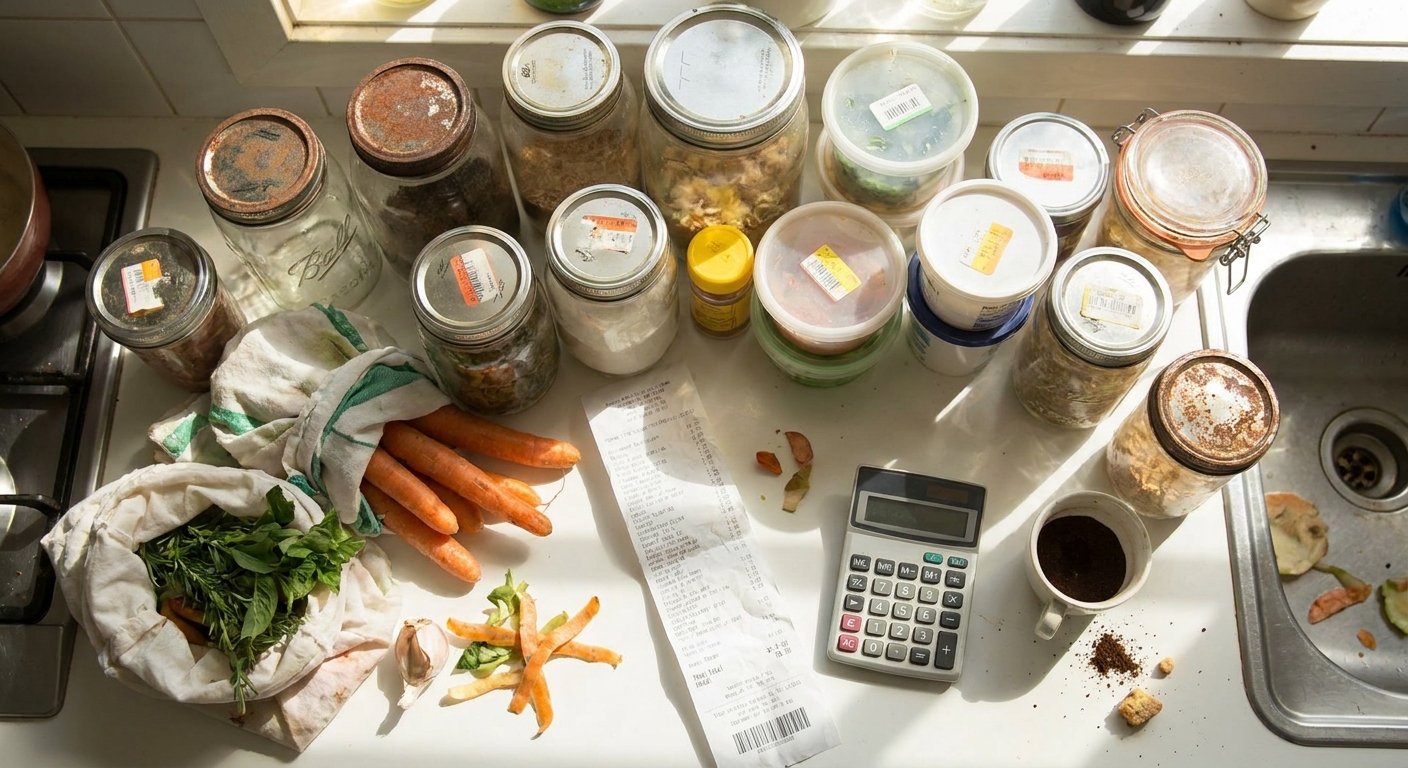
Before you buy anything labeled “eco,” look around your kitchen. The greenest item is usually the one you already own.
Do this first:
- Gather all your containers – old jars, plastic tubs, random lids. See what you actually have.
- Make a “use up first” box in your pantry for half-open pasta, rice, snacks.
- Repair or repurpose: that chipped mug becomes a spoon holder; the cracked bowl holds compost scraps.
Why this matters
Every new product—yes, even that gorgeous bamboo canister—has a footprint. If you skip buying “eco” gear for now and fully use what’s already in your cupboards, you’re already reducing waste and emissions.
Step 2: Low-Effort Swaps That Save Money
You don’t have to overhaul your whole kitchen. Start with small changes you’ll barely notice in your routine.
Swap 1: Paper Towels → Reusable Cloths (Gradually)
How:
- Cut old t-shirts or towels into rags.
- Keep a small basket or jar on the counter for clean ones.
- Hang a small bag or bucket for dirty cloths.
- Paper towels: ~$2–3 per roll, often 1–2 rolls/month = ~$24–72/year.
- Reusable cloths: $0 if you cut old fabric, or ~$15–25 one-time for a set.
Cost comparison (rough):
Real talk: You don’t need to quit paper towels entirely. Maybe you use cloth for everyday wipe-ups and keep a roll for pet messes or truly gross stuff.
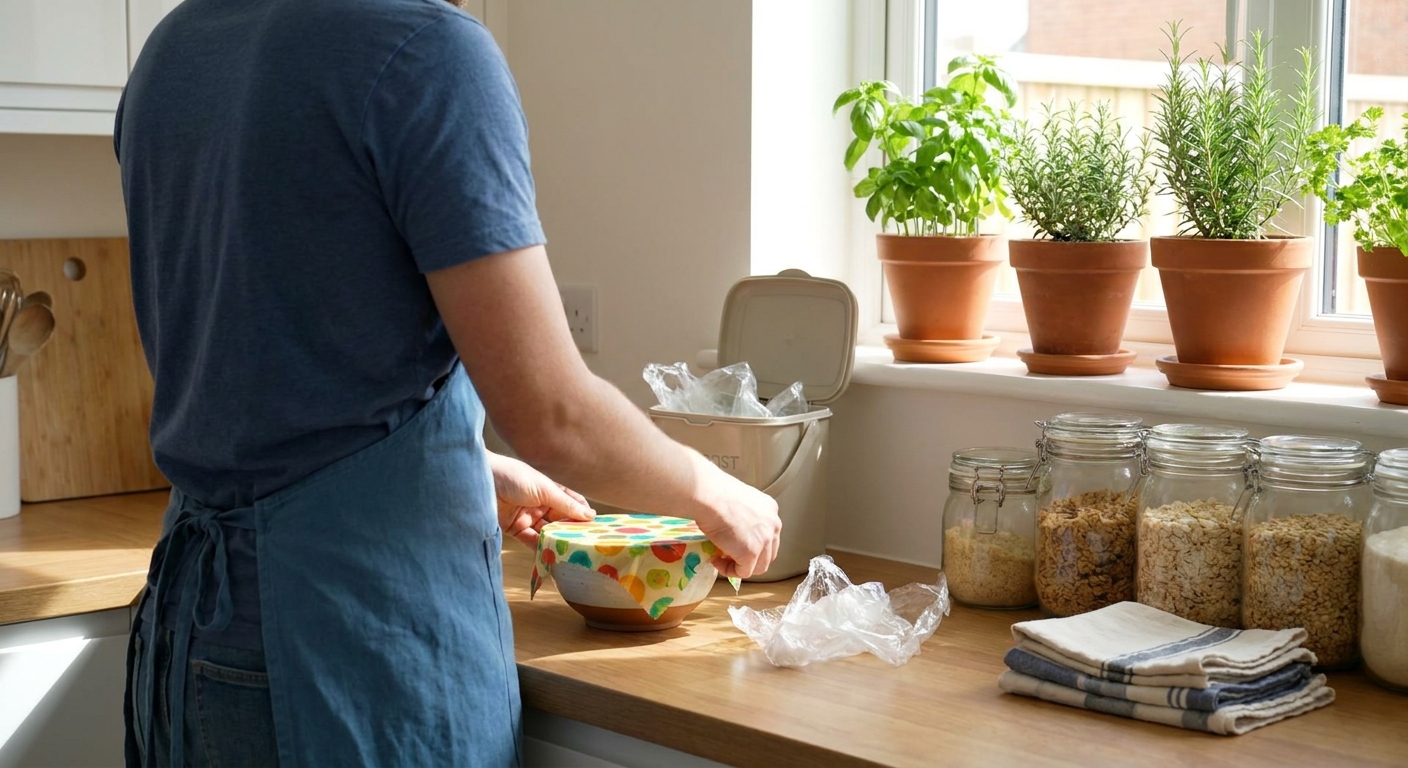
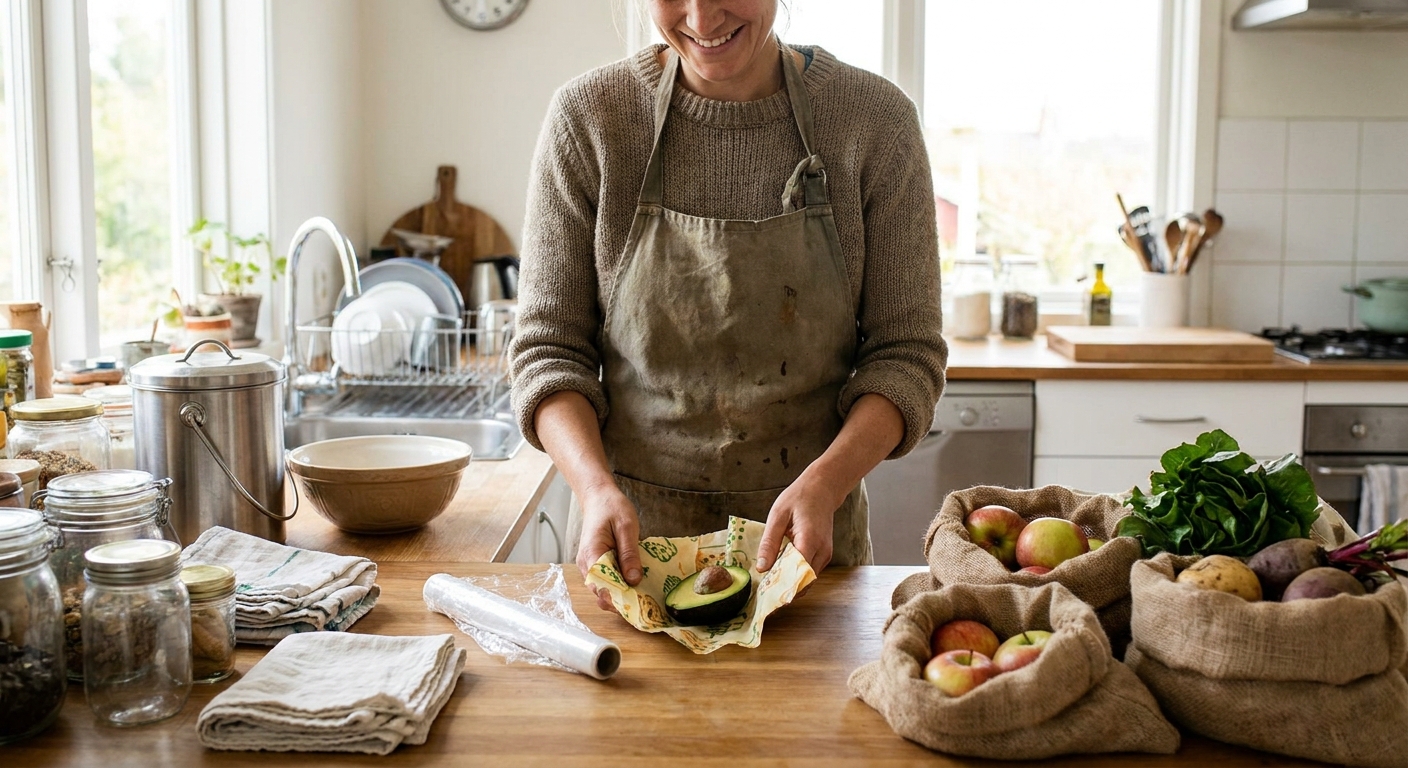
Swap 2: Plastic Wrap → Containers & Covers
Options:
- Reuse jars and takeout containers for leftovers.
- Use a plate as a lid over bowls.
- Gradually add silicone lids or beeswax wraps if you like them.
- Plastic wrap: ~$3/roll, a few rolls a year = ~$12–20/year.
- Reusables: You can spend $0 by using jars, or ~$15–30 for long-lasting covers.
Cost comparison:
Swap 3: Bottled Dish Soap → Concentrate or Refill
How:
- Look for dish soap concentrates or refill stations at local stores.
- Reuse one sturdy bottle instead of buying a new plastic one each time.
Savings: Concentrates and refills are often 10–30% cheaper per wash than regular bottles, especially when bought in bulk.
Step 3: Greener Groceries Without Going All-Organic
Buying sustainable food doesn’t have to mean switching entirely to organic or shopping only at fancy markets.
Start with packaging, not perfection
- Choose loose produce over plastic-wrapped when you can.
- Bring your own bags, or reuse plastic produce bags multiple times.
- Buy basics (rice, oats, beans) in bigger packages if bulk bins aren’t available—fewer small bags means less waste.
Smart swaps that don’t break the budget
- Frozen veggies vs. takeout – A bag of frozen veg is often cheaper and less wasteful than frequent last-minute takeout.
- Plant-heavy, not plant-only – Try adding one or two meatless meals each week instead of going fully vegan overnight.
- Buy fewer “specialty eco” foods – Many are expensive and over-packaged. Focus on simple, staple ingredients.
- Before: 4 takeout dinners, 3 cooked at home.
- After: 2 takeout dinners, 5 cooked at home, using simple veggie-heavy meals.
Example weekly shift:
That alone can cut packaging waste noticeably and usually saves money.
Step 4: Green Cooking Habits That Don’t Require New Gadgets
You don’t need a new induction stove or fancy appliances to cook more sustainably.
Energy-savvy cooking tips
- Put lids on pots – Cooks food faster and uses less energy.
- Match pot size to burner – A small pot on a huge burner wastes heat.
- Batch cook – If the oven’s on, roast a tray of veggies for tomorrow too.
- Use residual heat – Turn off the stove a minute early; the heat will finish the job for many dishes.
Water-wise dishwashing
- If you have a dishwasher, run it full – it usually uses less water than handwashing a pile of dishes.
- If handwashing, plug the sink instead of running water the whole time.
These are invisible changes that don’t require you to be a totally different person in the kitchen.
Step 5: Easy Waste Wins (Even If You Don’t Compost… Yet)
Start with smarter food storage
- Move “needs to be eaten soon” food to a visible shelf in the fridge.
- Keep cut veggies at eye level – if you see them, you’re more likely to eat them.
- Store herbs in a jar with a little water like flowers to extend their life.
Simple food waste triage
Before tossing something, ask:
- Can I freeze this? (bread, berries, cooked beans, leftover sauces)
- Can it be a stir-fry, soup, or omelet?
- Is it actually spoiled, or just wrinkly/ugly?
Compost, but make it realistic
- If full-on backyard composting feels intimidating, start with a freezer container for food scraps and drop them at a local compost drop-off when full.
- Or try a small countertop bin if your city collects organics.
If you never compost in your life but reduce your food waste by 30%, that’s still meaningful.
Step 6: Build a Green Kitchen Over Time (Not One Shopping Spree)
If you do want to buy some intentionally chosen items, spread them out.
High-impact, low-regret buys (when/if you’re ready)
- Sturdy food containers you truly like using
- A good chef’s knife you’ll keep for years
- A reusable water filter system instead of single-use bottles
- Reusable baking mat to replace parchment over time
Space these out over months. That’s easier on your budget and gives you time to see what you’ll actually use.
A Sample "Imperfect Green" Kitchen Makeover Timeline
Month 1:
- Use up what’s in your pantry and freezer.
- Switch half your paper towel use to rags.
- Choose loose produce and fewer tiny packages.
- Start keeping a “eat soon” shelf in your fridge.
- Add one meatless meal a week.
- Try one refill product (dish soap, oil, or dry goods) if available.
- Consider a compost solution if it fits your life.
- Slowly upgrade worn-out kitchen items with more sustainable options.
Month 2:
Month 3:
Month 4 and beyond:
Permission to Be Inconsistent
Some weeks you’ll cook from scratch, compost your scraps, and feel like an eco hero. Other weeks, you’ll eat takeout three nights in a row and toss recyclables into the trash because you’re exhausted.
A green kitchen isn’t a moral scorecard. It’s simply a space where more and more of your decisions—over time—start to line up with your values.
If you:
- use what you have,
- make a few realistic swaps,
- waste a little less food,
- and improve just one habit at a time,
then you already have an imperfect, very real, and absolutely valid green kitchen.