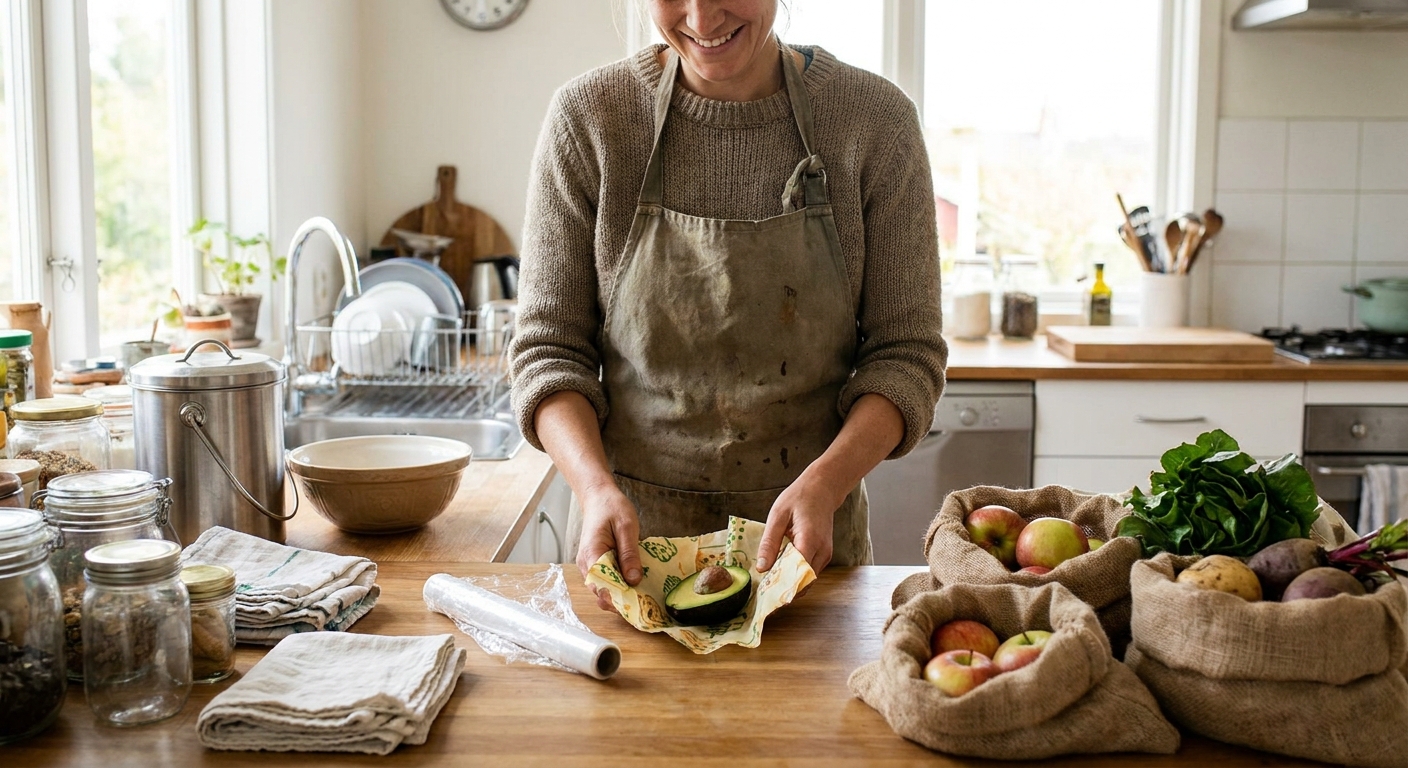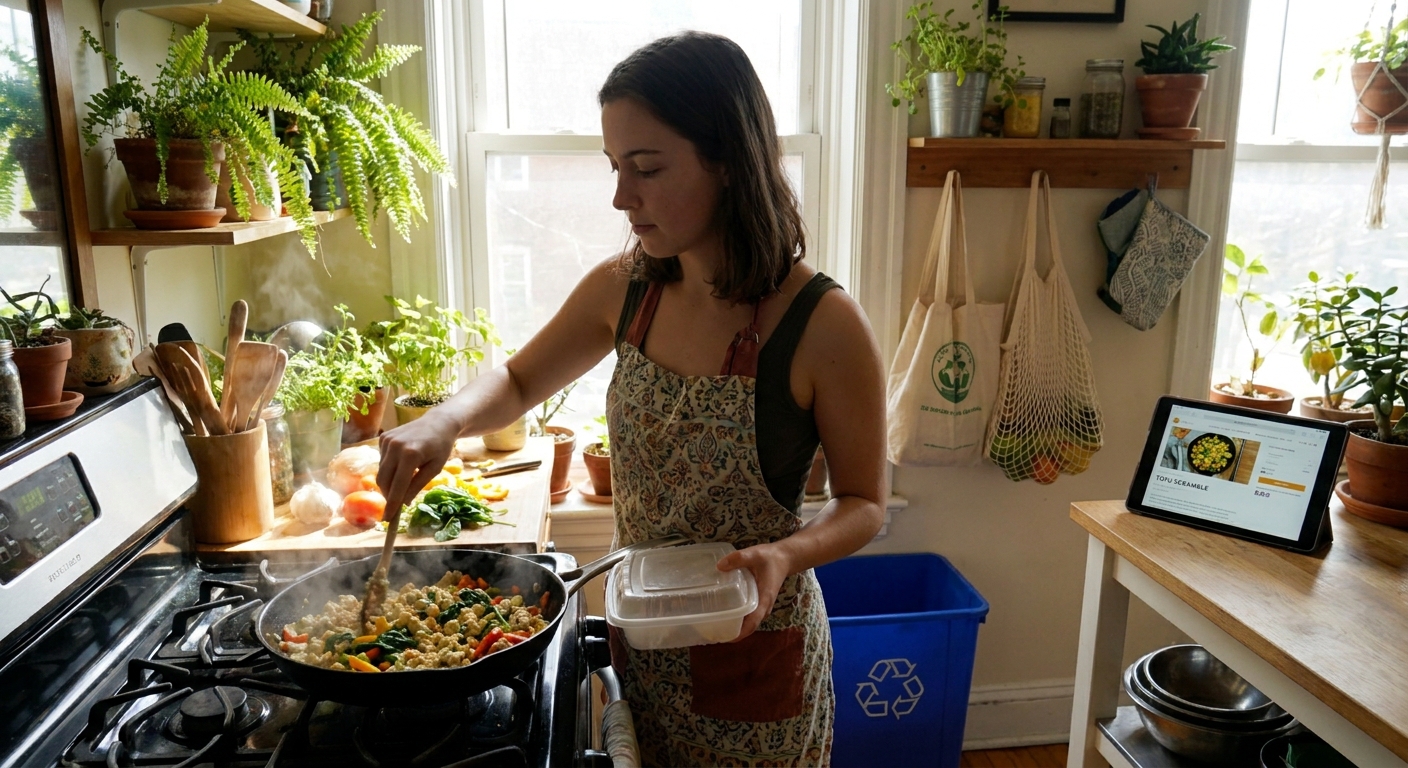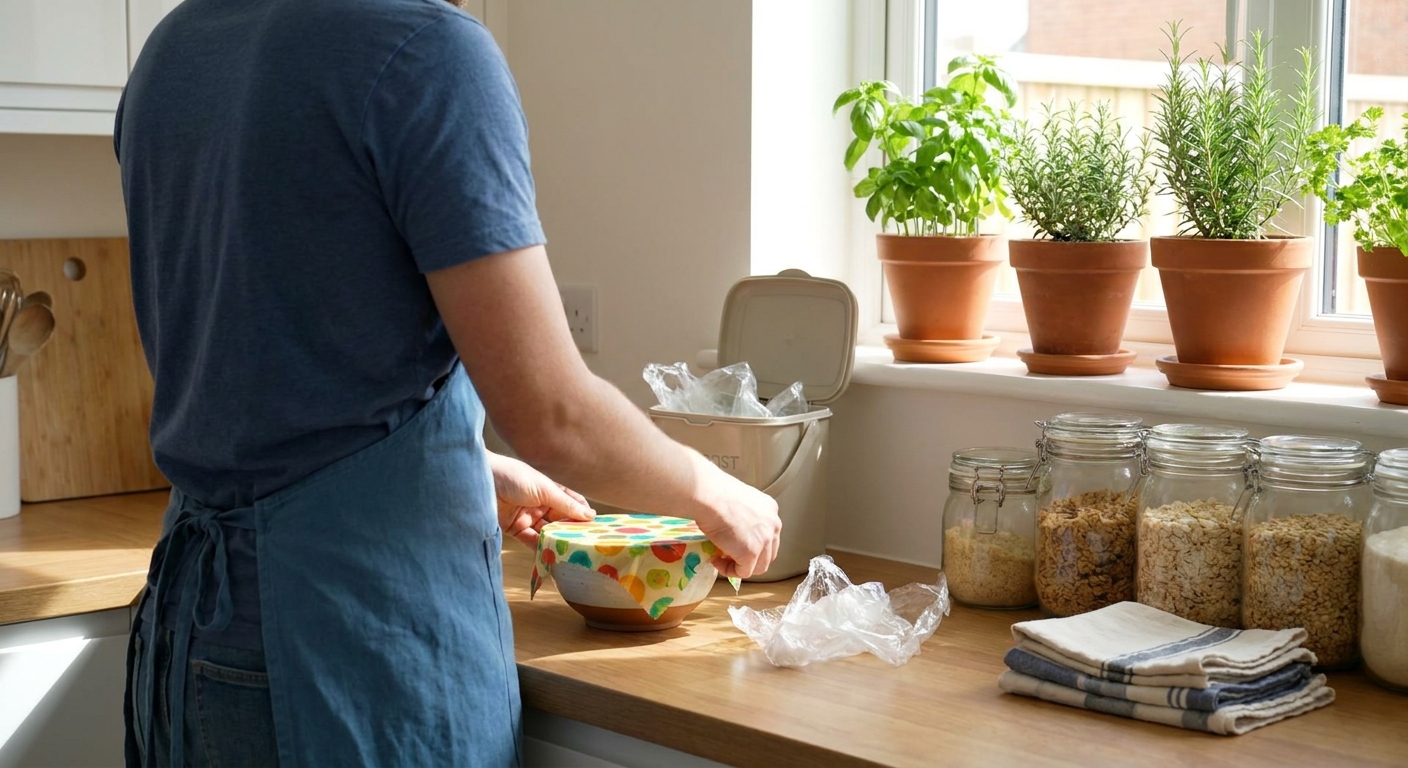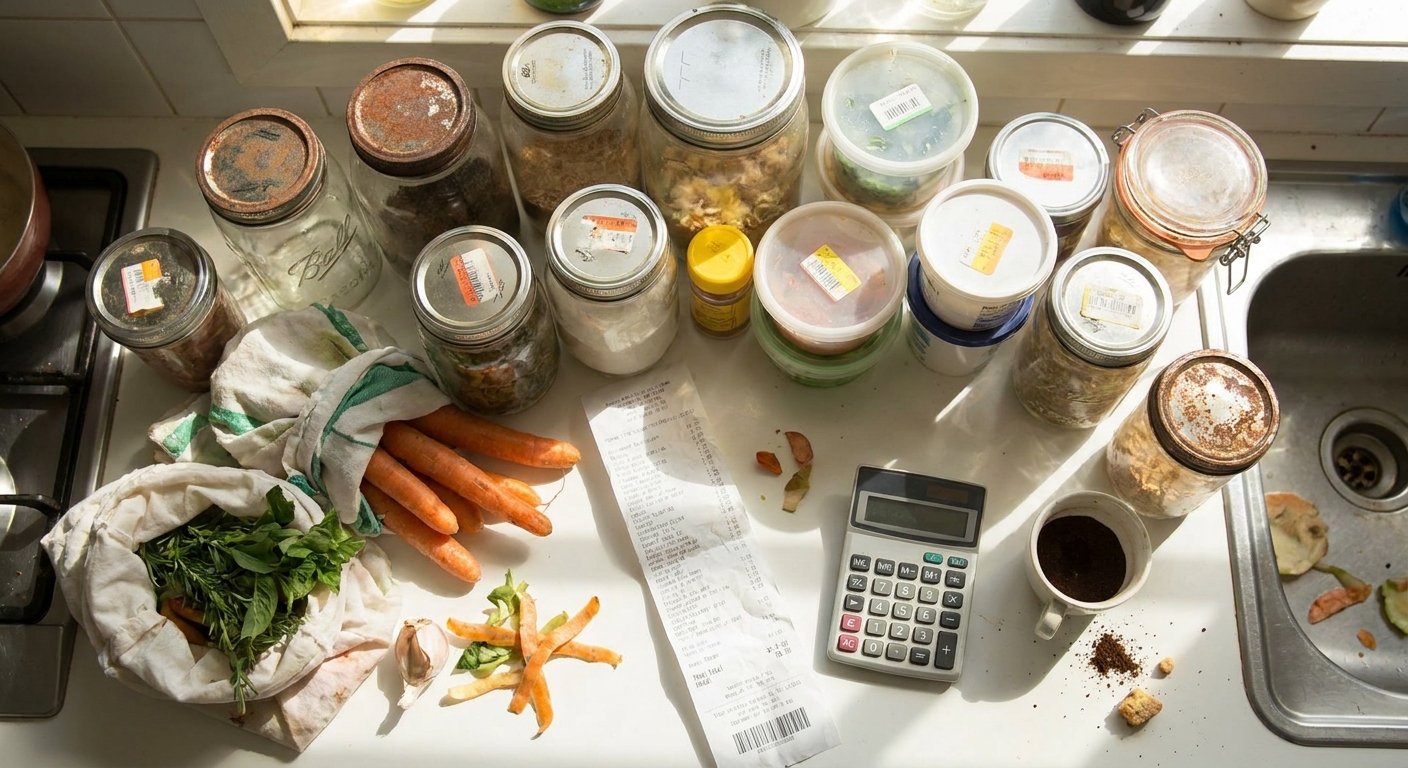
Scroll through social media and you’ll see the same image over and over: perfect rows of glass jars, bamboo lids, color-coordinated produce. It’s beautiful—and often expensive. But is it actually more sustainable than your mismatched containers and chaotic spice shelf?
Aesthetic vs. Actual Sustainability
Let’s do what social media rarely does: compare the real costs and benefits of common green kitchen choices. Not just money, but also waste, time, and what you’ll realistically keep up.
You might be relieved to find that a truly sustainable kitchen often looks a lot more like what you already have.
Containers: Glass Jars vs. Reusing What You Have
Option A: Buying a Full Set of Glass Jars
Pros:
- Long-lasting, recyclable, non-toxic.
- Helps you see what you have at a glance.
- Looks nice, which can inspire more home cooking.
- Upfront cost: ~$3–8 per jar. A full pantry set can easily hit $100–300.
- Production and shipping have a carbon footprint.
- Not strictly necessary to reduce waste.
Cons:
Option B: Reusing Jars and Takeout Containers
Pros:
- Basically free.
- Uses what already exists, reducing demand for new items.
- Functionally similar for most uses.
- Less visually uniform.
- Lids may be less durable over time.
Cons:
Sustainability Verdict
For most people, reusing what you already have is greener and cheaper. If you love the look of glass, upgrade gradually:
- Replace broken or stained containers with durable ones.
- Buy jars only when you genuinely need more storage.
Best-of-both-worlds approach: Start with reused jars. Over time, phase in higher-quality containers as you’re able and as your real needs become clear.
Cleaning Supplies: Green Labels vs. Simple Ingredients
Option A: Branded Eco Cleaners
Cost: $4–7 per bottle.
Pros:
- Lower-toxicity formulas.
- Often better for indoor air quality.
- Easy, no mixing required.
- Still comes in single-use plastic bottles unless refillable.
- Some products use “green” as a marketing buzzword.
Cons:
Option B: Concentrates, Refills, and DIY Basics
Cost:
- Concentrate/refill: often ~$1–2 per bottle equivalent.
- DIY (vinegar, baking soda, dish soap): cents per use.
- Less packaging waste.
- Lower cost over time.
- Fewer, simpler ingredients.
- Requires a bit of setup and mixing.
- Some surfaces need special care (e.g., vinegar can damage stone counters).
Pros:
Cons:
Sustainability Verdict
If you can access them, refills and concentrates usually hit the sweet spot between convenience, cost, and waste. DIY is great if you enjoy it, but not mandatory.
You don’t fail at being sustainable if there’s a mainstream cleaner under your sink. Just replace it with a better option when it runs out.
Food Choices: Organic, Local, Frozen, or Whatever’s on Sale?
You’ll hear a lot of conflicting advice: only buy organic, only buy local, never buy frozen, always shop in bulk. The reality is more nuanced.
Option A: All-Organic, All the Time
Pros:
- Reduced pesticide use.
- Often better for soil health.
- Can be significantly more expensive.
- Not accessible everywhere.
Cons:
Option B: Strategic Organic + Local When Possible
Pros:
- You prioritize higher-impact choices (like organic for heavily sprayed produce, or local seasonal items).
- Balances cost and sustainability.
- Requires a bit of planning and label-reading.
Cons:
Option C: Conventional but Plant-Forward
Pros:
- More affordable.
- Shifting even some meals from meat-heavy to plant-heavy has huge climate benefits.
- Doesn’t address pesticide concerns in the same way.
Cons:
Frozen vs. Fresh
- Frozen produce is often picked at peak ripeness and can have a similar or even lower footprint than fresh out-of-season produce flown in from far away.
- It also reduces food waste because it lasts longer.
Sustainability Verdict
A realistic green kitchen often looks like this:
- Mostly conventional produce, with some strategic organic choices.
- Occasional local or farmers’ market buys when convenient.
- A plant-forward pattern overall (not necessarily vegetarian or vegan).
- Liberal use of frozen veg and fruit to reduce waste and save money.
Perfection isn’t required to see real environmental benefits.
Cooking Energy: Gas vs. Electric vs. Just Using What You Have Smarter
Maybe you’ve heard that induction cooktops are more efficient, or that gas is bad for indoor air. Both can be true, but most of us aren’t replacing stoves anytime soon.
What You Can Do Without New Appliances
- Match pot size to burner to reduce wasted heat.
- Use lids on pots so water boils faster.
- Batch cook when the oven is on.
- Turn off heat a few minutes early and let residual heat finish the job.
These small habits can trim energy use without any upfront cost.
Sustainability Verdict
If you’re renting or not in the market for a new stove, focus on how you cook, not what you cook on. If and when you do upgrade appliances, choosing efficient models is a great long-term move—but not essential to start your green kitchen journey.
Waste: Zero-Waste Ideal vs. “Less Waste Than Before” Reality
Zero-waste influencers may fit a year of trash into a mason jar. For most people, that’s not realistic.
Option A: Strict Zero-Waste
Pros:
- Dramatically reduces household trash.
- Can be expensive (specialty stores, equipment).
- Time-consuming.
- High pressure; easy to feel like you’re failing.
Cons:
Option B: Gradual Waste Reduction
Pros:
- More sustainable in the long run (for your mental health, too).
- Flexible: you choose your focus (plastic, food waste, packaging).
- Results are less visually dramatic.
Cons:
High-Impact, Low-Stress Moves
- Cook at home just one more night per week instead of ordering delivery.
- Keep a visible leftovers shelf in your fridge.
- Choose larger packages or bulk when it truly fits your usage.
- Reuse bags and containers as much as you can.
These changes can significantly reduce your kitchen waste and often save money at the same time.
Time: The Hidden Cost of a Green Kitchen
Sustainability isn’t just about money or materials—it’s about time and energy.
Low-Time Green Wins
- Buying a mix of fresh and frozen produce so you’re not forced to cook everything immediately.
- Cooking double portions and eating leftovers.
- Choosing a few “house meals” you can make without thinking.
Higher-Time, Optional Extras
- Homemade bread or plant milk.
- Complex zero-waste recipes.
- Frequent trips to multiple specialty shops.
If you’re already stretched thin, it’s perfectly okay to skip the high-effort items and focus on what saves time and resources.
The Long-Game Math: How Green Choices Pay Off
Let’s imagine a modest kitchen shift for one year:
- 1 fewer takeout night per week: saving ~$15–20/week → ~$780–1,040/year.
- 50% less paper towel use: saving ~$25–40/year.
- Switching to refill cleaners: saving ~$20–50/year.
- Wasting 25% less food: rough estimate of ~$200–300/year saved.
Suddenly your “green kitchen” isn’t a luxury project—it’s a potential four-figure annual savings, plus:
- Less trash,
- Less recycling,
- Less stress over spoiled food.
You don’t need a huge budget to be sustainable. You just need a slightly different pattern.
An Imperfectly Sustainable Kitchen Is Still Sustainable
Your chipped mugs, mismatched containers, and half-full spice jars are not a failure. They are your starting assets.
A truly sustainable kitchen:
- Uses what it has before buying new.
- Improves gradually, not overnight.
- Balances cost, time, and impact in a way that’s livable.
You can admire the glass-jar pantries online, but you don’t have to copy them to make a difference. If your kitchen sends out a little less trash, wastes a little less food, and hosts a few more home-cooked meals this year than last, it’s already a quiet climate win.
And if you sometimes eat takeout from a plastic box while standing over the sink? You’re still allowed to call your kitchen green.