You don’t need to look like a Pinterest board to start building an ethical wardrobe. You don’t even have to like fashion that much.
Ethical Wardrobe 101 (No Aesthetic Overhaul Required)
An ethical wardrobe is simply a collection of clothes that:
- You wear often.
- Are reasonably well-made.
- Align a bit better with your values each year.
This roadmap walks you through creating that kind of wardrobe gradually—without tossing everything you own or spending a fortune.
Step 1: Get Honest With Your Real Life
Before you touch your closet, ask: “What do I actually do, most weeks?”
Make a rough pie chart in your head (or on paper):
- Work or school
- Home/errands
- Exercise or hobbies
- Social events
- Special occasions
If 70% of your life is working from home in leggings and hoodies, but your closet is 70% party dresses… no wonder getting dressed is frustrating.
Mini-task (10–15 minutes):
- Write down your top 5 weekly activities.
- For each, list 2–3 outfits that actually make sense.
You just drafted a reality-based wardrobe plan.
Step 2: Shop Your Closet Like a Store
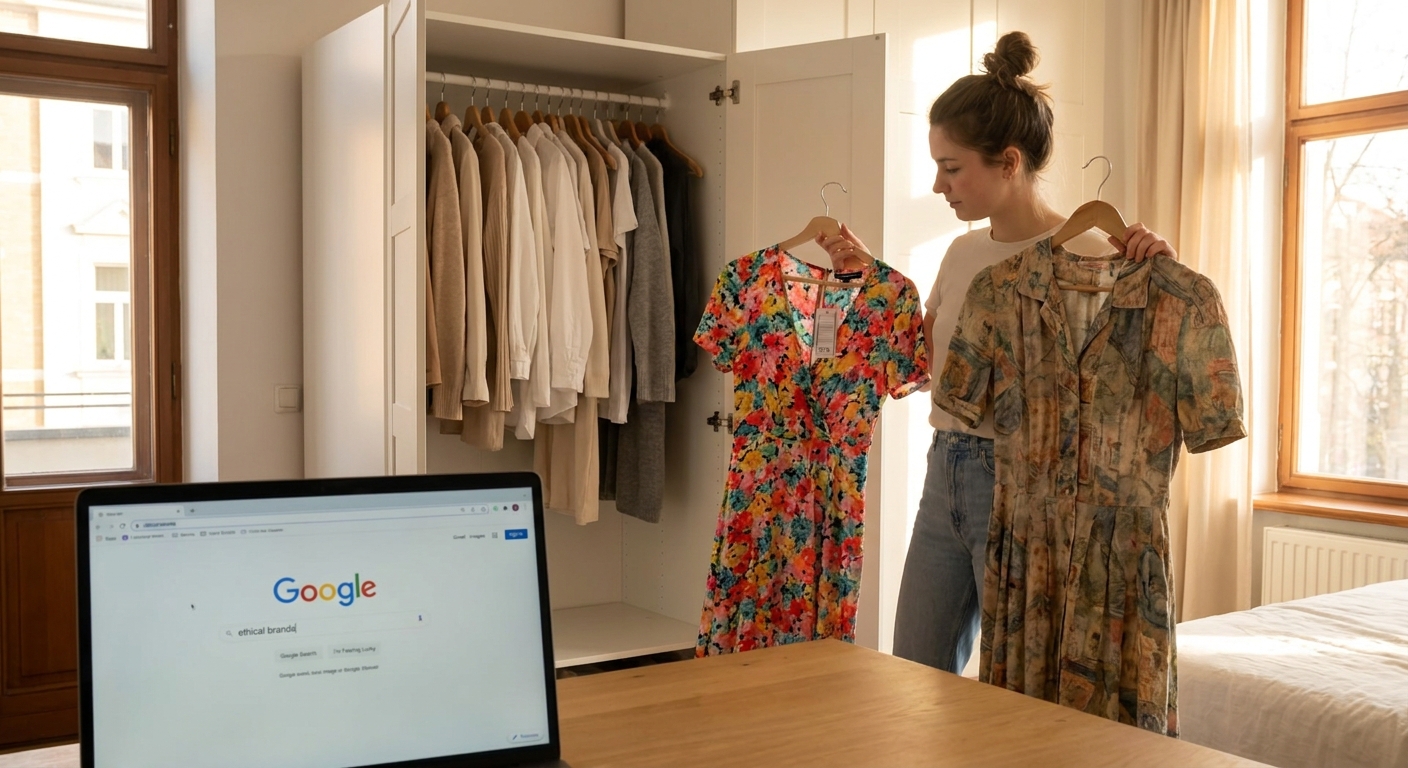
Instead of starting with “what to buy,” start with what you already have.
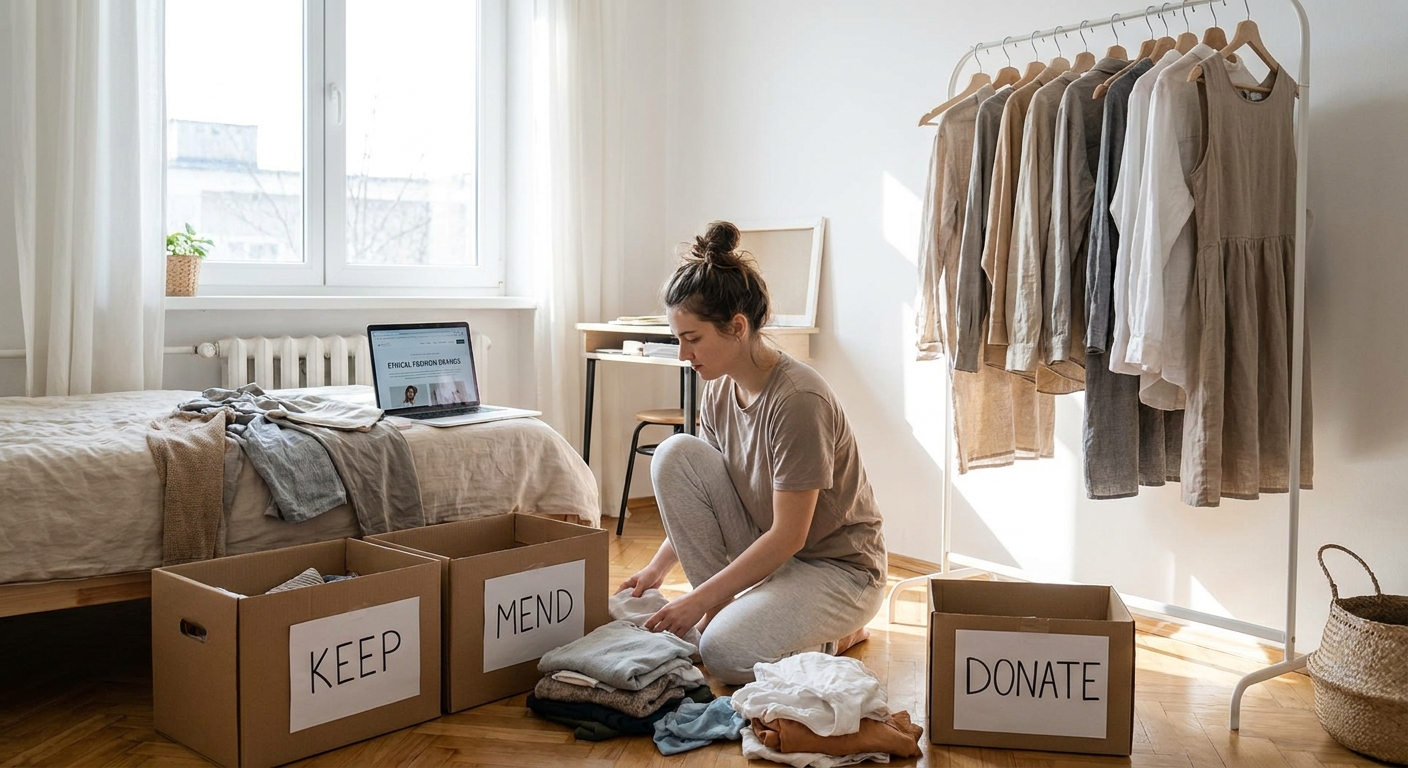
Pull everything out by category
Tops, bottoms, dresses, outerwear, loungewear, shoes.
Try things on quickly
Ask for each item: - Does it fit today’s body? - Do I feel okay or good in it? - Does it work with at least 2–3 other things?
Sort into four groups:
- Core: You wear it and like it. - Almost: Needs a small fix (button, hem, minor stain). - Wrong life: Doesn’t fit your actual lifestyle. - Nope: Doesn’t fit, feels bad, or is totally worn out.
Ethical angle: Extending the life of existing clothes is one of the lowest-impact moves you can make.
Step 3: Do the Low-Hanging Fixes
Take your Almost pile and tackle what’s realistic.
- Missing button? 5–10 minutes.
- Loose hem? A tailor can fix it for a small fee.
- Minor stain? Try a stain remover or dyeing the garment darker.
Even if you only rescue 3–5 pieces, that’s like getting free clothes.
If tailoring costs feel high, compare:
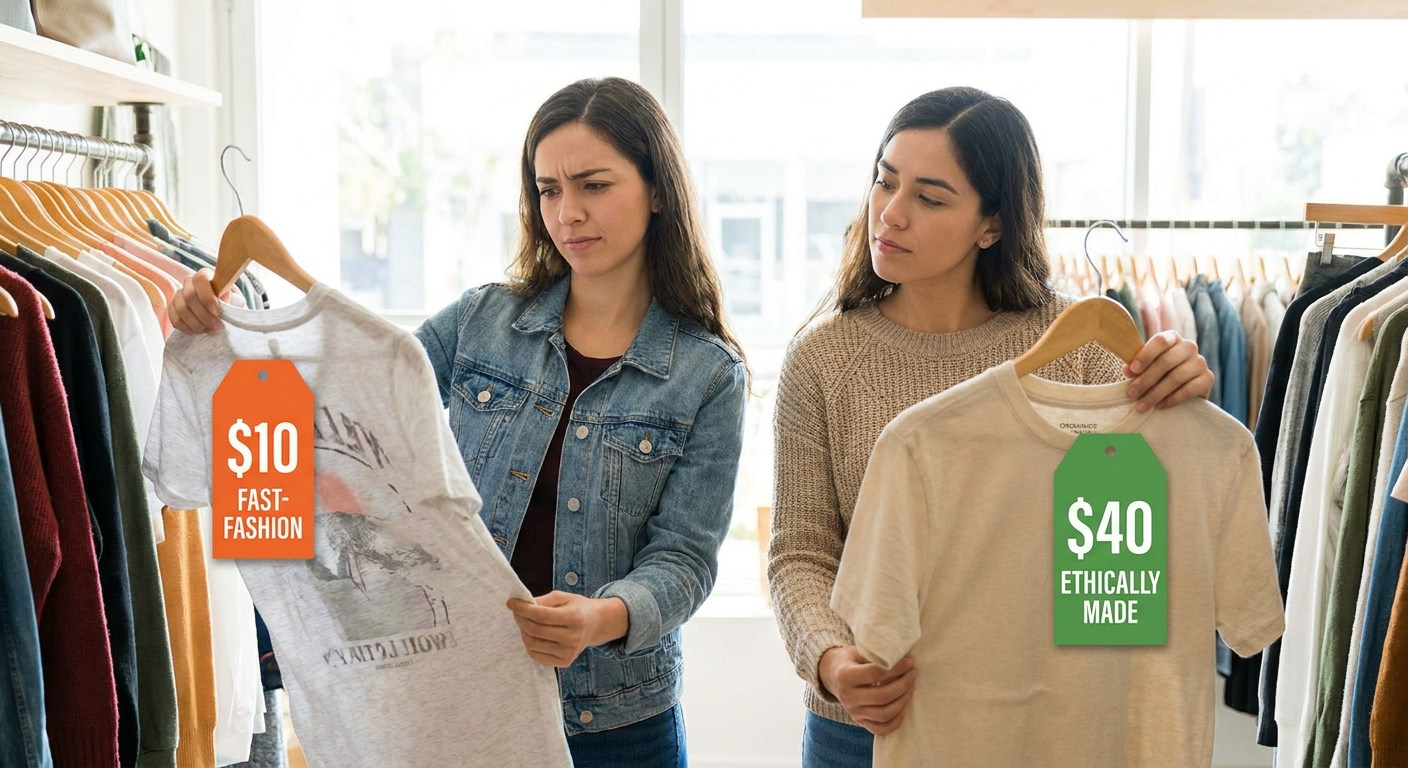
- New jeans: $40–$120.
- Tailor repairing your favorite pair: $10–$25.
Often cheaper—and more satisfying.
Step 4: Create a Simple “Enough List”
Instead of chasing some perfect capsule wardrobe number, define what’s enough for you.
Example (for one climate):
- 5–7 everyday tops
- 2–3 dressier tops
- 2 pairs of jeans
- 1–2 other pants/skirts
- 2–3 dresses or jumpsuits (if you wear them)
- 2 cozy layers (cardigan, sweater)
- 1 warm coat, 1 lighter jacket
Compare this to your Core + Almost piles:
- Where do you already have enough?
- Where are the true gaps?
Now your shopping list is grounded in reality, not vibes.
Step 5: Fill Gaps the Low-Impact Way
When you see a gap, run through this order of operations:
Can I do without it?
Maybe you “need” 3 pairs of jeans but function fine with 2.
Can I swap or borrow?
- Clothes swap with friends. - Borrow for one-off events.
Can I find it secondhand?
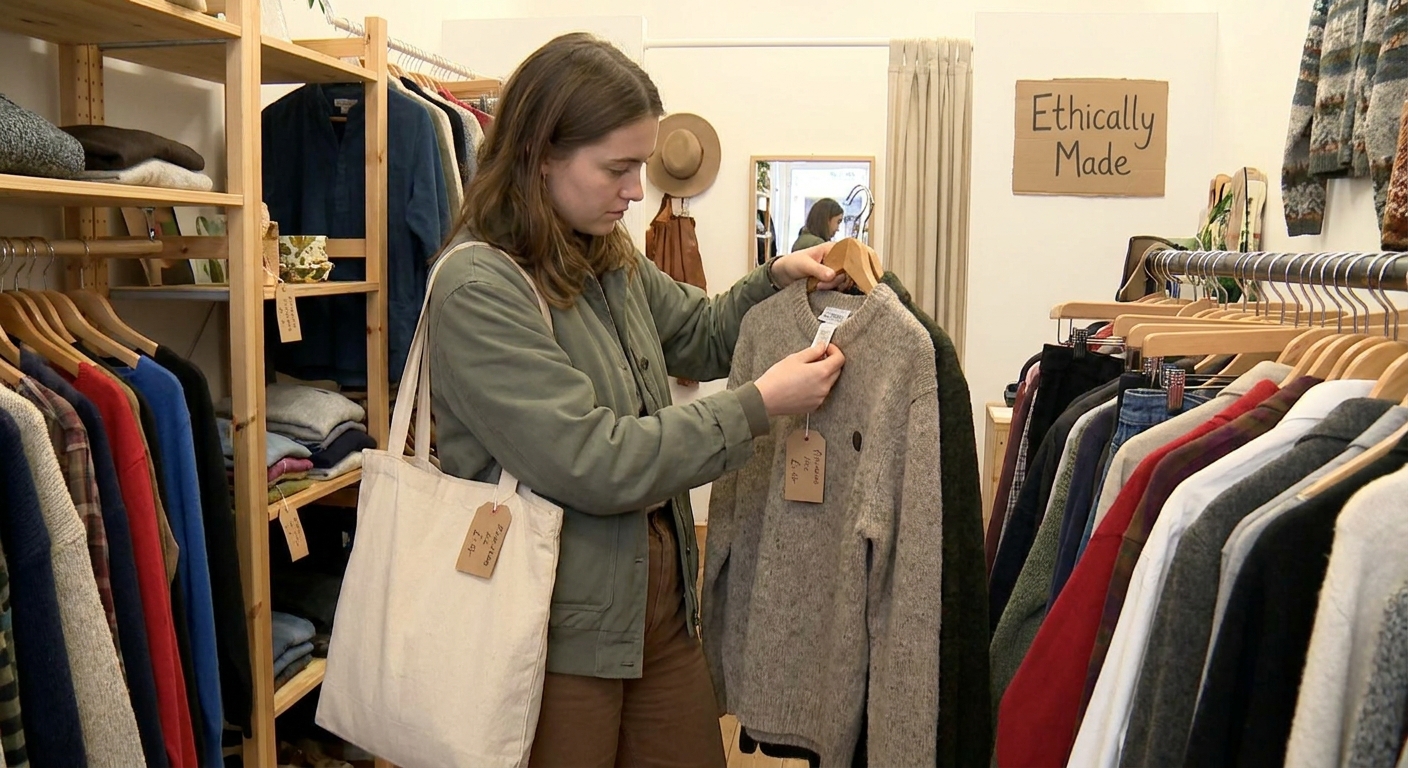
- Local thrift or consignment shops. - Apps and resale platforms.
If I need it new, can I choose a better option?
- Longer-lasting fabric and construction. - Ethical or smaller brands, if budget allows.
You’re not failing if you end up at Step 4; you’re succeeding by walking through Steps 1–3 first.
Step 6: Beginner-Friendly Fabric Guide (No Jargon)
When you do buy new (or secondhand), a few quick fabric choices can make your wardrobe more ethical and comfortable.
More Planet-Friendly (Generally)
- Organic or regular cotton: Everyday basics, breathable.
- Linen: Great for warm weather, durable.
- TENCEL™ / Lyocell / Modal: Soft, drapey, made from wood pulp in more controlled systems.
- Wool: Warm layers, can last for years, repairable.
Use Synthetics Strategically
- Good for rainwear, activewear, and stretch.
- Try to avoid them for items you wash constantly if you can, to reduce microplastic shedding.
No need to be perfect. Even choosing natural fibers for just your most-worn items is a big step.
Step 7: Put Your Wardrobe on “Maintenance Mode”
Once you’ve done the initial reset, you don’t need to obsess. Just adopt a few low-effort habits:
The 24‑Hour Rule
Wait a day before non-essential purchases. Most impulses fade.
One In, One Out (ish)
If your wardrobe feels full, rehome one item when a new one comes in.
Gentler Laundry
- Wash on cold most of the time. - Skip the dryer when you can. - Air out clothes between wears.
Seasonal 30-Minute Check-In
- At the start of a new season, quickly scan: what did I actually wear last season? - Anything you skipped every time might be ready for a new home.
This keeps your wardrobe evolving slowly in a more ethical direction, without drama.
Step 8: Expect (and Accept) Imperfection
Here’s what an ethical wardrobe journey looks like for most people:
- You still own and wear fast-fashion items you bought years ago.
- You sometimes buy from mainstream retailers because they have your size, your style, or your price point.
- You forget your 24‑hour rule and impulse-buy sometimes.
None of this cancels your efforts.
Instead of asking “Is my wardrobe ethical?” as a yes/no question, try:
- Is my wardrobe more aligned with my values than it was a year ago?
- Am I buying fewer things I regret?
- Do I feel more at peace when I open my closet?
If the answer is even a small yes, you’re on the right track.
A Gentle Final Check-In
As you move toward an ethical wardrobe, remember:
- You don’t owe social media an aesthetic.
- You don’t have to justify keeping clothes that make you feel good, even if they’re not perfectly sustainable.
- Caring is not all-or-nothing—every swap, every repair, every paused purchase matters.
Build slowly. Wear what you have. Upgrade when you can. Let your wardrobe be a living, imperfect project that grows with you.
And if sometimes you click ‘add to cart’ on a fast-fashion piece because life is messy and so are budgets—it’s okay. You’re still allowed to care.