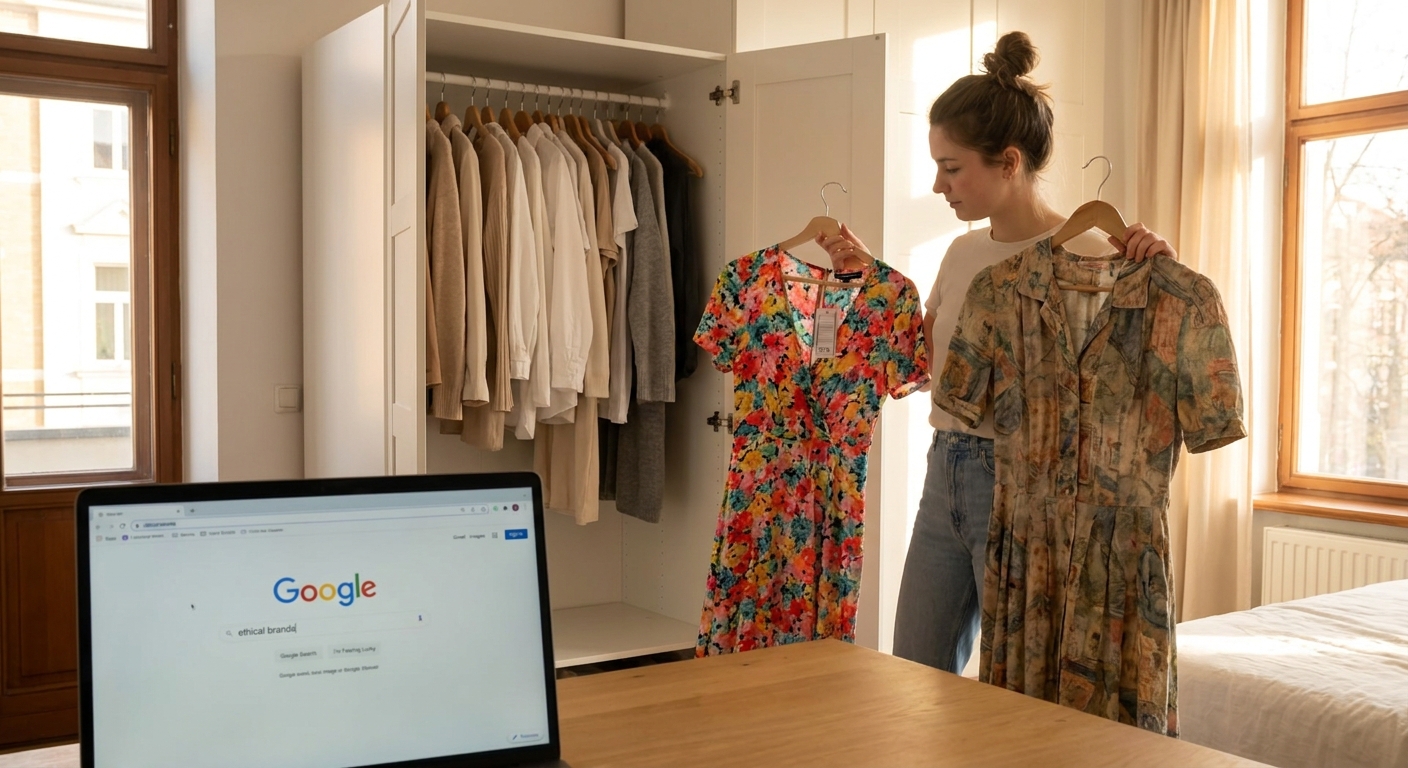
Ethical fashion can feel intimidating, like you need a minimalist capsule wardrobe, a big budget, and a moral halo just to get started. Let’s retire that myth.
Why Ethical Fashion Doesn’t Have to Be All‑or‑Nothing
You can care about the planet and still wear old fast‑fashion pieces you already own. You can want better working conditions for garment workers and occasionally buy something from a big-box store when that’s what fits your body or your wallet.
Ethical fashion is less about perfection and more about shifting the average of your choices over time.
This guide is for you if:
- You’re curious about ethical fashion but not ready to overhaul your closet.
- You’re on a budget and suspicious that “sustainable” is just code for “expensive.”
- You want practical steps, not shame.
What Does “Ethical Fashion” Actually Mean?
There’s no single official definition, but most people use “ethical fashion” to refer to clothes that:
- Are made by workers who are paid fairly and treated safely.
- Use materials and processes that minimize environmental harm.
- Are designed to last and be repairable.
Ethical fashion sits at the intersection of people, planet, and longevity. You don’t have to hit all three every time to be “good.” Aim for improving at least one.
Step 1: Start With What You Already Own
The most ethical item is almost always the one already in your closet.
Before buying anything new, try this:
Do a 20‑minute closet audit
- Pull everything out by category (tops, bottoms, outerwear, etc.). - Make three piles: love, maybe, nope.
Rediscover your favorites
Try styling your “love” pieces in new ways—Pinterest, Instagram, or just experimenting in front of a mirror.
Give your “maybe” pile a trial week
Put those items front and center in your closet and try to wear them within a week. If they still don’t feel right, they’re probably a “nope.”
Ethically offload your “nope” pile
- Offer to friends or a local Buy Nothing group. - Sell on secondhand apps for a little extra cash. - Donate thoughtfully (small, community-based organizations are usually better than overstuffed donation bins).
Impact-wise, using what you have beats almost any eco-label.
Step 2: Easy, Low‑Cost Swaps That Matter
You don’t have to suddenly switch to organic linen everything. Start with small moves that add up.
Swap 1: Fast-Fashion Impulse Buys → Secondhand Finds
Old habit: Buying a $15 trendy top on impulse.
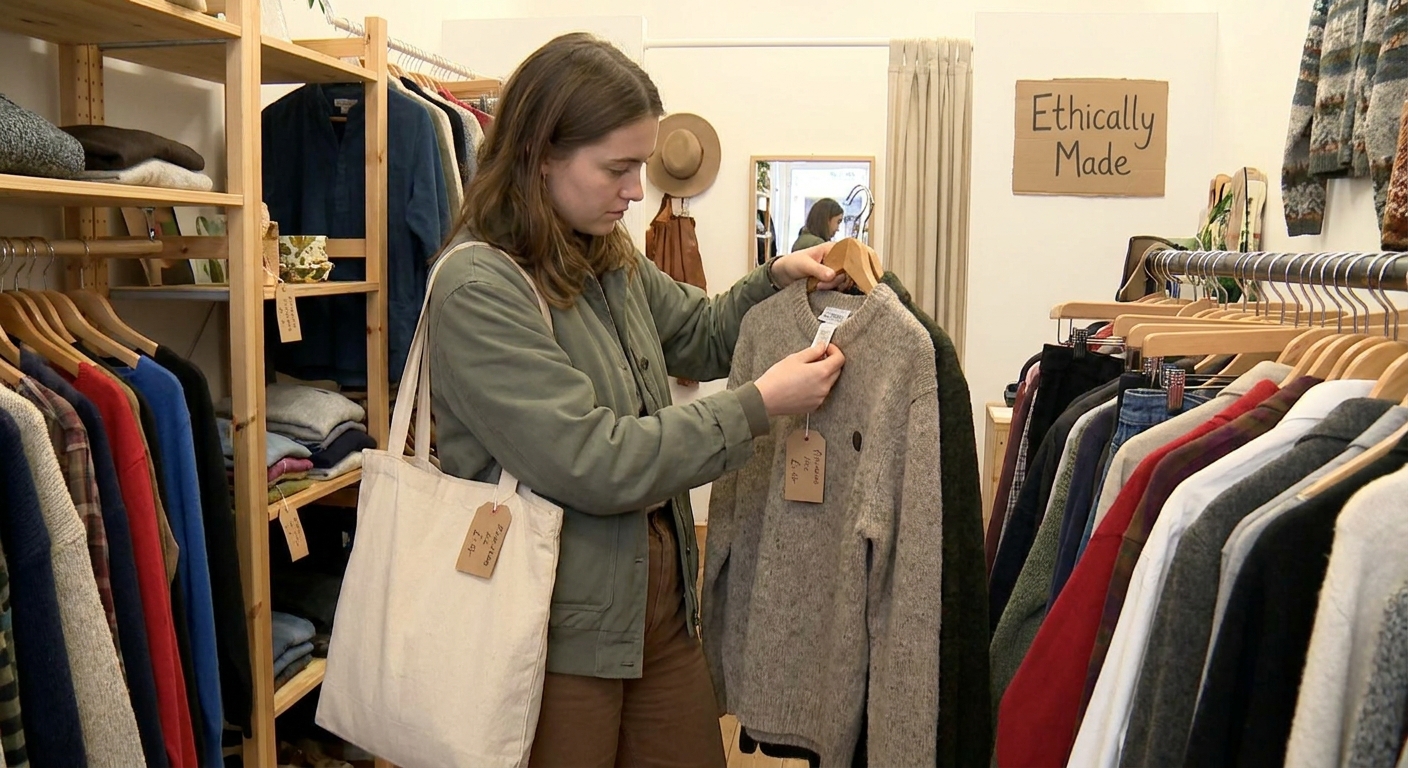
New option: Thrifting or using resale sites.
Cost comparison (example):
- Trendy fast-fashion blazer: $40–$70
- Thrifted blazer (often better quality): $10–$25
- Resale app blazer (good brand, gently used): $25–$45
You often get better fabrics and construction for the same—or less—money.
Swap 2: Synthetic Everything → A Few Natural-Fiber Basics
You don’t have to ban polyester, but you might:
- Choose a cotton, linen, or TENCEL™ tee instead of another polyester one.
- Pick wool or cotton knitwear that can be repaired over acrylic sweaters that pill quickly.
Natural fibers usually:
- Breathe better
- Last longer when cared for
- Shed fewer microplastics when washed
Swap 3: Washing After Every Wear → Smart Laundry Habits
Keeping clothes in circulation longer is ethical fashion’s secret weapon.
Try:
- Spot-cleaning minor stains instead of full washes.
- Airing out clothes between wears.
- Washing on cold and air-drying when possible.
Savings: You’ll reduce energy use (good for the planet) and extend the life of your clothes (good for your wallet).
Step 3: Set a Simple Shopping Rule (or Two)
Complicated systems fall apart. One or two simple rules can change a lot.
Here are some beginner-friendly options:
The 30‑Wear Rule
Before buying, ask: “Will I wear this at least 30 times?” - If you can’t imagine that many outfits or occasions, it’s probably not worth it.
1‑In, 1‑Out
For every new item you bring in, you commit to rehoming or recycling one.
The 24‑Hour Pause
If it’s not a true basic or emergency need, wait a day before checking out. - If you forget about it, you didn’t really want it.
Pick one rule to start. You can always layer more later.
Step 4: When You’re Ready to Buy “Ethical” New
Sometimes you genuinely need something new: workwear, underwear, shoes that fit. When that happens, you can lean into more ethical brands—without tripling your budget.
How to Spot Better Brands (Without a Degree in Supply Chains)
Look for brands that:
- Share their factories or regions of production publicly.
- Talk about worker safety, wages, and audits in specific terms.
- Use some certified materials (GOTS organic cotton, Fairtrade, etc.).
- Offer repair services or mention durability.
Vague language like “we care about the planet” with no details is a yellow flag.
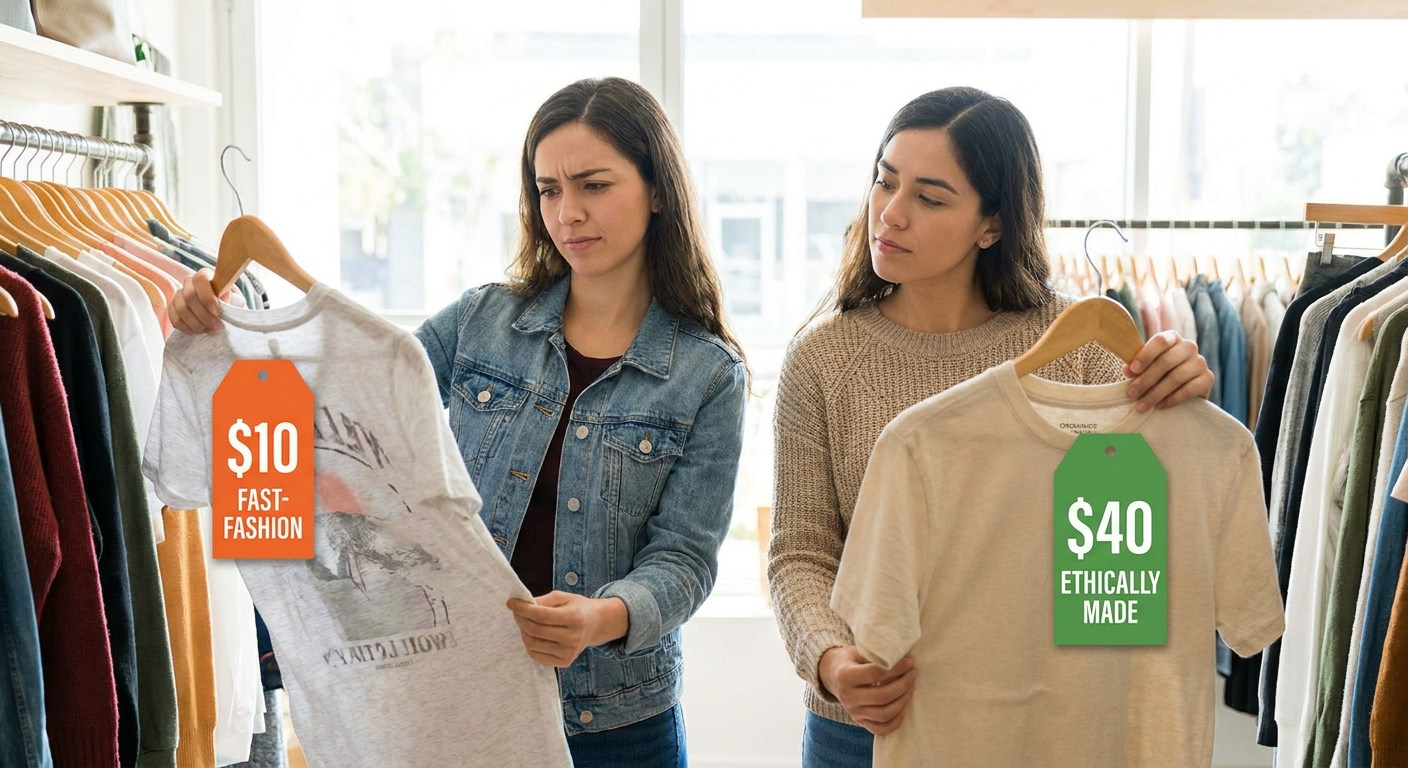
Cost Comparison: Fast Fashion vs. More Ethical Brands
Typical price ranges (these are averages, not rules):
- T-shirt
- Fast fashion: $5–$15
- Ethical brand: $25–$45
- Jeans
- Fast fashion: $25–$50
- Ethical brand: $90–$150
That’s a noticeable gap. But factor in cost per wear:
- $15 fast-fashion tee worn 10 times = $1.50 per wear.
- $35 ethical tee worn 70 times = $0.50 per wear.
If you can afford the upfront cost and buy fewer items overall, the math can work out in your favor.
If you can’t afford the upfront cost, that’s not a failure—it’s a structural issue. You’re not personally responsible for fixing the fashion industry with your bank account.
Step 5: Small Habits That Make a Big Difference
You don’t have to identify as a “fashion person” to care for your clothes well. Try:
- Learning one simple repair: sewing on a button, fixing a small hole, or using iron-on patches.
- Storing seasonal clothes properly: fold knits, hang structured items, keep things dry and clean.
- Using what you have: old T-shirts as cleaning rags, mismatched socks as dusting mitts.
Each worn-again item is one you didn’t have to buy.
Let Go of the “Perfectly Ethical” Myth
You will probably:
- Buy something less-than-ideal because it fits your body perfectly.
- Panic-buy a dress the night before an event.
- Keep wearing old fast-fashion pieces for years.
None of that cancels out your efforts.
Think of ethical fashion as a spectrum, not a switch. Every time you:
- Choose secondhand over new,
- Repair instead of replace,
- Pause instead of impulse‑buy,
…you’re nudging the system in a better direction.
You don’t have to be the person with the perfect capsule wardrobe and a color‑coded closet. You can just be a person who’s trying—slowly, imperfectly, and sustainably in more ways than one.
And honestly? That’s enough.