If you’ve ever browsed an “ethical” brand, seen a $120 price tag on jeans, and quietly closed the tab—this article is for you.
The Big Question: Is Ethical Fashion Only for People With Money?
There’s a real tension here:
- Ethical brands often do cost more upfront.
- Not everyone has the budget to pay double or triple.
- But fast fashion also has hidden costs—for workers, the planet, and sometimes your own wallet long-term.
Let’s unpack the real cost differences, without pretending money isn’t a factor.
What Are You Actually Paying For?
When you buy a piece of clothing, the price tag usually reflects some mix of:
- Labor (wages, safety, benefits)
- Materials (fiber quality, certifications)
- Production scale (small vs huge factories)
- Overheads (marketing, rent, shipping)
Fast fashion cuts prices by:
- Paying workers as little as legally—or illegally—possible.
- Using cheaper synthetic fabrics.
- Producing huge volumes in low-cost factories.
Ethical fashion tries to do the opposite: smaller batches, better materials, safer working conditions—and those things cost more.
But that’s not the whole story. Let’s break it down by category.
Cost Comparison: Everyday Basics
Imagine you need a new T‑shirt, jeans, and a hoodie.
Option A: Budget Fast Fashion
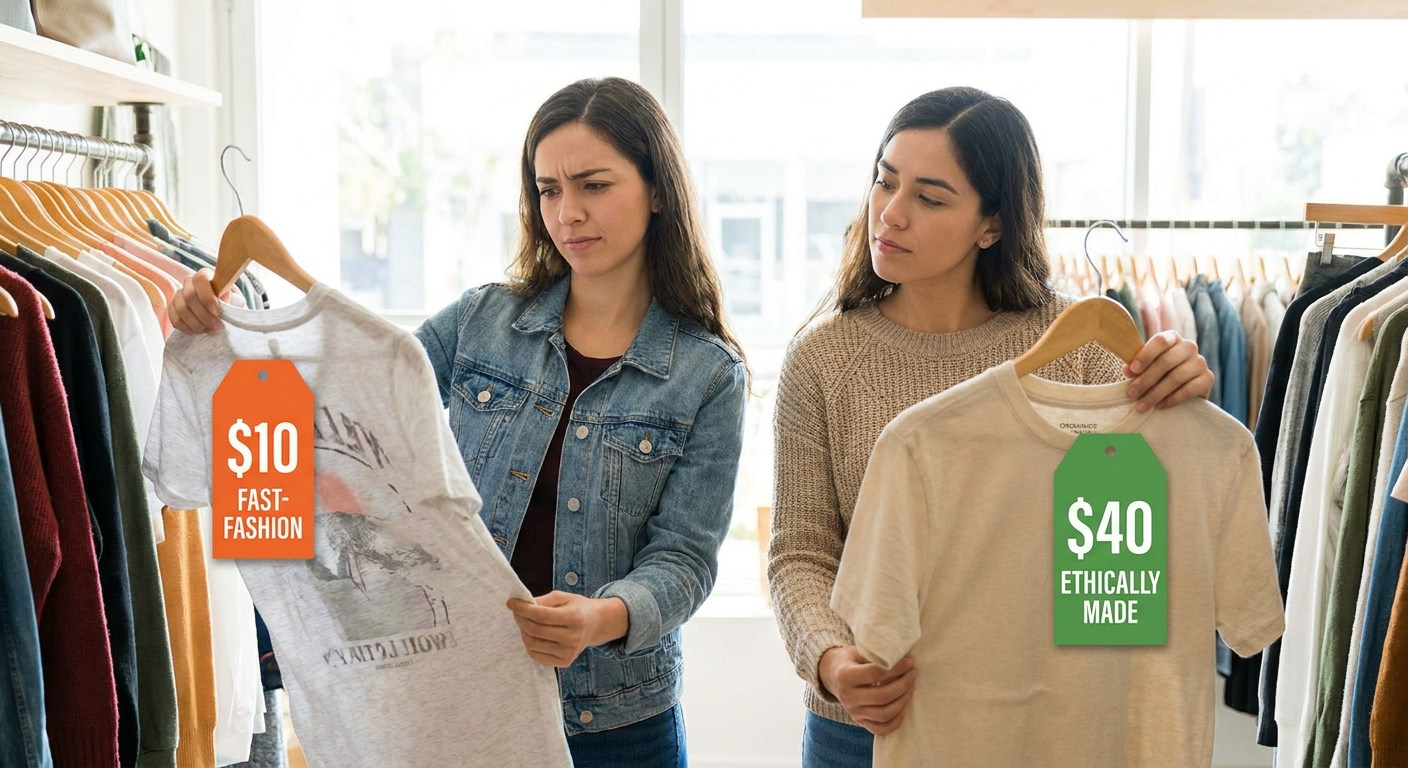
- T‑shirt: $10
- Jeans: $30
- Hoodie: $25
Total: $65
If each item lasts one season to a year of regular wear before stretching out, tearing, or feeling too worn to leave the house, you might rebuy roughly annually.
Assume 1 year of solid use per item:
- $65 / 1 year = $65 per year
Option B: Ethical Brand
- T‑shirt: $35
- Jeans: $110
- Hoodie: $90
Total: $235
If these last 3–5 years (very possible with good care), then:
- $235 / 3 years = $78 per year
- $235 / 5 years = $47 per year
In the best-case scenario (5 years), the ethical set costs less per year. In the worst-case (3 years), it’s a bit more.
The catch: You need the money upfront. And that’s where it gets complicated.
The Middle Path: Secondhand + Select Ethical Pieces
If full-price ethical brands feel out of reach, there’s a strong hybrid strategy:
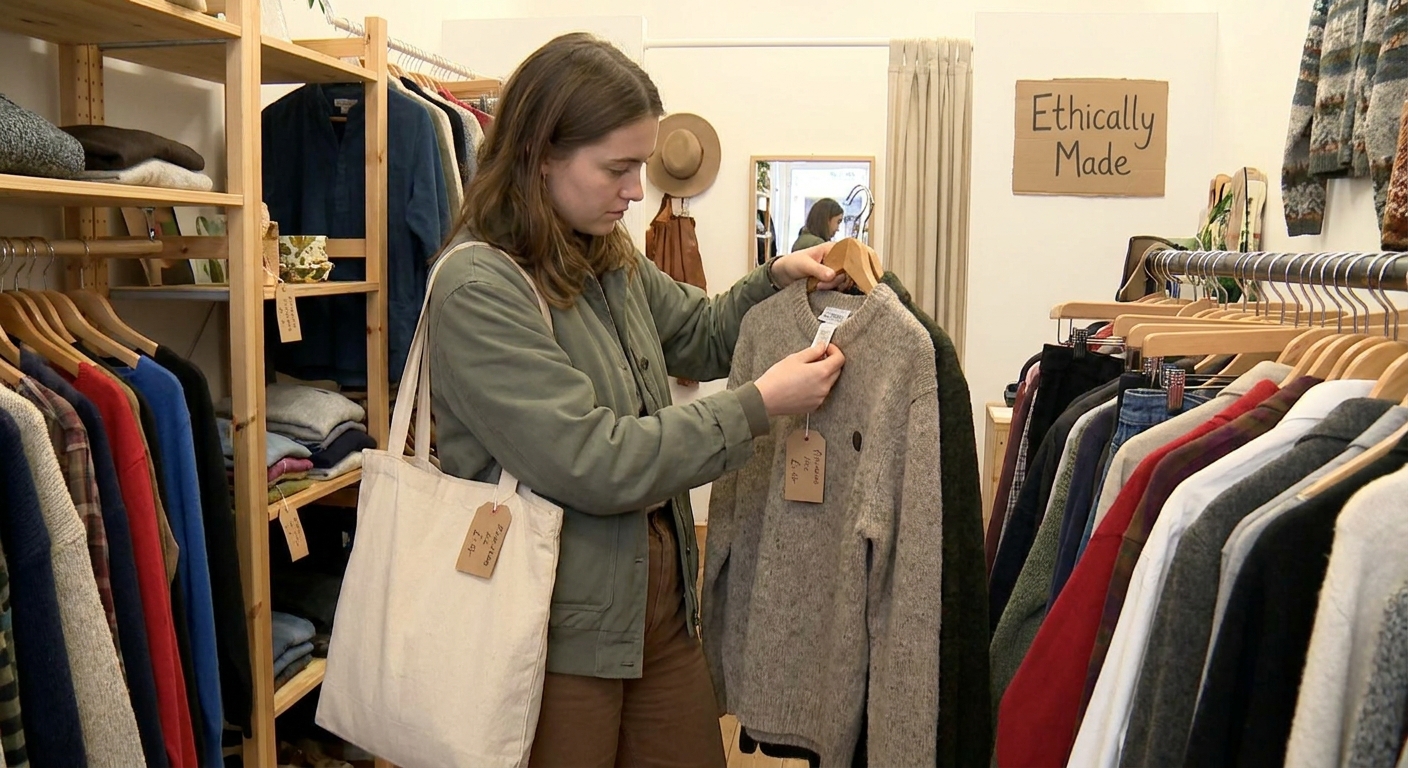
- Buy most pieces secondhand.
- Invest in a few key ethical items when you can.
Example mix:
- Thrifted jeans (good brand): $25
- Secondhand hoodie from resale app: $30
- New ethical T‑shirt: $35
Total: $90
If they last 2–4 years:
- $90 / 2 years = $45 per year
- $90 / 4 years = $22.50 per year
This is often the most affordable and ethical combo for many people: used where possible, ethical where it matters most or is hard to find secondhand (like underwear, basics you wear daily, or specific sizes).
When Fast Fashion Is the Only Real Option
Here’s the honest reality that doesn’t get said enough:
- If your budget is extremely tight, fast fashion may be your only option for certain items.
- If your size is under-served by ethical brands, you may depend on mainstream retailers.
- If you need something now (for work, school, the weather), you might not have time to hunt secondhand.
That doesn’t make you unethical. It makes you a person living in a system that needs changing.
What you can do, even when shopping fast fashion:
- Choose simpler, more classic pieces that you’ll wear longer.
- Avoid ultra-trendy items that will feel “over” in a month.
- Take care of what you buy so it lasts as long as possible.
You’re allowed to prioritize your survival and basic comfort over ideals.
Where Spending a Bit More Has the Biggest Impact
If you can occasionally spend more, some categories give you bigger ethical and practical returns:
1. Shoes
- We wear them constantly.
- Cheap shoes wear out quickly and can cause foot pain.
- Better-made pairs can be repaired (new soles, stitching).
Tip: Look for cobbler-friendly styles: leather uppers, stitched rather than purely glued construction.
2. Everyday Tops and Bottoms
These get the most wears. Spending more here beats splurging on a formal dress you’ll wear twice.
Ask: “Will I wear this at least once a week?” If yes, it’s a better candidate for investment.
3. Outerwear
Quality coats and jackets can last 5–10+ years. Buying one better coat instead of a new cheap one every winter is often cheaper long-term and kinder to the planet.
Small Budget, Big Intent: Practical Strategies
You can be intentional, even on a tight budget:
- Set a monthly fashion cap (e.g., $30) and stick to it. This automatically reduces impulse buys.
- Shop secondhand first. Check thrift, consignment, and apps before buying new.
- Prioritize versatility. One black blazer you can wear 50 ways is better than five ultra-specific tops.
- Delay big purchases. If you want a $120 ethical blazer, give yourself 30 days. If you still want it and can afford it, you’re less likely to regret it.
- Use cost-per-wear math.
- $120 blazer worn 100 times = $1.20 per wear.
- $40 blazer worn 10 times = $4 per wear.
This isn’t about justifying every purchase, but about being honest with yourself.
The Hidden “Cost” of Perfection
There’s another cost in this conversation: mental load.
If you’re stressing over every purchase, feel ashamed about past buys, or think you’re a bad person every time you walk into a mall—that’s not sustainable either.
More helpful questions than “Is this 100% ethical?” might be:
- Is this better (for people/planet/me) than my usual choice?
- Will I wear and care for this long-term?
- Can I afford this without hurting my financial stability?
If the answers feel grounded and kind to both you and the planet, that’s a good direction.
So… Can Ethical Fashion Be Affordable?
Yes, partly—but not perfectly.
Affordable ethical fashion is most realistic when you:
- Rely heavily on secondhand.
- Buy less overall.
- Reserve new ethical purchases for high-wear items.
- Let go of the idea that you must be perfectly “clean” in your choices.
Fast fashion might still show up in your closet. That doesn’t erase the good you’re doing.
You’re allowed to be someone who cares about garment workers and still wears old fast-fashion jeans you bought years ago. You’re allowed to mix thrifted basics with the occasional high-street item when that’s what fits your body and your budget.
Ethical fashion isn’t a club with a membership fee. It’s a direction you can walk toward, step by step, in shoes you can actually afford.