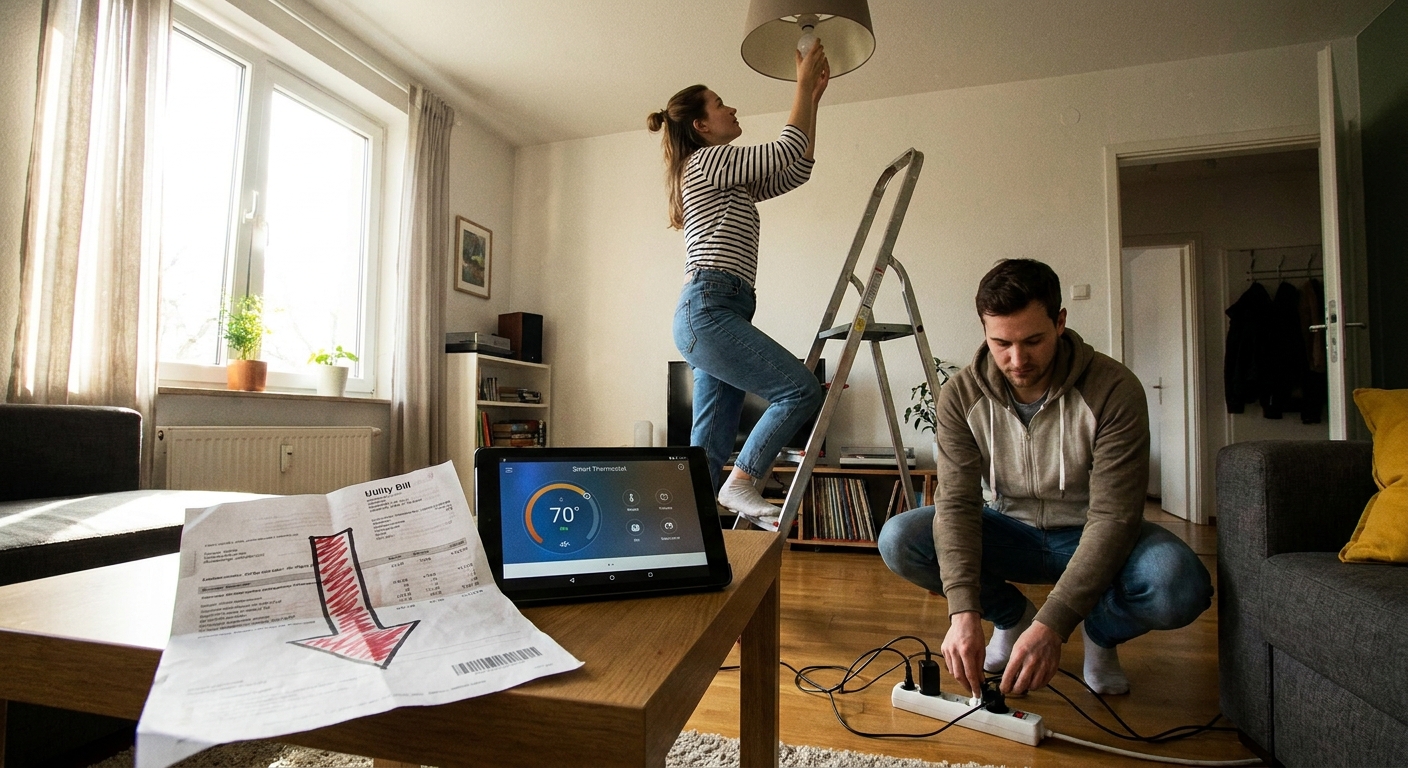
If you’ve ever looked at your utility bill, felt slightly faint, and then opened your laptop to search “how to save energy”… only to get overwhelmed and do nothing, this guide is for you.
Why Energy Saving Doesn’t Have to Be All or Nothing
You don’t have to live in the dark, unplug your fridge, or become the perfect eco hero. You just need a few simple, realistic shifts that add up over time.
Think of this as advice from a friend who uses a clothesline sometimes, but also forgets their reusable bag at the store often. Progress over perfection.
Step 1: Know Where Your Energy Actually Goes
Before changing anything, it helps to know the big culprits. In a typical home, energy use roughly breaks down like this (varies by climate and home type):
- Heating & cooling: 40–50%
- Water heating: 15–20%
- Appliances & electronics: 15–20%
- Lighting: 5–10%
- Cooking & other: 5–10%
So instead of stressing about whether your phone charger is still plugged in, it’s more effective to focus on heating, cooling, hot water, and big appliances first.
Step 2: Easy Wins That Take Less Than 10 Minutes
Let’s start with the changes that don’t require tools, money, or a personality transplant.
1. Tweak Your Thermostat (the Big One)
- Winter: Aim for 19–20°C (66–68°F) when you’re home and awake, 17–18°C (62–64°F) when asleep or away.
- Summer: Aim for 25–26°C (77–79°F) when home, a few degrees warmer when away.
Every degree you adjust can save around 1–3% on your heating or cooling costs over a season.
2. Use the “Off” and “Eco” Buttons You’ve Been Ignoring
- Turn off lights when you leave a room for more than a few minutes.
- Use eco mode on your dishwasher and washing machine when possible.
- Hit sleep mode on your laptop instead of leaving it fully on all day.
These feel tiny, but done daily they become automatic—and they cost nothing.
3. Close the Gaps (No Tools Edition)
- Close doors to unused rooms when heating or cooling.
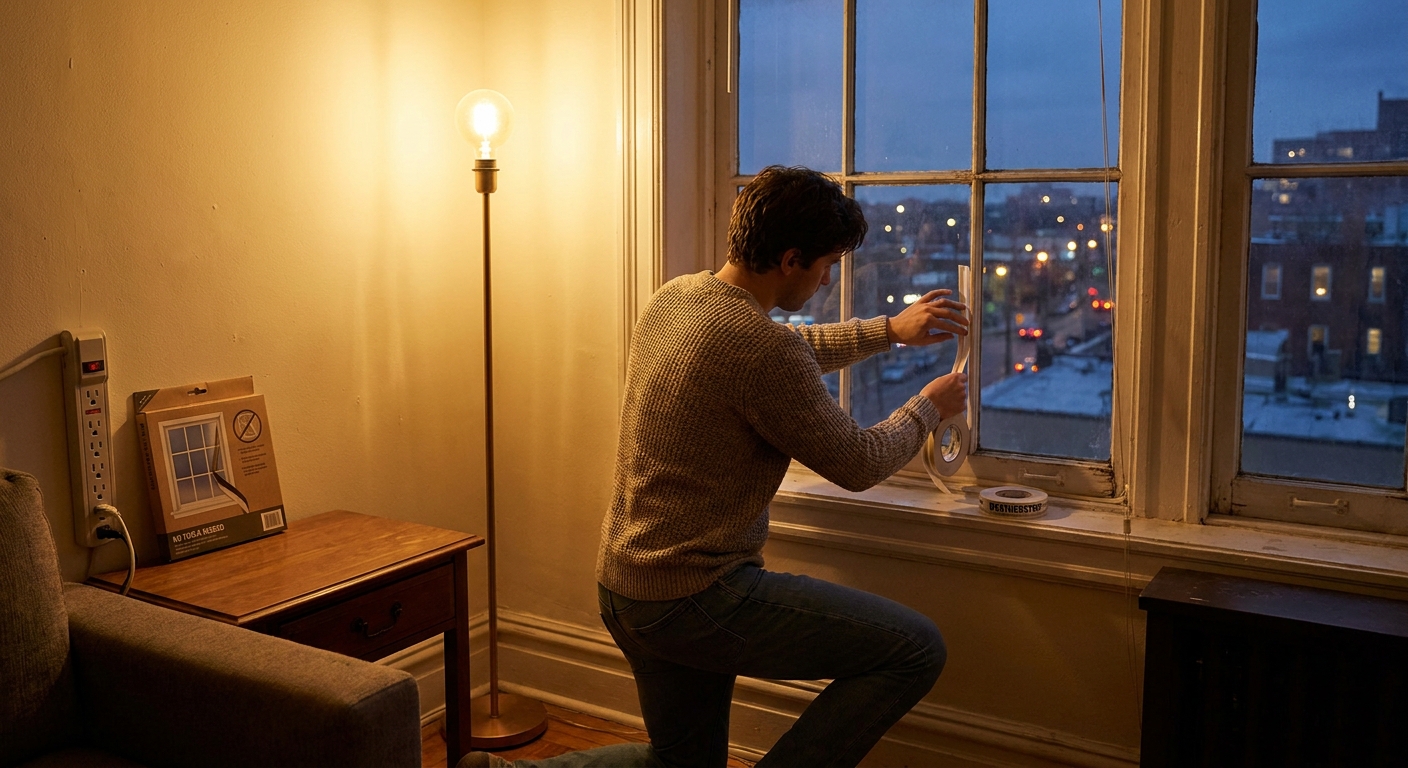
- Use draft stoppers or rolled towels at the bottom of leaky doors.
- Close curtains at night in winter; close sun-facing blinds in summer days.
You’re basically giving your heating or cooling system a smaller, easier job.
Step 3: Practical Swaps With Real Cost Comparisons
You don’t need to replace everything at once. Start with changes that pay you back.
Swap 1: Old Bulbs → LEDs
- Upfront cost: About $2–$5 per LED bulb.
- Energy use: LEDs use up to 80–85% less energy than old incandescent bulbs.
- Lifespan: LEDs can last 10–20 times longer.
- A 60W incandescent running 3 hours/day costs roughly $8–$10/year in electricity (at $0.15/kWh).
- An equivalent LED (9W) doing the same costs around $1.20–$1.50/year.
Example:
If you replace 10 bulbs, you might save around $70–$90 per year, and the bulbs can last a decade.
Beginner approach:
- Replace bulbs as they burn out instead of all at once.
- Prioritize most-used lights: kitchen, living room, hallways.
Swap 2: High-Heat Washes → Lower Temperatures
- Washing clothes at 30°C/86°F instead of 60°C/140°F can cut the energy use of a load by up to half.
- Hot wash (60°C): ~0.9 kWh → $0.13–$0.18 per load.
- Cool wash (30°C): ~0.4–0.5 kWh → $0.06–$0.08 per load.
Cost snapshot:
If you do 4 loads/week, that’s roughly $15–$25/year in savings with almost zero effort.
Beginner approach:
- Use warm or cold for everyday clothes.
- Save hot washes for towels, bedding, and heavily soiled items.
Swap 3: Standby → Smart Power Strips
Some electronics keep sipping power even when “off.”
- TV + sound system + game console + streaming device on standby can use 20–50W all the time.
Over a year, that might be $25–$50 in silent standby costs.
Practical fix:
- Use a smart power strip (around $20–$30).
- It cuts power to peripherals when you turn off the main device.
- Start with one power strip for your TV setup or home office.
Beginner approach:
Step 4: Bigger Moves (When You’re Ready)
You don’t need to do these tomorrow. Think of them as “someday” options that can really shift your bills.
1. Upgrade the Fridge When It Truly Dies
A 15–20-year-old fridge can use 2–3 times more energy than an efficient new model.
- A very old fridge might use 800–1,200 kWh/year ($120–$180).
- A modern efficient fridge: 300–500 kWh/year ($45–$75).
Over 10 years, that’s $700–$1,000 in potential savings, not counting food staying fresher.
Honest note:
- Don’t toss a working fridge just for the eco kudos if you can’t afford it.
- But when it fails, choose the highest efficiency rating you reasonably can.
2. Consider a Programmable or Smart Thermostat
If your schedule is somewhat predictable, a programmable or smart thermostat can:
- Lower heating/cooling automatically when you’re asleep or away.
- Save 8–15% on heating and cooling if used correctly.
Cost: $40–$250 depending on features.
Beginner approach:
- Use a simple programmable model with a basic schedule.
- Adjust as you learn what’s comfortable.
Step 5: “I Can Start This Week” Checklist
Pick 3–5 things from this list to try over the next week:
- [ ] Lower/raise your thermostat by 1–2 degrees.
- [ ] Switch 3 most-used bulbs to LEDs.
- [ ] Do laundry at 30°C/86°F instead of hot for everyday loads.
- [ ] Turn off lights when you leave a room for >10 minutes.
- [ ] Use a power strip for your TV or computer setup.
- [ ] Close doors and use a draft stopper in one leaky room.
- [ ] Use eco mode on your dishwasher or washing machine.
You don’t need to check all the boxes. Just a few is a real win.
Letting Go of Perfection
You will:
- Forget to turn off a light.
- Run the dryer on a busy week.
- Crank the heat or AC on a rough day.
That doesn’t erase the good you’re doing.
Energy saving is like building a muscle: it feels awkward at first, gets easier with repetition, and doesn’t require you to be perfect to be strong.
You’re allowed to care about the planet and your comfort and your budget. Every step you take—no matter how small or inconsistent—still moves you in the right direction.
And if today’s step is just reading this and changing one lightbulb? That absolutely counts.