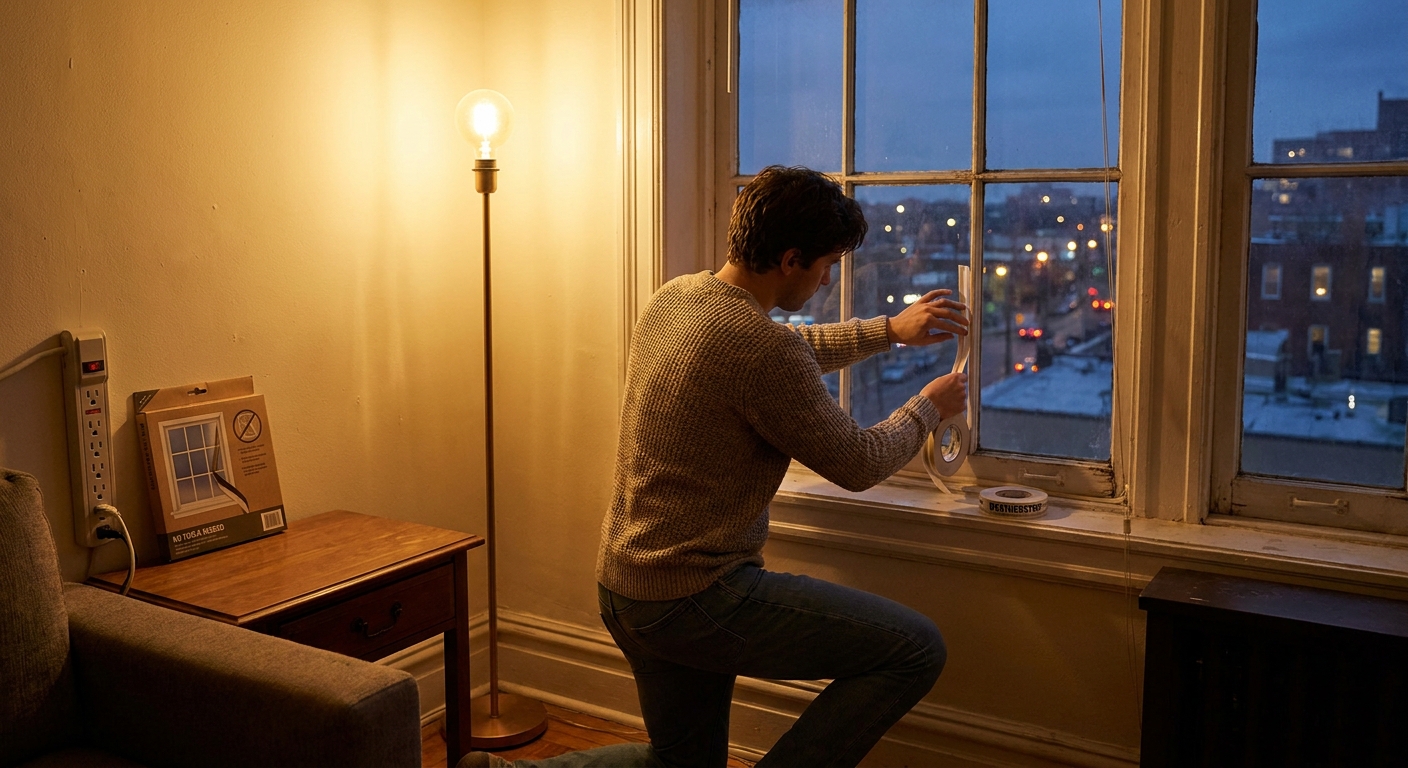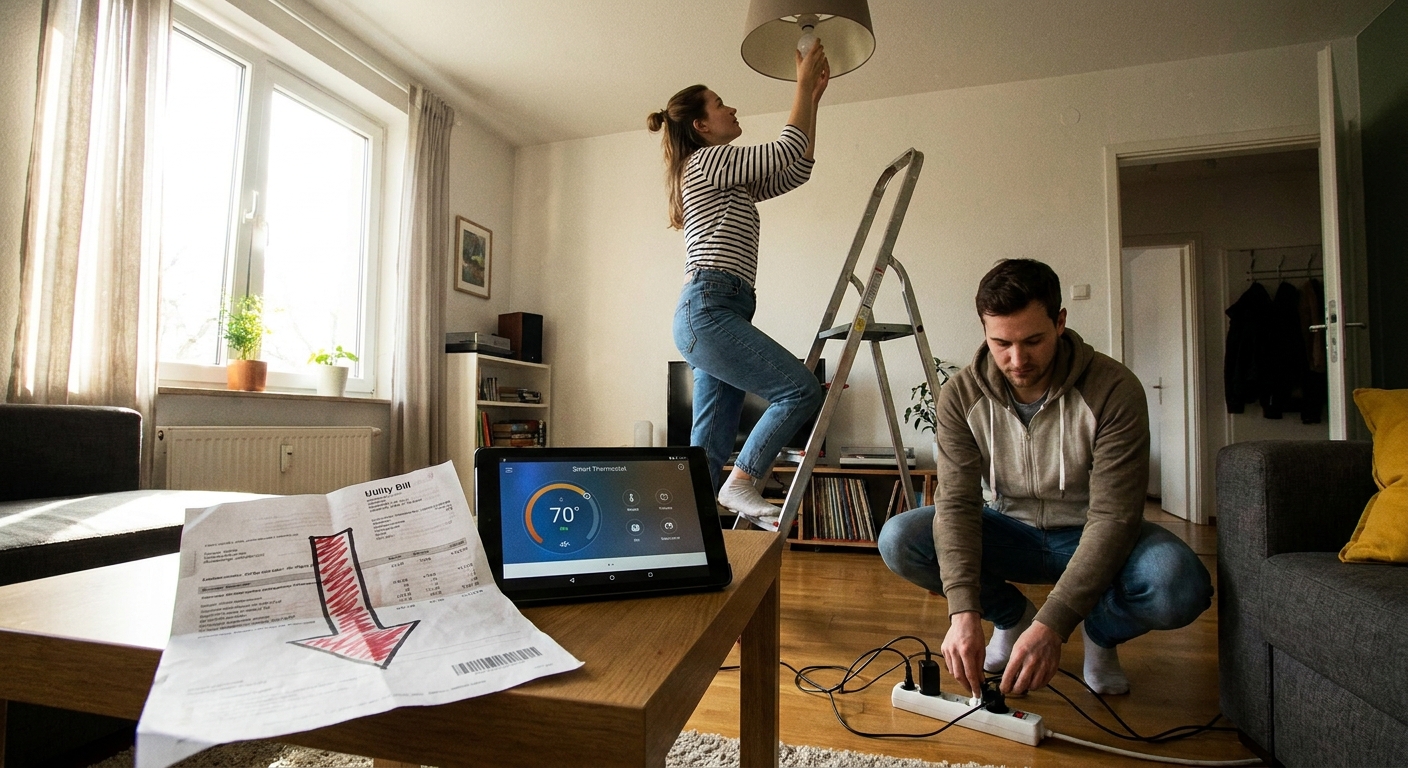
Solar panels, heat pumps, triple-glazed windows—they’re amazing, but also expensive and out of reach for many of us, especially if we rent.
Real Talk: You Don’t Need Solar Panels to Start Saving Energy
The good news: you can still make real, measurable reductions in energy use with simple, low-effort swaps. No contractor, no permits, no Instagram-perfect eco home required.
Think of this as your starter pack of energy-saving moves that fit into a busy, real life.
1. Swap the Worst-Offending Bulbs First
What to do
- Replace the 5–10 most-used bulbs in your home with LEDs.
- Kitchen
- Living room
- Hallways
- Bathroom
Prioritize:
Why it matters
- LEDs use up to 80–85% less energy than incandescent bulbs.
- They last 10–20 times longer.
Quick cost snapshot
- Cost: $2–$5 per bulb.
- Potential savings: $8–$9/year per bulb used 3 hours/day.
If you replace 10 bulbs, you could save around $80–$90 every year.
2. Tame the Thermostat (Without Freezing or Melting)
What to do
- Nudge your thermostat by 1–2°C (2–3°F):
- Cooler in winter, warmer in summer.
- Use blankets, socks, or a fan to stay comfortable.
Why it matters
Heating and cooling often account for 40–50% of home energy use.
Every degree of adjustment can save about 1–3% on that part of your bill.
Beginner tip
- Try it for a week first. If it feels okay, keep it. If not, adjust halfway.
3. Use Your Dishwasher (Yes, Really)—on Eco Mode
What to do
- Run the dishwasher only when it’s full.
- Use eco or energy saver mode.
- Skip the heated dry if you can (open the door to air-dry instead).
Why it matters
Modern dishwashers can use less water and energy than washing by hand—especially if you’re the “water running the whole time” type.
- Eco mode may take longer but uses lower temperatures and less energy.
Cost comparison (per load, typical ranges)
- Regular cycle: ~1–1.5 kWh → $0.15–$0.23.
- Eco cycle: ~0.7–1 kWh → $0.10–$0.15.
Multiply that by a few loads a week and it adds up over a year.
4. Wash Clothes Cool, Dry Smarter
What to do
- Wash most loads at 30°C/86°F or cold.
- Air dry some items instead of using the dryer.
Why it matters
- Heating water dominates the energy use of a wash cycle.
- The dryer is one of the most energy-hungry appliances.
Simple strategy
- Cold wash for everyday clothes.
- Save hot washes for towels, bedding, or heavily soiled items.
- Air dry once a week, or just items that dry fast (t-shirts, activewear).
Even air drying half your loads could save $36–$54/year depending on local rates.
5. Kill the “Standby Vampire” in Your Living Room
What to do
- Plug your TV, game console, streaming box, and sound system into a single power strip.
- Turn off the strip when you’re not using the setup.
Why it matters
Many electronics use power in standby mode.
- A TV + streaming device + game console on standby can quietly draw 20–50W.
- Over a year, that can mean $25–$50 in wasted electricity.
Beginner-friendly tip
- Place the strip where it’s easy to reach.
- Or use a strip with a master switch that turns off everything when the TV is off.
6. Use Curtains and Blinds Like Free Insulation
What to do
- Winter: Open curtains during sunny hours to warm rooms, close them at night to keep heat in.
- Summer: Close blinds/curtains on sun-facing windows during the hottest part of the day.
Why it matters
You’re helping your home naturally regulate temperature so your heater or AC doesn’t have to work as hard.
Rough impact
- Good curtain use can shave a few percent off heating/cooling costs, especially in homes with large windows.
It’s not glamorous, but it’s genuinely effective.
7. Cut Shower Time (Just a Little)
What to do
- Reduce your shower by 2–3 minutes.
- If you’re up for it, install a water-efficient showerhead.
Why it matters
Hot water is a major energy user, especially with electric or gas water heaters.
Cost snapshot
A 10-minute hot shower can use:
- 50–100 liters (13–26 gallons) of water.
- Enough energy to cost $0.20–$0.60, depending on your heater and rates.
Cutting 3 minutes off a daily shower can save you dozens of dollars a year just from reduced hot water use.
8. Cook With Lids, Batch, and Carryover Heat
What to do
- Use lids on pots to boil water and cook faster.
- Cook larger batches and reheat instead of making multiple small meals.
- Turn off the oven/stove a few minutes early and let residual heat finish the job.
Why it matters
Kitchen energy isn’t usually the biggest slice of your bill, but the changes are easy and free.
Extra-credit swap
- Use a microwave or toaster oven for reheating small portions instead of your full-sized oven—they can use significantly less energy.
9. Choose Energy-Smart Settings on Your Fridge and Freezer
What to do
- Set your fridge to around 3–5°C (37–41°F).
- Set your freezer to around -18°C (0°F).
- Don’t overstuff or block airflow.
Why it matters
Too cold = wasted energy. Too warm = food safety risk. You want the sweet spot.
Simple habits
- Let hot food cool slightly (but not for hours) before refrigerating.
- Defrost your freezer if ice buildup exceeds ~5 mm (for older non-frost-free models).
A well-maintained, correctly set fridge/freezer uses less energy and keeps food fresher, reducing waste.
10. Pick One “Bigger” Swap for When Something Dies
You don’t need to replace working appliances just to be eco-friendly. But when they do need replacing, you can choose more efficient options.
Good upgrade candidates
- Fridge
- Washing machine
- Dishwasher
- Air conditioner
What to look for
- Energy labels (Energy Star, EU energy labels, or local equivalents).
- Lower kWh/year ratings on the product info.
Even a modest bump in efficiency can add up to hundreds of dollars saved over the appliance’s lifetime.
A Realistic Mindset: Some Days You’ll Just Hit “Start” and Walk Away
You won’t:
- Time every shower.
- Air-dry every load of laundry.
- Always remember to hit the power strip.
And that’s okay.
Instead of aiming for a spotless record, aim for a new normal:
- Cooler laundry most of the time.
- Shorter showers most days.
- LEDs in most fixtures.
- Thermostat a bit more modest.
These “mostly” habits will quietly lower your bills and your footprint.
You’re allowed to be someone who cares about energy saving and sometimes takes a long hot shower after a rough day. You haven’t failed the planet—you’re just human, doing better where you can.
Pick 2–3 swaps from this list to start. Let them become second nature. Then come back for more when you’re ready.