If you rent, the usual energy-saving advice—insulate your attic, install solar, upgrade windows—can feel like a bad joke. You’re not about to remodel someone else’s property.
Yes, You Can Save Energy Without Owning the Place
But you still pay the bills. You still care about your impact. And you still deserve a home that’s comfortable and efficient.
This guide is for renters (and anyone in temporary housing) who want practical, reversible ways to use less energy—without risking their security deposit.
Step 1: Spot Your Biggest Energy Drains as a Renter
You might not know your landlord’s insulation strategy, but you can still guess where energy goes:
- Heating and cooling: Probably the biggest slice, especially in older buildings.
- Hot water: Showers, washing dishes, laundry.
- Lighting and appliances: Lights, fridge, TV, etc.
You can’t rip out the furnace, but you can influence how hard it has to work.
Step 2: Low-Drama Draft-Proofing (All Reversible)
Old rentals = charming ceilings + uncharming drafts. You can’t replace doors and windows, but you can block the worst leaks.
1. Door Draft Stoppers
- Use fabric draft stoppers, foam tubes, or even a rolled towel.
- Focus on doors that lead outside or to unheated spaces.
Cost: $5–$20 each.
Impact: A warmer room in winter, cooler in summer, less load on your heater/AC.
2. Temporary Weatherstripping
- Use self-adhesive foam strips around leaky window and door frames.
- They peel off when you move out or when the season changes.
Cost: Around $10–$20 for enough to do several windows/doors.
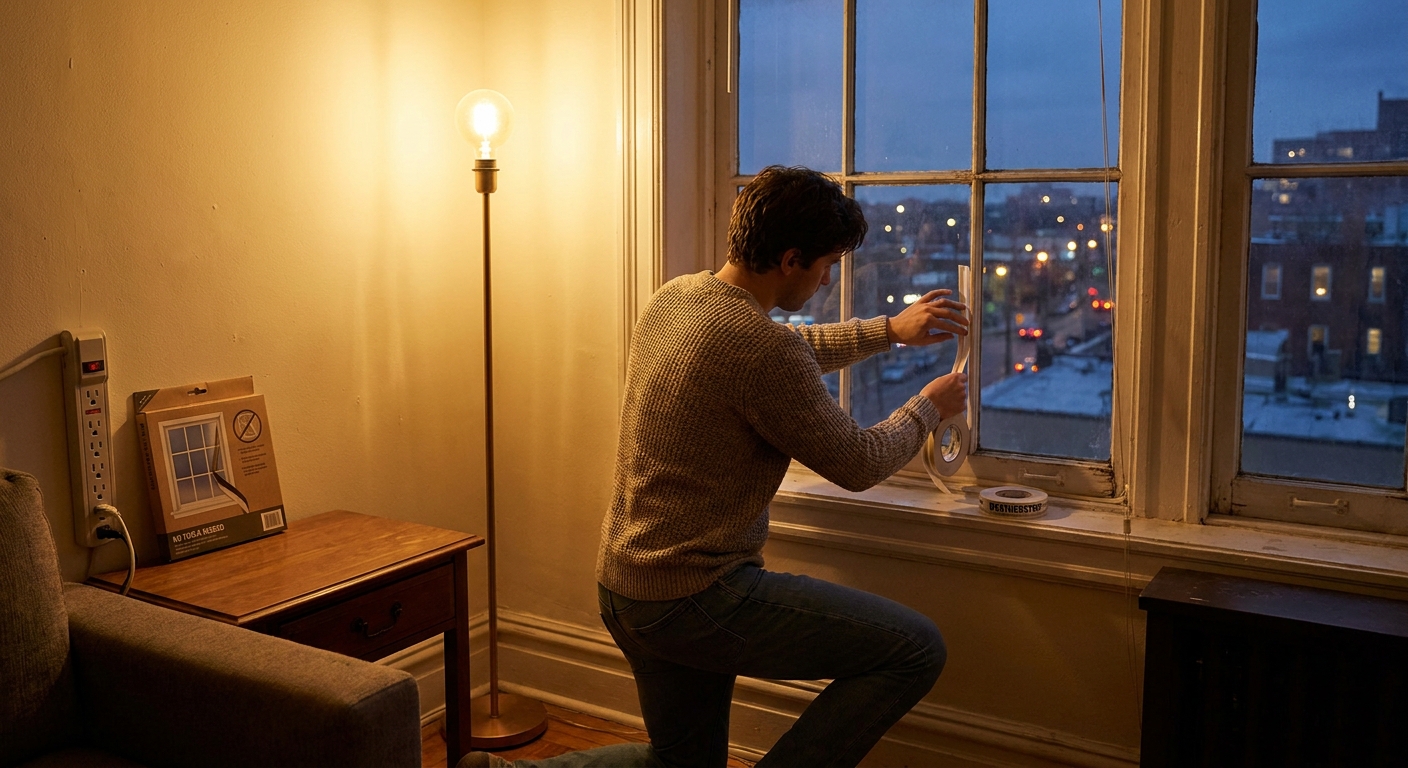
3. Removable Window Insulation Film
- Clear plastic film applied with double-sided tape and a hairdryer.
- Creates an extra layer of still air = better insulation.
Cost: $15–$25 for a kit that covers multiple windows.
Bonus: Comes off with no damage if installed carefully.
Step 3: Use Soft Furnishings as Secret Energy Tools
Your decor can actually help your energy bills.
1. Thick Curtains or Thermal Drapes
- In winter:
- Open curtains on sunny days for warmth.
- Close them at night to trap heat.
- In summer:
- Close curtains on sun-facing windows during the hottest part of the day.
Even regular heavy curtains can reduce heat loss or gain around windows.
2. Rugs on Bare Floors
- Wood, tile, or laminate can feel cold and leak heat.
- Rugs add a layer of insulation and comfort.
Bonus: Warmer feet means you can lower the heat a degree or two and still feel cozy.
Step 4: Smart Heating and Cooling When You Don’t Control the System
You might not choose the building’s heating system, but you can still level up how you use it.
1. Radiators and Baseboard Heaters
- Don’t block them with furniture.
- Clean dust off occasionally so heat moves freely.
- Use fans on low to gently spread warm air.
2. Portable Heaters (Use Wisely)
If you rely on one room most of the time:
- Use a safe, efficient space heater in that room.
- Turn down the main thermostat a little if possible.
This lets you heat only the space you’re actually in.
3. Fans Are Your Friends
- Ceiling fans: Run counterclockwise in summer to push air down and create a cooling breeze.
- Winter trick: Some fans have a reverse mode (clockwise on low) to gently push warm air down from the ceiling.
Fans use far less energy than air conditioning and can make higher AC setpoints feel comfortable.
Step 5: Renter-Friendly Appliance and Lighting Swaps
You might not pick the fridge, but there are still ways to cut energy use.
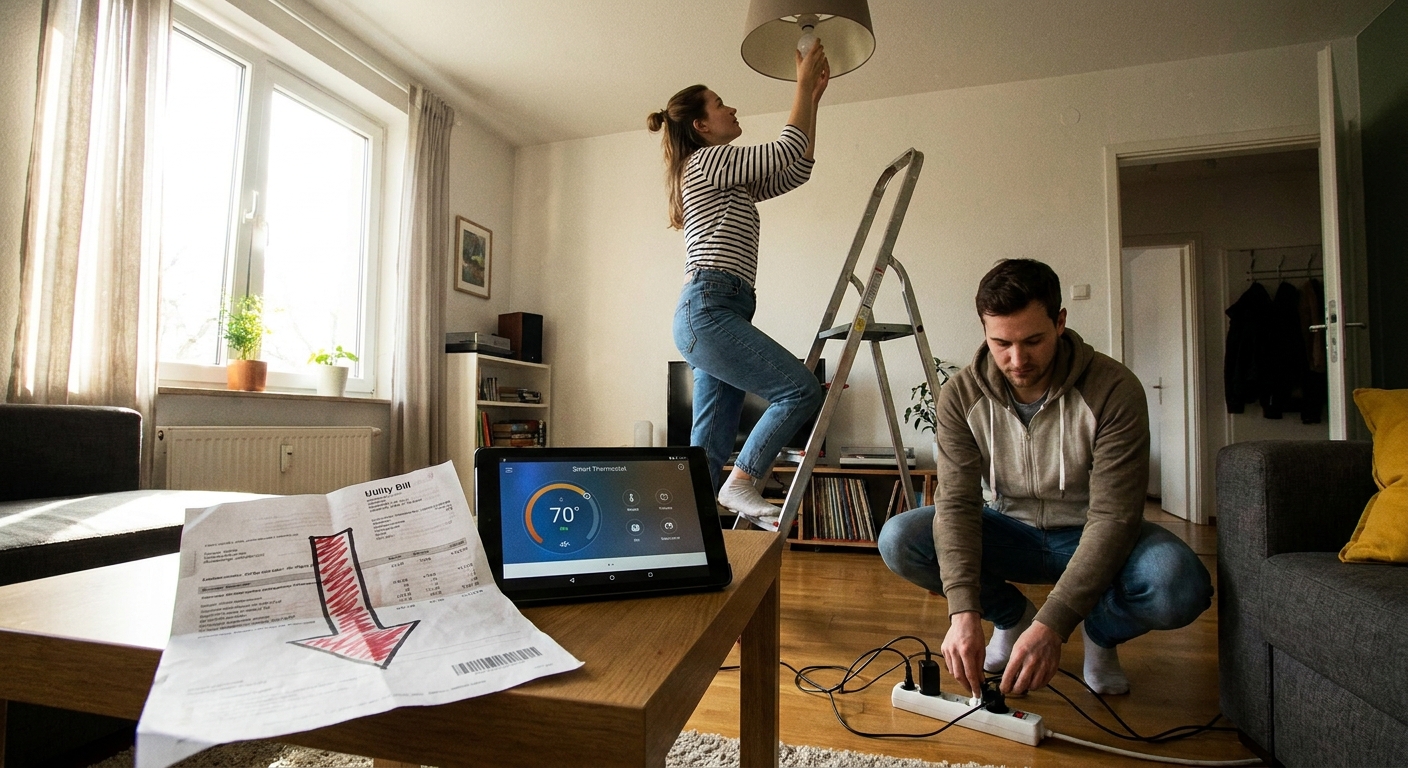
1. LEDs Everywhere You Can Reach
- Replace your own lamps’ bulbs with LEDs.
- If the landlord’s fixtures use standard bulbs, swap them too (and keep the originals to put back when you move).
This alone can save tens of dollars a year, even in a small apartment.
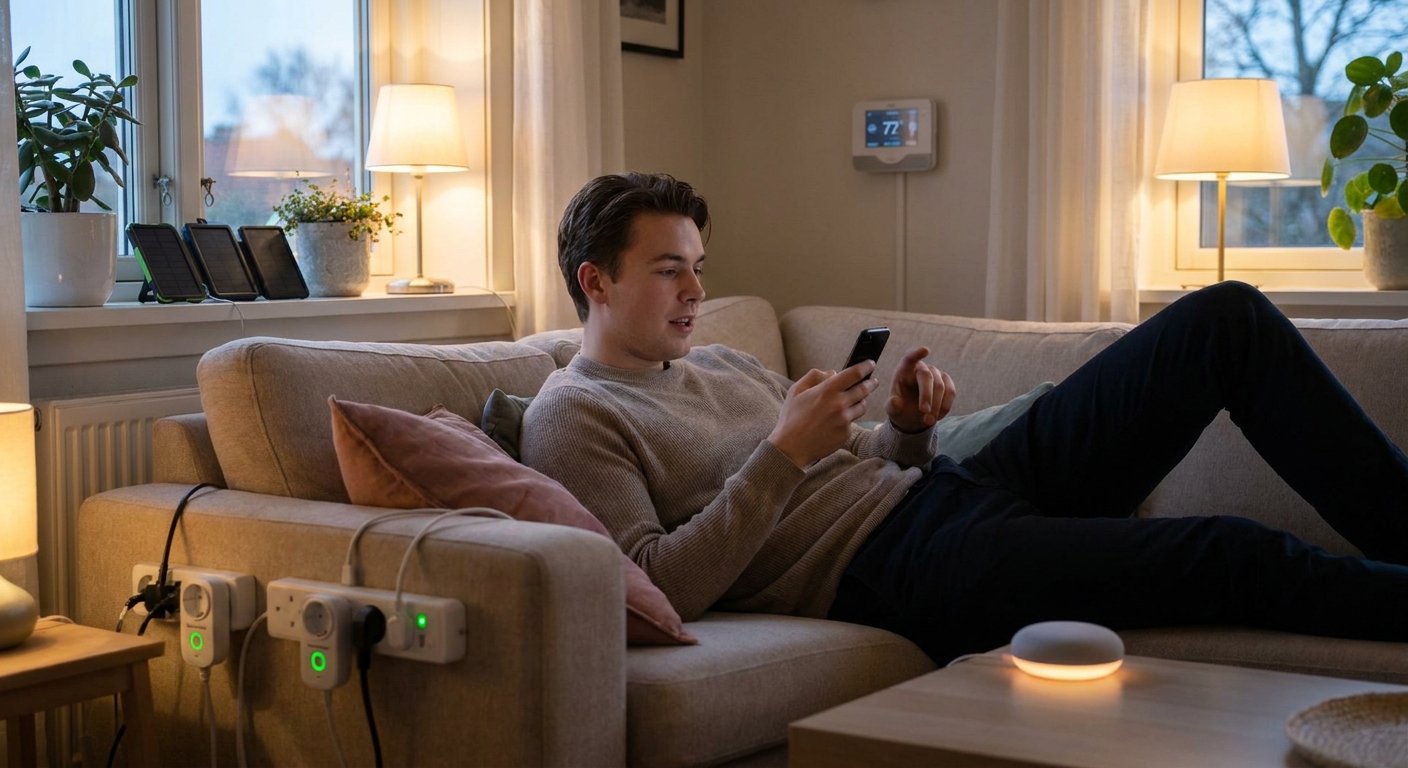
2. Power Strips for “Always On” Electronics
- Group TV, game console, streaming box, speakers on one strip.
- Group computer, monitor, printer on another.
Turn the strip off when you’re done—standby power drops to almost nothing.
Smart option: A power strip that turns off automatically when the main device (like the TV) powers down.
3. Small Appliances That Work Hard for You
If you’re buying or replacing small appliances, look for:
- Electric kettles instead of boiling water on the stove.
- Induction hot plates if your rented stove is ancient and inefficient.
- Toaster ovens or microwaves for small meals instead of the big oven.
These often use less energy for everyday tasks and are fully portable to your next place.
Step 6: Hot Water Habits You Actually Might Keep
Even if your landlord controls the water heater, you control how you use the hot water.
1. Shorter Showers (Within Reason)
- Try cutting showers by 2–3 minutes.
- If you like music, limit showers to one or two songs.
2. Efficient Showerhead (Ask or DIY)
- Some landlords are fine with you installing a water-saving showerhead, especially if you offer to leave the old one.
- Keep the old one to swap back if needed when moving out.
Lower hot water use = lower energy use, especially in fully electric buildings.
Step 7: Talking to Your Landlord (If You’re Up For It)
You’re not obligated to have this conversation, but sometimes it’s worth a try.
What might be worth asking about
- Weatherstripping for very drafty doors/windows.
- Replacing very old, clearly inefficient appliances.
- Fixing broken seals on fridge/freezer doors.
How to frame it
- Emphasize long-term cost savings for them: newer appliances and reduced wear on heating/cooling systems.
- Mention comfort and maintenance issues (drafts, condensation, ice build-up) rather than just “energy” if that seems more persuasive.
You might be surprised by what they’ll approve, especially for simple fixes.
Step 8: What You Don’t Have to Do
You do not have to:
- Live with the heat off all winter.
- Sweat through summer without using AC.
- Refuse to use the dryer even when you’re exhausted.
- Buy expensive gadgets just to “prove” you care.
Your situation as a renter already has constraints. Working within them still absolutely counts.
Some days you’ll run the AC longer than you planned. Some weeks you’ll dry every load because life is hectic. That doesn’t erase the small, consistent changes you’re making.
A Simple Renter Energy Checklist
Pick a few of these to try in the next month:
- [ ] Add a draft stopper to at least one leaky door.
- [ ] Put your TV setup on a power strip and turn it off at night.
- [ ] Swap 3–5 bulbs for LEDs.
- [ ] Use curtains/blinds strategically for heat or shade.
- [ ] Cut shower time by 2 minutes most days.
- [ ] Add a rug to the coldest floor space.
- [ ] Ask your landlord about fixing one obvious draft or broken seal.
You don’t have to own your home to shape how it uses energy. Even within rental limits, you’re allowed to seek comfort, save money, and reduce your environmental footprint—while fully intending to move on when life takes you somewhere new.