If you’ve ever spiraled into, “Does my one metal straw even matter?” you’re bumping into a big sustainability question: What’s more important—what I do, or what we do together?
Individual vs. Community Action: It’s Not Either/Or
Short answer: your individual actions are like sparks. Community is the dry kindling that helps them actually catch.
This article is an explainer—with numbers, comparisons, and real-life examples—of why community-level habits often have more impact than any one person’s quest for zero waste. And how you can plug in without giving up your Friday night takeout or your sanity.
Why Community Multiplies Impact
1. Shared Systems Trump Personal Heroics
Systems are the background rules that shape what’s easy and what’s hard. Think:
- Is composting available in your building?
- Are bike lanes safe?
- Are there refill shops or bulk options nearby?
You can try really hard as an individual, but if the system pushes you the other way, it’s exhausting.
Community action tweaks those systems.
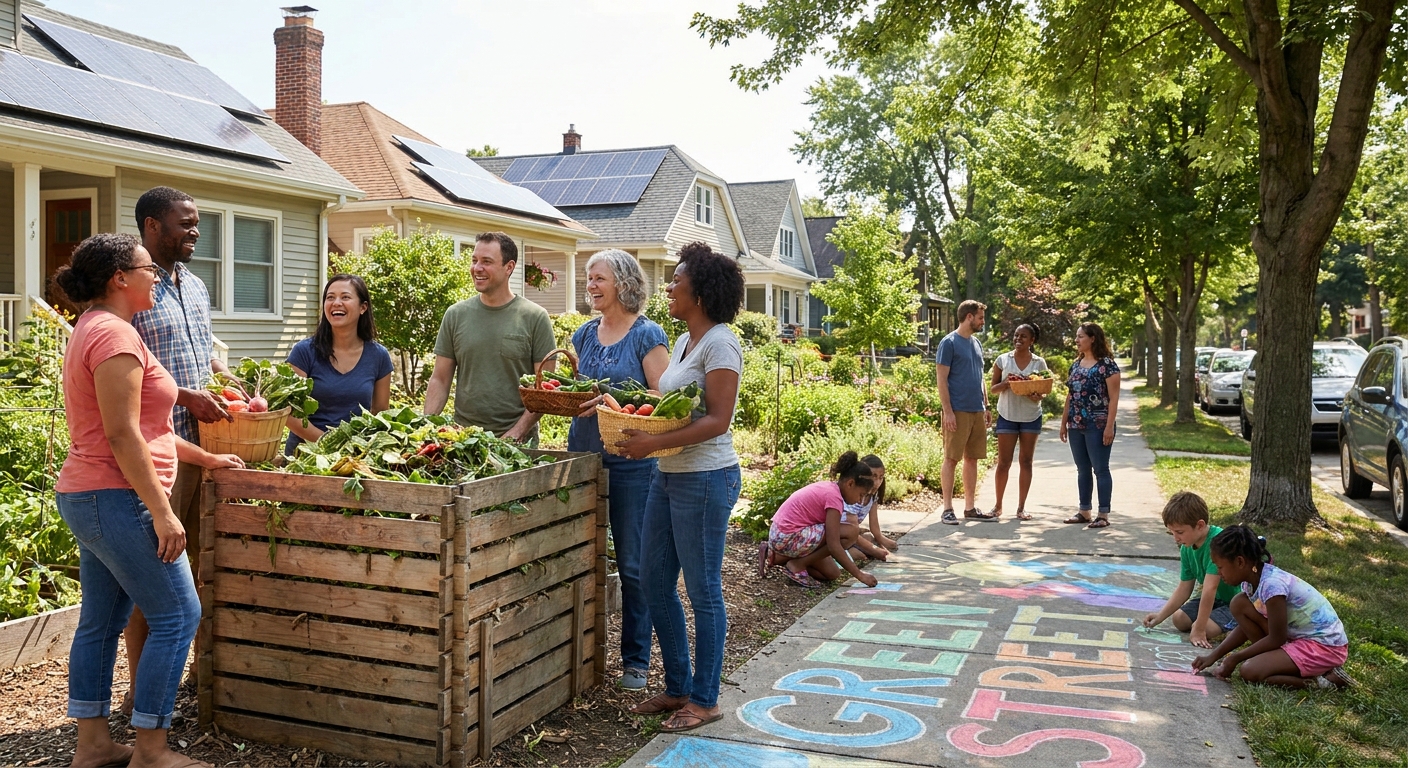
Example: Ten residents asking their building manager for compost service and better recycling signs. The manager is much more likely to respond to 10 voices than 1.
Impact comparison (simple illustration):
- 1 person composting: about 150–300 lbs of food scraps diverted per year.
- 20 apartments composting in a building: 3,000–6,000 lbs per year.
Same principle, multiplied. No one person had to become perfectly zero-waste—just enough people nudged the system.
2. Habits Spread Through People, Not Posts
We copy what people around us do more than what we see on social media.
If your coworker brings lunch in a reusable container every day, you eventually start wondering if you could do the same. If your neighbor offers to share their car for a big shopping trip, that normalizes not-every-adult-needs-a-car culture.
One honest conversation often beats ten perfectly curated eco-Instagram posts.
Cost Comparisons: Solo vs. Shared Sustainability
Sustainability has a reputation for being expensive. Community can change that math.
Example 1: Gardening Alone vs. Community Garden
Solo container garden on a balcony:
- Pots & soil: $40–$80
- Seeds & seedlings: $15–$30
- Tools: $20–$40
- Total: $75–$150
- Shared plot fee: ~$40–$80/year → $10–$20 each
- Shared tools provided on-site (often included)
- Seeds & seedlings split: $5–$10 each
Community garden plot split with 3 neighbors:
Total: ~$15–$30 per person for a bigger growing space and built-in support.
Example 2: Buying New vs. Circulating in Community
Average new winter coat: $60–$200.
Community options:
- Clothing swap: $0 (you bring what you no longer wear).
- Buy Nothing group: $0.
- Secondhand from neighbor: $10–$40.
Over a few years, that difference adds up fast—and so does the avoided production footprint.
Example 3: Solo Errands vs. Shared Trips
Scenario A:
Three households each drive 10 km to the same big-box store → total 30 km + 3 parking fees.
Scenario B:
One household drives, picks up items for the other two → total 10 km + 1 parking fee.
If this happens weekly:
- Solo: ~1,560 km/year.
- Shared: ~520 km/year.
Roughly a third of the distance, fuel, and emissions. Same groceries.
Practical Ways to Use the Community Effect (Without Being Annoying)
You don’t have to lecture anyone, ever. You can frame sustainability around what people already care about: saving time, money, and stress.
1. Frame It Around Convenience
Instead of: “We need to waste less plastic.”
Try: “Wouldn’t it be easier if we had a place in the building to share tools so we don’t all have to own everything?”
Instead of: “You should bike, it’s better for the planet.”
Try: “The bike route to the market is actually faster than driving at rush hour. Want to try it one day?”
2. Offer Concrete, Low-Commitment Options
People are more likely to say “yes” if the ask is clear and small.
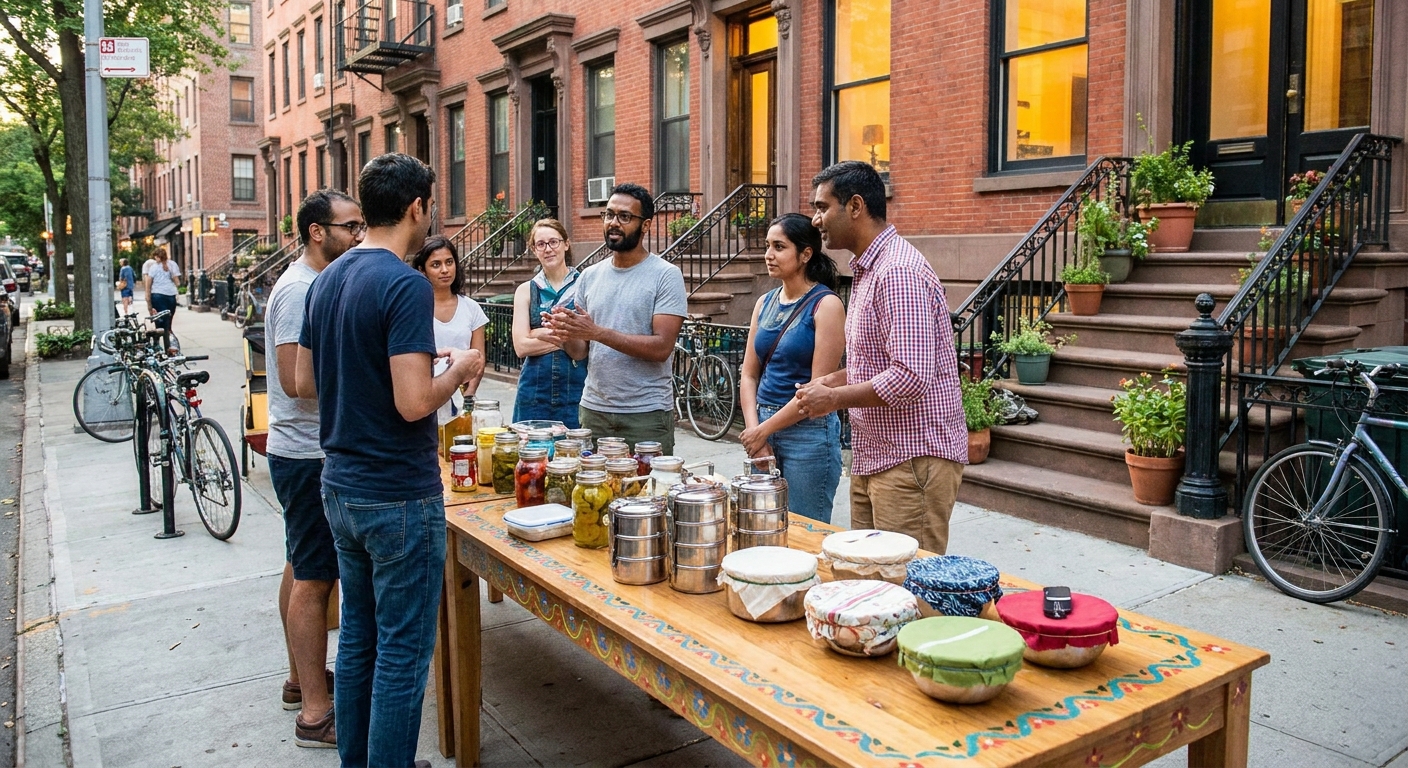
- “I’m making a run to the bulk store Saturday—want me to grab anything for you if you send me a list?”
- “A few of us are thinking of splitting a compost pickup. It would be about $8/month each. Interested?”
- “We’re setting up a shared tools spreadsheet for the building. Can I add you if you’d like to borrow or list anything?”
You’re not trying to convert them, just making it easier to opt in.
3. Build Routines, Not One-Off Moments
The real power comes from repeating shared actions until they’re normal.
Examples:
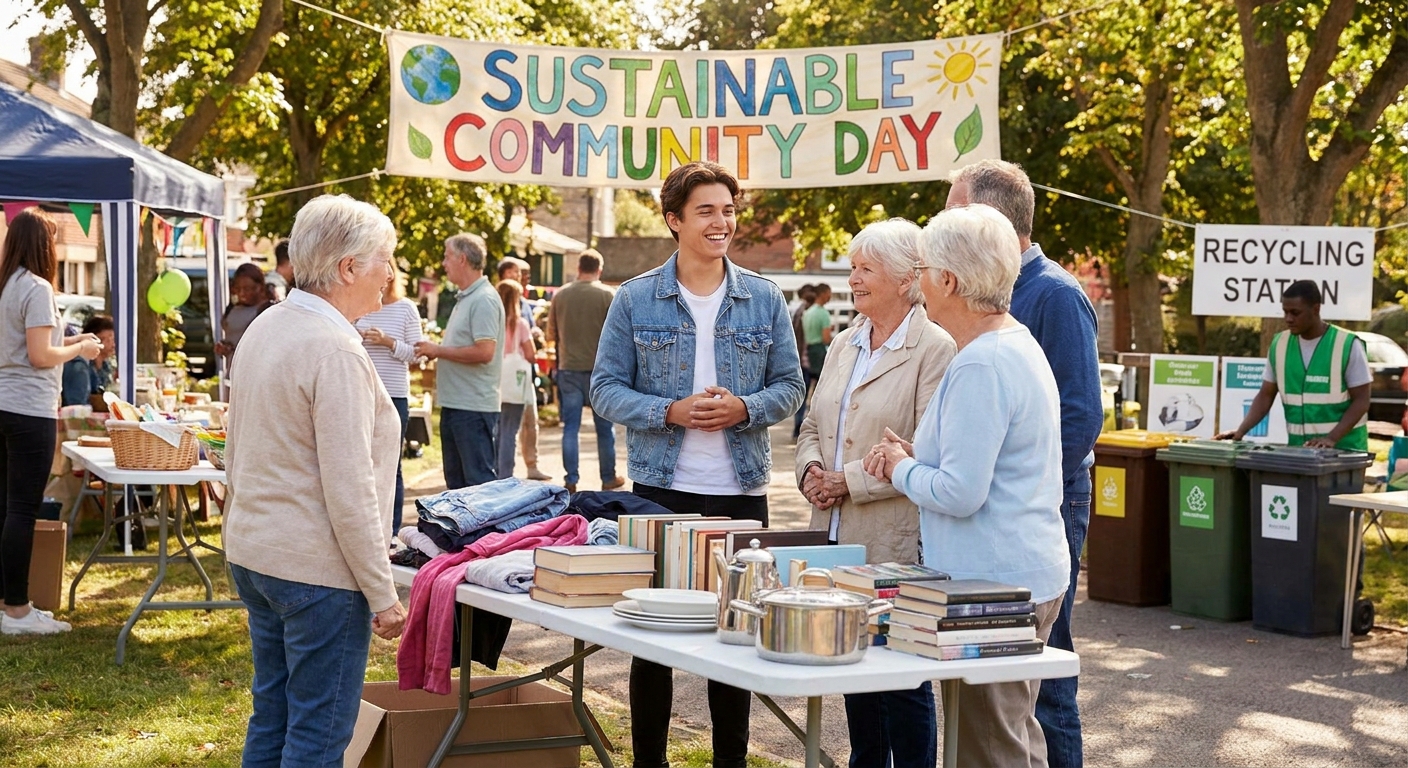
- Monthly neighbor swap (books, kids’ clothes, kitchen stuff).
- Standing carpool or bike-train to work or school.
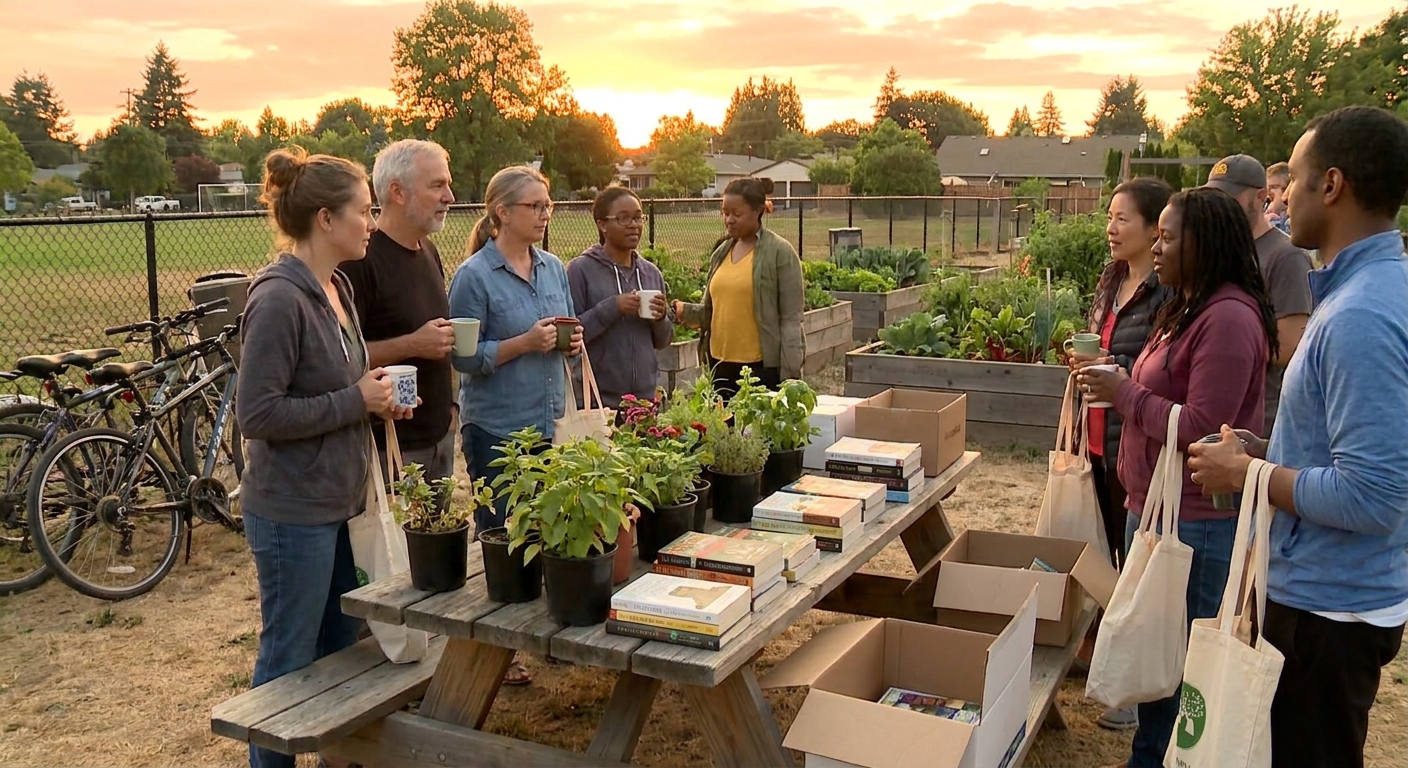
- Regular community cleanup with coffee afterward.
Over time, these routines quietly reshape what “normal” looks like—especially for kids watching.
When Community Efforts Feel Messy (Because They Will)
Real talk: community work is not neat.
You might:
- Start a tool library that 3 people use and 1 person breaks something.
- Launch a compost system and find plastic forks in it every week.
- Host a clothing swap where people mostly take snacks and socialize.
That doesn’t mean it’s failing; it means it’s human.
Try this mindset:
- Experiment, don’t perfect. Treat each idea like a test. Adjust or drop it if it doesn’t work.
- Document what you learn. “We learned the swap works better if people bring fewer items” is useful knowledge.
- Share honestly. “We tried a complicated system and it flopped; here’s our simpler version.”
Your imperfect attempts help the next person do it a bit better.
Balancing Personal Effort and Community Impact
You don’t have to choose between:
- Perfect personal habits, alone, or
- Huge community projects that burn you out.
Aim for a mix that fits your life.
A Realistic Mix Might Look Like:
Personal:
- Cooking at home more often but still getting takeout sometimes.
- Bringing your own mug most days and not spiraling when you forget.
- Buying secondhand when it’s easy, new when you need to.
- Sharing tools or rides once in a while.
- Saying “yes” to one local initiative a season (cleanup, swap, garden day).
- Nudging your workplace/school/building toward one systemic improvement a year.
Community:
That combination, multiplied across thousands of people, is powerful.
Quick Start: Three “Community Effect” Actions You Can Take This Week
Pick one depending on your comfort level.
Ultra Low-Energy: Post in a local online group:
- “Does anyone want to share a tool list for borrowing things like drills/step ladders?”
Medium Energy: Ask a few neighbors or coworkers:
- “Would anyone be interested in a simple clothing or book swap next month?”
Higher Energy (But Still Doable): Email your building manager, PTA, or office admin:
- “A few of us are interested in [composting / better recycling signage / secure bike parking]. Could we explore options?”
You can do all of this while still eating snacks from plastic wrappers and forgetting your canvas bag sometimes.
Progress over perfection.
Community over isolation.
Shared systems over solo guilt.
That’s how we get from “my metal straw doesn’t matter” to “our habits quietly changed how this whole place works.”