If you’ve ever felt like your personal eco-efforts are too small to matter, you’re not alone. Switching to shampoo bars, remembering tote bags, rinsing out jars for recycling—it can feel a bit… tiny.
Why Community Matters More Than the Perfect Reusable Bottle
Here’s the honest truth: individual actions do matter, but they matter more when they’re connected to other people.
Community is where sustainability stops being a lonely checklist and becomes a shared experiment. It’s also where you get backup on the days you forget your reusable cup and end up with a plastic lid anyway.
This isn’t about being the Perfect Eco Neighbor. It’s about using your existing community—your block, building, or street—to make lower-impact living easier, cheaper, and more fun.
The Hidden Power of Doing Things Together
When people act together, several things shift:
- Costs get shared – One person buying tools or bulk goods is expensive. Ten people splitting the same costs? Way more doable.
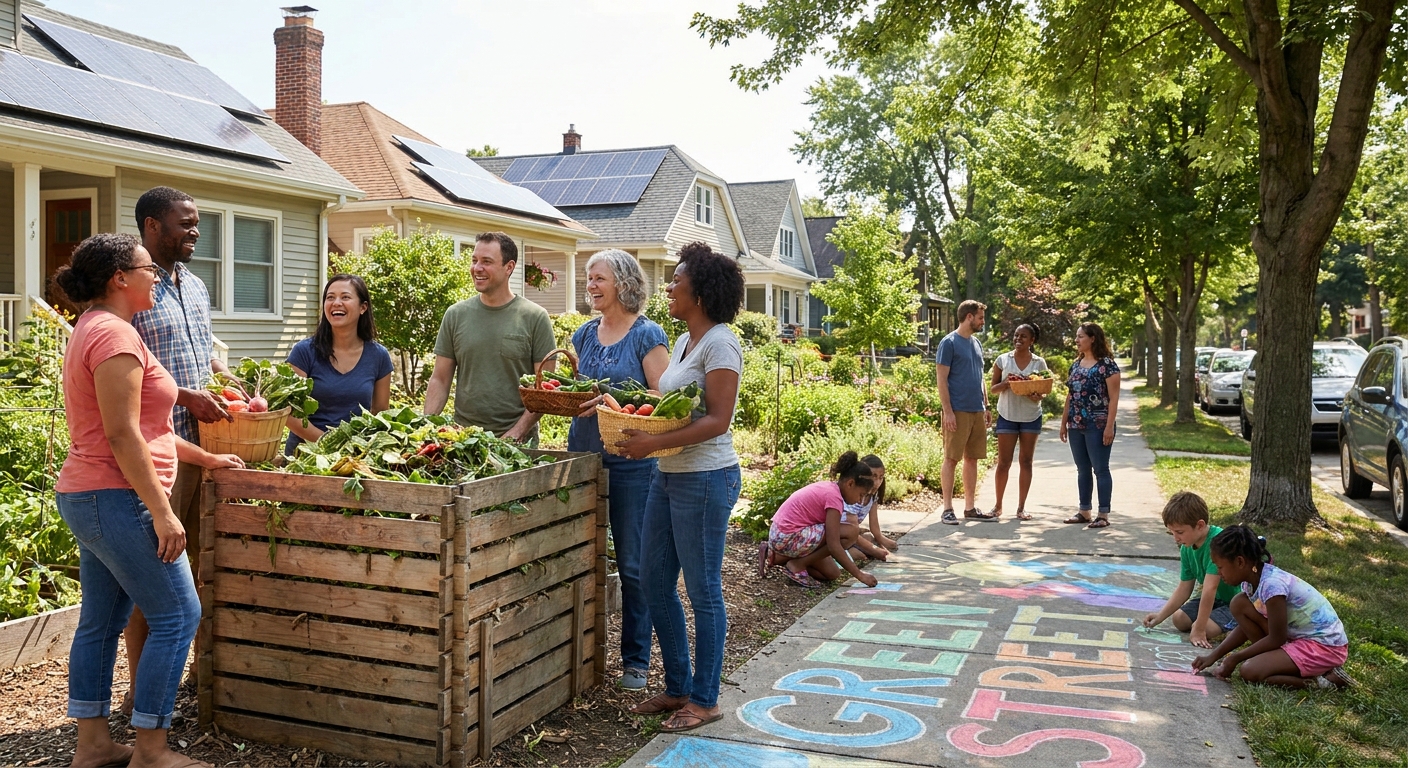
- Habits stick better – We copy what people around us do. If your building has a compost bin, tossing in your food scraps becomes normal, not niche.
- Solutions scale fast – A single letter or email from one resident might be ignored. A joint message from ten residents gets attention.
This is why community is a quiet superpower for sustainability.
Simple Community Swaps That Save Money (and Don’t Require Being Extroverted)
You don’t have to start a nonprofit or host a block party. Begin with low-lift, real-life swaps.
1. Share Tools Instead of Buying New
Why it helps: Fewer products manufactured, transported, and eventually trashed.
Solo cost:
- Decent drill: $50–$100
- Basic toolkit: $30–$60
- Drill + toolkit: $80–$150 total → $16–$30 each
- Ask in your building chat, HOA group, or local online group: “Does anyone already have a drill/ladder/saw they’re willing to share occasionally?”
- Create a simple shared spreadsheet or notes file with who has what and basic rules (e.g., return clean, text before borrowing).
Shared cost (5 neighbors):
How to start:
No need to become the neighborhood hardware manager. Even one shared tool is a win.
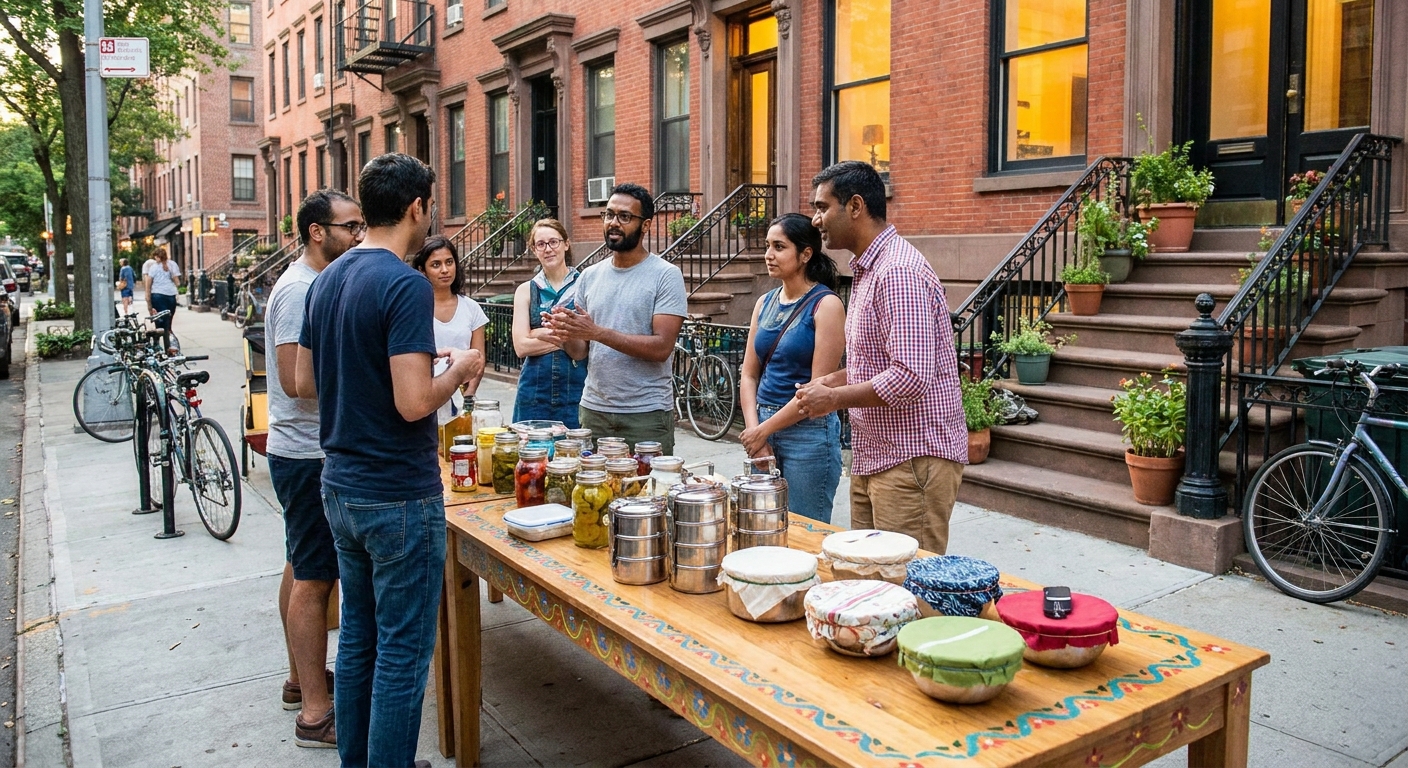
2. Bulk-Buy Basics with Neighbors
What this tackles: packaging waste + cost.
Example: Laundry Detergent
- Regular 50-load bottle: $8–$12 = $0.16–$0.24/load
- Bulk 5-gallon detergent bucket (800 loads): ~$70–$90 = ~$0.09–$0.11/load
- About $18–$23 each, similar up-front cost but lasts much longer and often uses less plastic per load.
- Detergent pods or powder
- Toilet paper
- Dish soap tabs
- Grains/beans if you have a bulk store nearby
Split among 4 households:
Easy starting point:
You can literally start with: “Anyone want to split a big pack of toilet paper? I don’t want to store a year’s supply in my closet.”
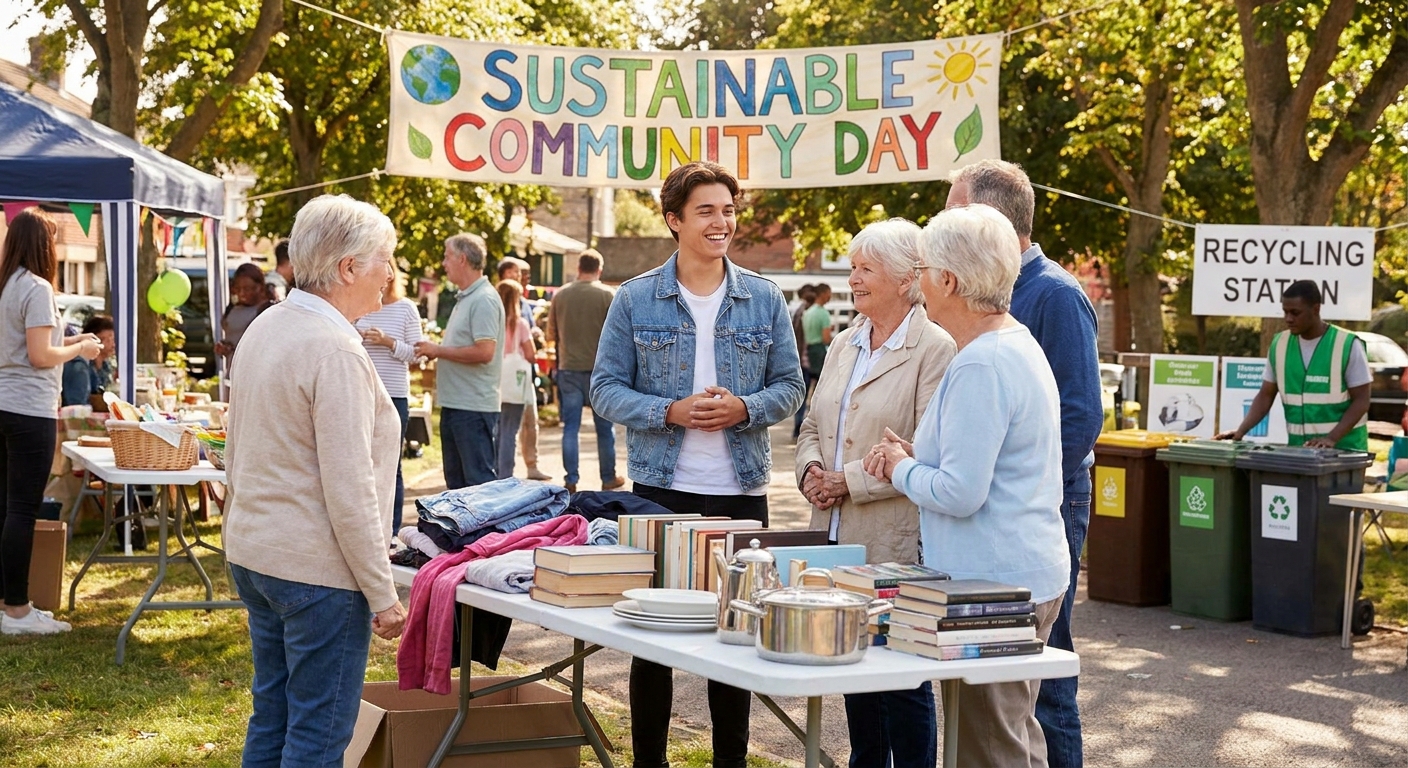
3. Start a Casual Swap Corner
Not a fancy library, just a shelf or box where things go to find a second life.
What to swap:
- Books, puzzles, toys
- Mugs, jars, small kitchen gadgets
- Lightly used clothing or baby items
- New puzzle or book: $10–$25
- Swap version: $0 and one less thing headed to landfill
Cost comparison:
Check with your building manager or community center and label clearly: "Take what you need, leave what you don’t." Keep it small and manageable.
Beginner-Friendly Steps to Build a More Sustainable Community (Without Burning Out)
Think of this as levels in a game. Pick the one that feels doable.
Level 1: Quiet Joiner
Perfect if you’re shy, busy, or just starting.
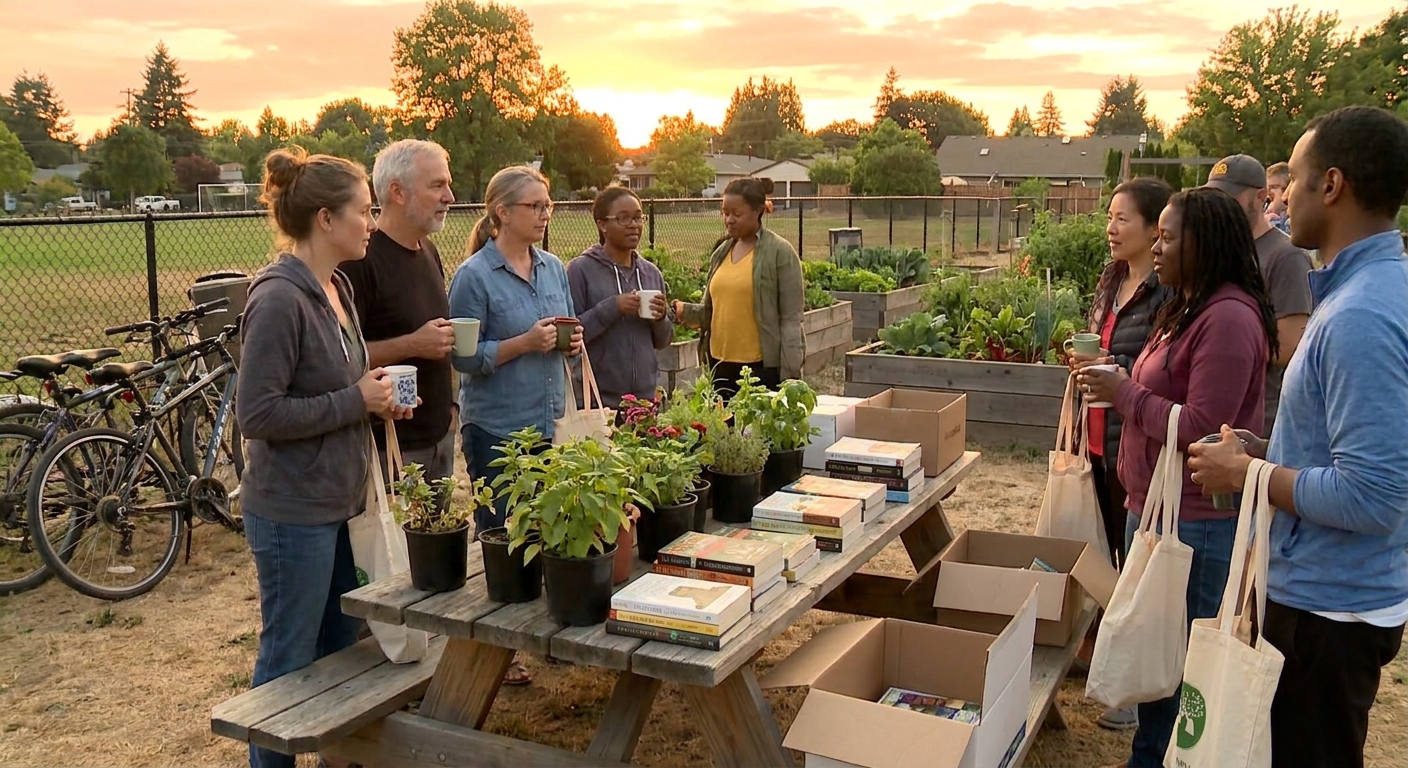
- Join an existing local group: Buy Nothing, neighborhood association, gardening group.
- Show up to one cleanup, clothing swap, or community garden day over the next 3 months.
- Ask one question, like: “Has anyone tried composting services around here?”
This alone can introduce you to local resources you didn’t know existed.
Level 2: Small Connector
You’re not leading a movement—just nudging your circle.
- Host a low-pressure meet-up: coffee in the courtyard, tea in your living room, or snacks in the park.
- Add one simple eco-topic: “Anyone want to split a compost pickup service?” or “Should we try a shared tool shelf?”
If three people come and one small idea sticks, that’s a win.
Level 3: Gentle Organizer
Only if you want to step up.
Ideas:
- Start a building compost program (with a private service or community drop-off).
- Coordinate a seasonal clothing or toy swap once or twice a year.
- Talk to property managers about better recycling signage or bike racks.
Even one project a year is plenty. You don’t owe the world your exhaustion.
Making Sustainability More Affordable Through Community
Sustainability has a reputation for being expensive—and it can be, especially when it’s marketed as a lifestyle upgrade.
Community can flip that script:
Cost-Saving Examples
- Car-Sharing vs. Car Ownership
- Average yearly car ownership: $9,000–$12,000 (insurance, gas, maintenance, payments).
- Occasional shared rides or car-share: potentially $50–$200/month depending on usage.
- Community Garden vs. Store-Bought Herbs
- Store herbs: $2–$4 per small plastic clamshell.
- Shared garden plot fees (if any) split among a few neighbors: often $20–$50/season each with way more yield.
- Skill-Sharing vs. Professional Services
- Sewing repair, bike tune-ups, basic home fixes can be swapped among neighbors: “I can hem your curtains if you help me set up my Wi-Fi.”
Money saved can go toward more durable items, better food, or just easing financial stress.
When You Care… and Your Community Doesn’t (Yet)
Honest moment: not everyone around you will be excited about this stuff. Some may not have the time, energy, or headspace, and that’s okay.
Try this instead of pushing:
- Lead with convenience or savings, not guilt. “Want to split a Costco run so we both save money?” beats “Plastic is killing the planet.”
- Share what works for you without preaching. “Borrow my drill anytime” or “These bulk beans are way cheaper if you ever want to try.”
- Accept that some people won’t change, and that’s not your failure.
Your job isn’t to convert everyone. It’s to find the people who are even a little curious and build from there.
Permission to Be Imperfect (Seriously)
You can:
- Organize a community swap and still forget your tote bags sometimes.
- Share a compost bin and order Friday night takeout in plastic containers.
- Carpool to work and still fly to see family once a year.
Perfection is not the entry fee for joining a sustainable community. Showing up as you are is.
What matters long-term is:
- You’re paying attention.
- You’re making small adjustments where you can.
- You’re helping others make those adjustments easier too.
One Tiny Action to Take This Week
Pick one of these and call it a win:
- Ask a neighbor or coworker: “Want to split a bulk order of something we both use a lot?”
- Post in a local group: “Anyone interested in swapping books or kids’ clothes?”
- Invite one person to walk, bike, or carpool with you to something you already do.
None of this has to be perfect or Instagram-worthy. Your community doesn’t need a hero. It just needs a few people willing to try small things together.
And that can absolutely be you—even if you’re still figuring out what goes in the compost bin.