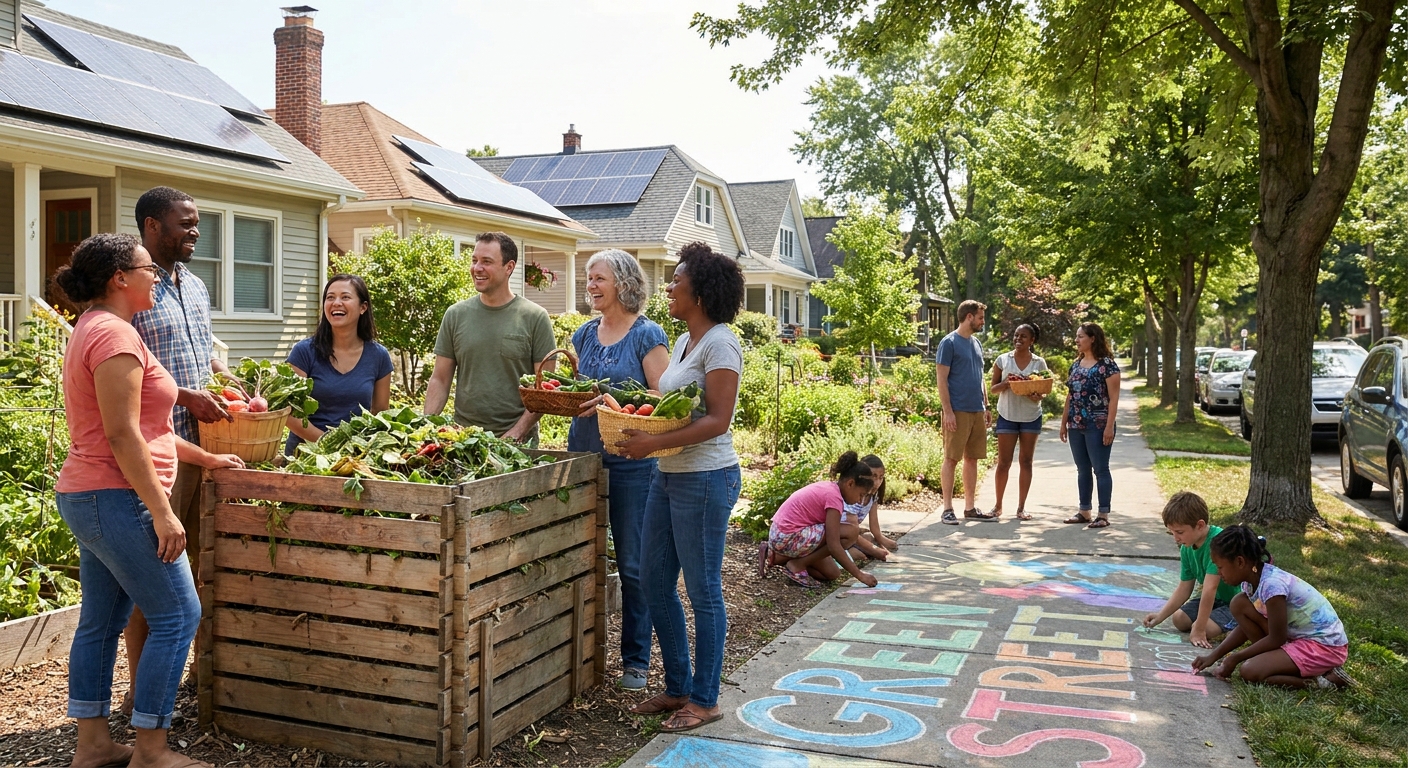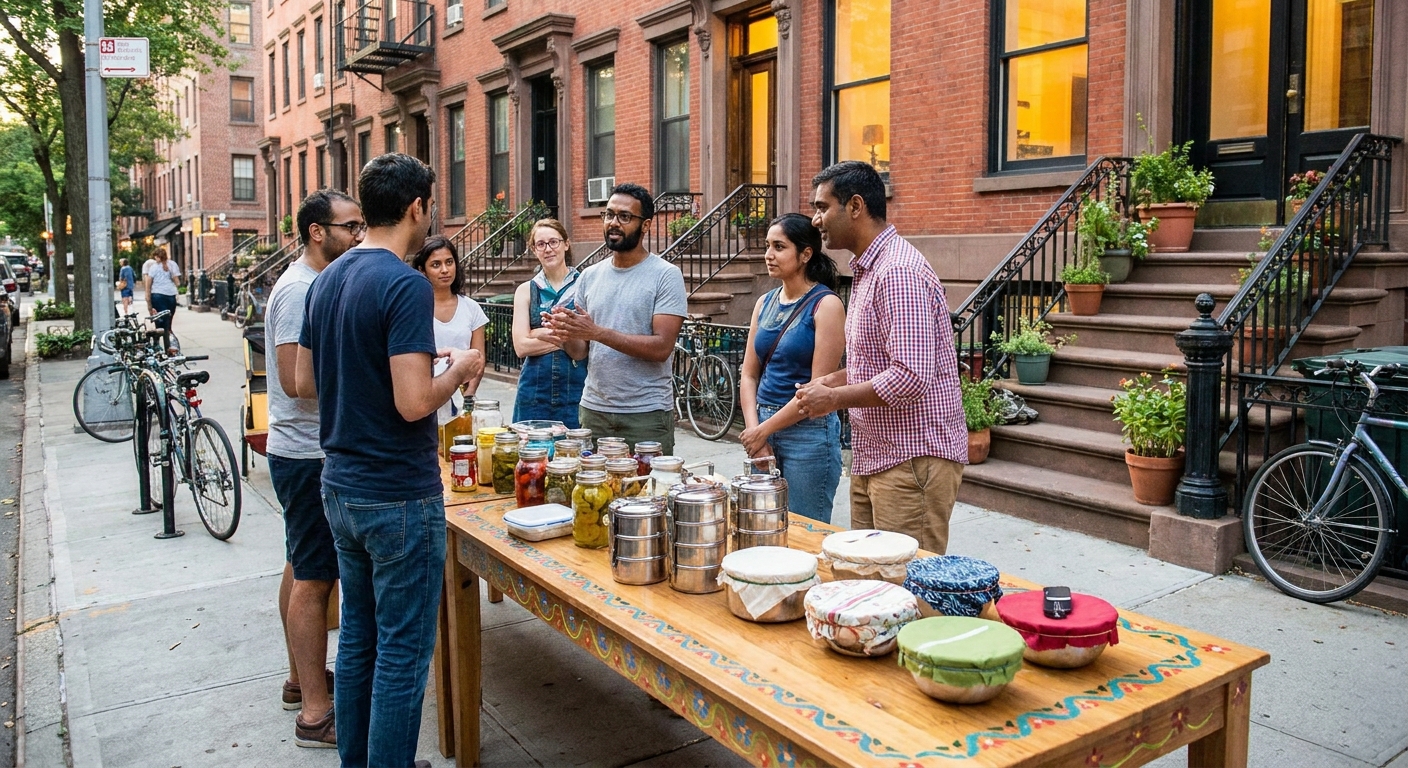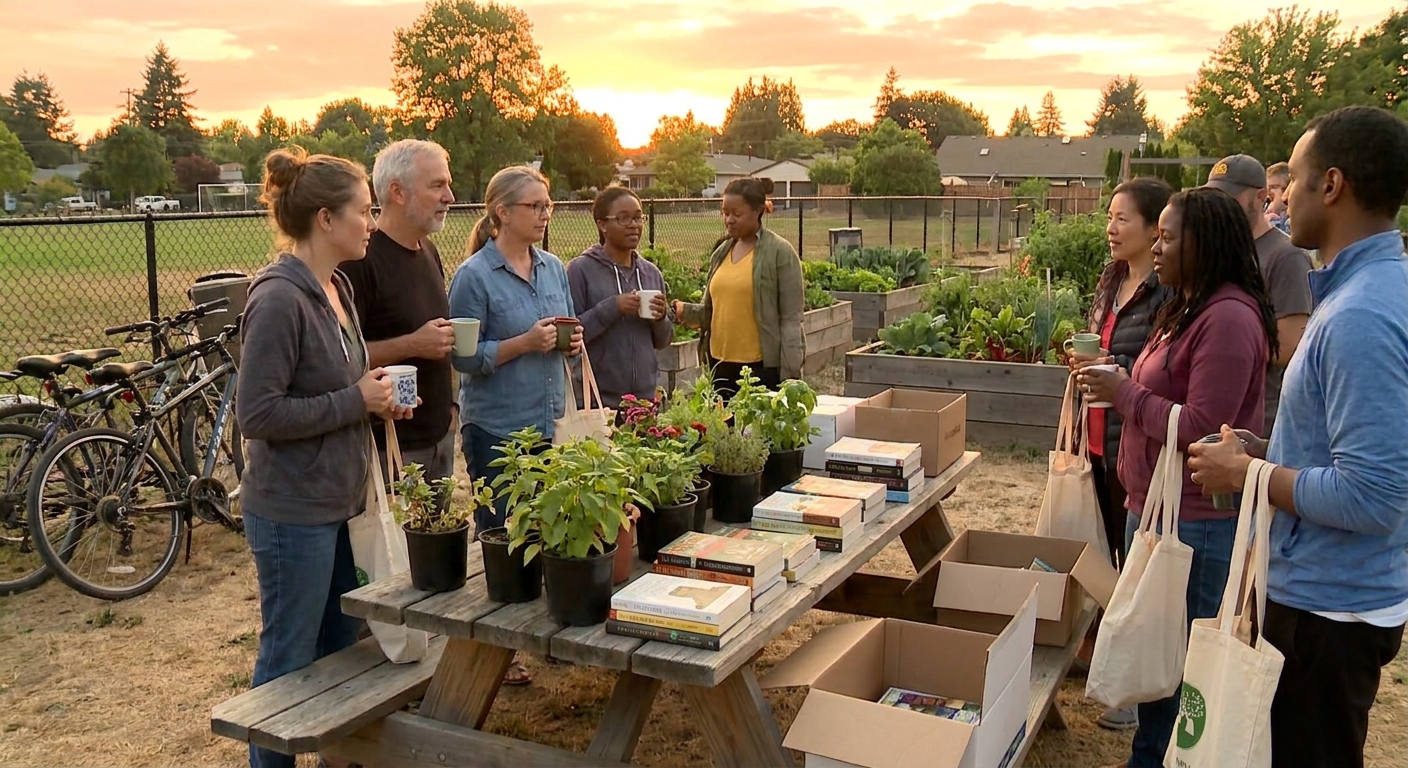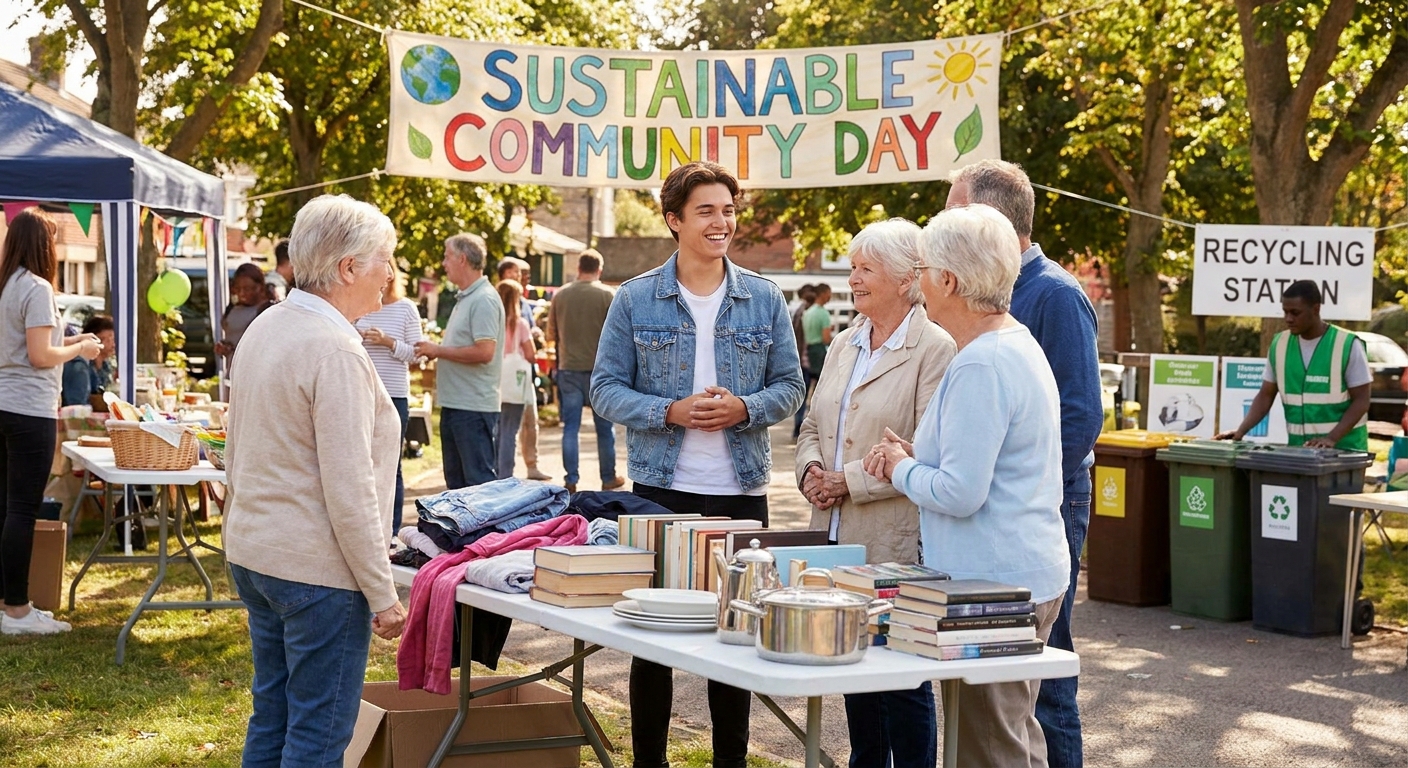
Maybe you’re the person rinsing jars, refilling your water bottle, and quietly wincing at overflowing trash cans. You want to do more—but becoming a full-on community organizer sounds like… a lot.
You Don’t Need to Be a Leader to Make a Difference
You don’t have to be that person.
This guide is for people who are starting or deepening their sustainability journey and want community to be part of it—without quitting their job to run a co-op or wearing only secondhand linen.
We’ll walk through how to build small, real connections that make sustainable living easier. Think of it as a "how-to" for becoming a local ally, not a superhero.
Step 1: Map the Community You Already Have
Before starting anything new, notice what’s already there.
Ask Yourself:
- Who do I already interact with regularly?
- Where do I already spend time?
- What local groups already exist?
(Coworkers, neighbors, parents at school, fellow dog walkers, faith communities.)
(Library, gym, coffee shop, park, community center.)
(Buy Nothing groups, mutual aid networks, gardening clubs, online neighborhood groups.)
Write down a quick list. These are your existing touchpoints—not projects you need to start from scratch.
Beginner step: Join one local group online (like a Buy Nothing, neighborhood, or building chat) and just observe for a week.
Step 2: Start with Micro-Connections, Not Big Initiatives
You don’t need a “program.” You need simple, human interactions.
Conversation Starters That Aren’t Awkward
- “Hey, I’m trying to cut down on waste—have you found a good place that refills soap or detergent nearby?”
- “I have a perfectly good [tool/book/appliance] I barely use. Would you ever want to borrow it?”
- “Have you heard of Buy Nothing groups? I’ve given away so much stuff instead of tossing it—it’s kind of addictive.”
You’re not selling anything. You’re just sharing what you’re genuinely trying—and admitting where you’re still struggling.
Example: “I’ve been trying to compost but I still cave and order takeout in plastic containers. If you ever want to split a compost pickup service, I’d be down.”
People respond to honesty, not perfection.
Step 3: Use Community to Make Eco Swaps Cheaper
Let’s talk money, because that’s real.
Living sustainably often looks expensive at first: organic food, fancy reusables, local services. But community can flip the math.
Swap 1: Shared Compost vs. Individual Bins
Scenario A – Going Solo:
- Compost pickup service for one household: $20–$35/month.
Scenario B – Building or Block Share:
- One shared pickup spot for 4 households: total still $20–$35/month → as low as $5–$9 per household.
Beginner step: Ask 2–3 neighbors: “If we could get compost pickup for under $10/month each, would you be interested?”
Swap 2: Shared Meals vs. Individual Takeout
You can still love takeout and make progress.
Option A – Individual Takeout:
- 3 separate orders → 3 sets of containers, 3 delivery fees.
- One shared order (family-style dishes) → fewer containers & one delivery fee.
- Three solo orders: $20 x 3 + fees ≈ $75–$80 total.
- One larger order shared: maybe $50–$60 total, plus less packaging.
Option B – Shared Takeout Night:
Cost example:
Beginner step: Ask a neighbor or friend: “Want to do a shared takeout night sometime and split a big order?”
No one has to give up their favorite noodle dish. You’re just consolidating.
Swap 3: Shared Skills vs. New Purchases
Instead of buying new every time you hit a minor crisis:
- Torn clothing → find a neighbor who sews.
- Squeaky bike → ask someone who knows basic tune-ups.
- Broken shelf → neighbor who’s handy.
Offer what you can: “I’m not handy but I’m good with spreadsheets / babysitting / cooking / pet sitting.”
Cost comparison:
- Tailor repair for simple hem: $10–$20.
- DIY with neighbor’s help: maybe free + cookies.
Step 4: Try One Small Community Project (If and When You’re Ready)
You don’t have to, but if you want to go a bit further, start tiny.
Project Idea 1: Mini Lobby or Porch Swap Box
What you need:
- Small box, crate, or shelf.
- Simple sign: “Free to Take / Free to Leave – Clean items only.”
Good for: books, small home goods, unopened pantry items, kids’ toys.
Beginner step: Start it for a month as a test. If it becomes messy, you can pause it. This isn’t a lifetime contract.
Project Idea 2: One-Time Clothing or Book Swap
How it works:
- Pick a date and location (living room, courtyard, community room).
- Invite friends/neighbors: “Bring up to 10 clean items to swap.”
- Donate leftovers to a local charity or mutual aid group.
- Reduces demand for new stuff (and all the resources behind it).
- Saves everyone money.
- Gives clothing/books a longer life.
Why it helps:
Beginner step: Co-host with one other person so you’re not doing it alone.
Project Idea 3: Simple Info Board or Group Chat
You don’t have to be the expert—just the connector.
Post or share:
- Local farmers markets or bulk stores.
- Repair shops, cobblers, tailors, and fix-it cafes.
- Local compost options & recycling rules.
People can then self-organize carpools, bulk orders, or shared errands.
Step 5: Expect Imperfection and Stay Kind (to Yourself Too)
You’ll run into:
- People who don’t care.
- People who care but are overwhelmed.
- People who are suspicious of anything that sounds “activist.”
- Forget your reusable mug and use disposable cups.
- Toss something you meant* to repair.
- Get too tired to host that swap you planned.
And you’ll:
That doesn’t erase the progress you’ve made.
Instead of “I failed,” try:
- “What tiny adjustment can I make next time?”
- “Can I share this honestly with someone so we both feel less alone?”
Sustainability isn’t an exam you pass or fail. It’s more like a long conversation you keep having—with yourself and your community.
Reality Check: You Don’t Have to Fix Your Whole Town
Your community impact doesn’t have to be huge to be real.
If all you ever do is:
- Share your extra tools and leftover food,
- Help 2–3 people find local resources they didn’t know about,
- Make one sustainable habit easier for a small group,
that is already meaningful.
Those people influence other people. And so on. That’s how systems shift—from a thousand small, unglamorous changes.
One Gentle Challenge for This Month
Pick one of these and give yourself full credit for doing it:
- Offer to lend something you own (tool, appliance, baby gear) in a group chat or to a neighbor.
- Ask someone you trust if they’d like to split a bulk buy, compost service, or car trip.
- Host or suggest a simple swap (books, clothes, plants) with 2–5 people.
You can still eat chips, forget your tote bag, and order late-night takeout. You’re human.
You’re not trying to be perfect. You’re trying to be a slightly more connected, slightly more intentional version of yourself.
And the world genuinely needs more of that.