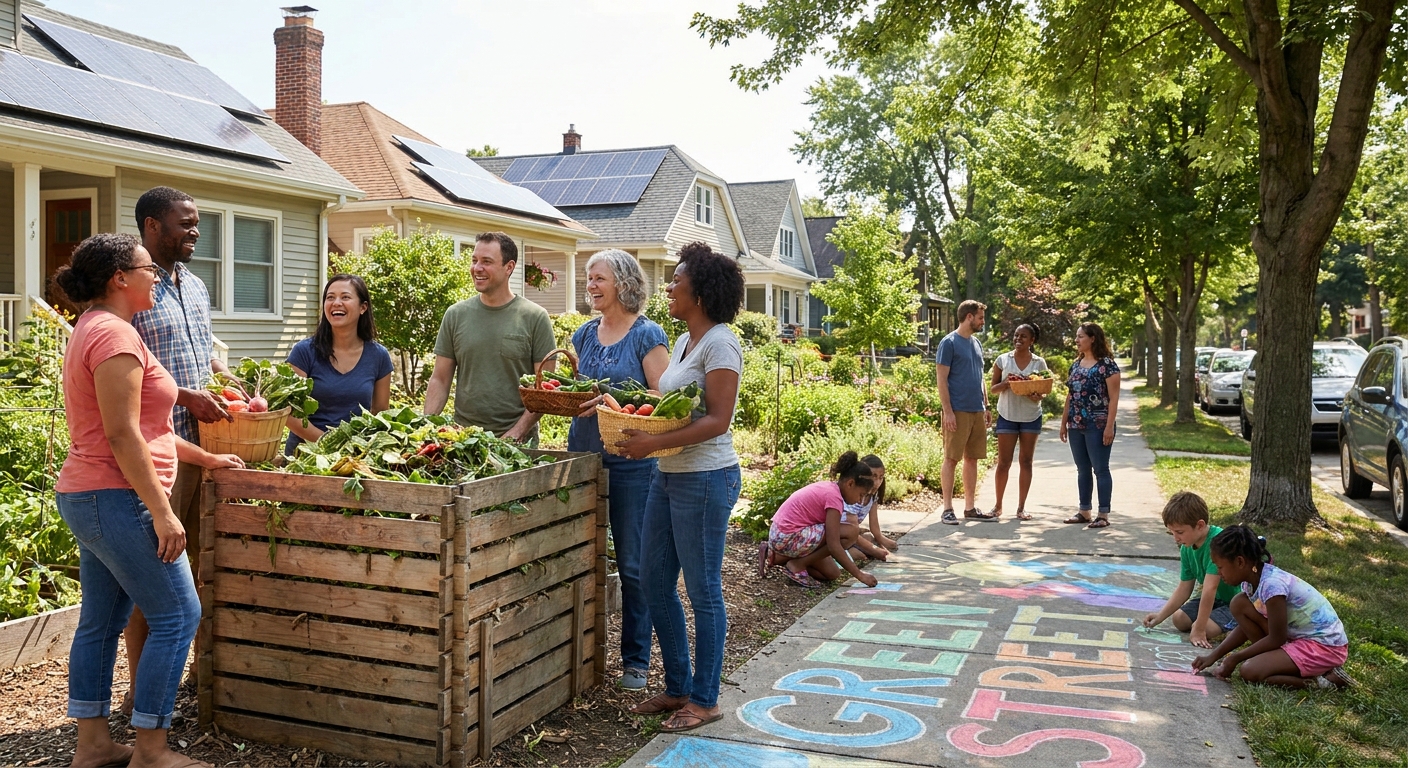
Maybe you’re the only one in your circle who gets excited about refill stores, or the only family on the block trying to compost. It can feel isolating, like you’re doing sustainability on “hard mode.”
You Don’t Need a New Friend Group—You Need a Few Green Allies
Good news: you don’t have to completely reinvent your social life to feel supported. You just need a few people—online or offline—who care enough to experiment with you.
This is a friendly guide (listicle style) to low-pressure ways to find and grow a sustainable community around you, without pretending you never use Uber Eats.
1. Start with Micro-Communities You Already Belong To
You likely already have overlapping mini-communities:
- Work or school
- Your building or street
- Faith or cultural communities
- Hobby groups (running club, book club, gaming group)
Instead of asking, “Where are the eco people?” try: “Where could one eco-friendly idea fit naturally?”
Examples:
- Suggest a monthly potluck at work that encourages homemade or low-waste dishes (but doesn’t require perfection).
- Offer to bring real mugs to your book club once, and see if others like the vibe.
- Ask your running group if anyone wants to carpool or bike to meet-ups.
Tiny shifts, same people.
2. Try One Local Group (No Pressure to Be Best Friends)
Places to look:
- Buy Nothing or local sharing groups (usually on Facebook or dedicated apps).
- Mutual aid or neighborhood groups.
- Community gardens.
- Library bulletin boards.
- City sustainability or climate action groups.
Beginner tip:
Join with the mindset: “I’m here to test the waters, not overhaul my life.”
- Attend one meeting or event.
- Notice how it feels—welcoming or intense?
- If it’s not your crowd, you can quietly move on.
You’re allowed to be picky about your community.
3. Use Online Spaces as a Warm-Up, Not a Substitute
Online communities can be incredibly helpful, especially if you live in a small town or don’t have IRL options yet.
Look for:
- Subreddits focused on low-waste living, frugality, or local issues.
- Discords or forums on gardening, DIY, repair, or minimalism.
- Instagram or TikTok creators who share realistic, non-shamey content.
- All-or-nothing language (“If you ever buy fast fashion, you don’t care about the planet”).
- Constant pressure to buy new sustainable stuff.
- Shaming people for constraints (money, time, health).
Watch for red flags:
Healthy eco-community says: “Here are ideas. Take what works, leave what doesn’t.”
4. Host a “Soft” Sustainability Hangout
You do not need to hosting a workshop on climate policy. You can simply invite people to hang out with a gentle green twist.
Easy Hangout Ideas
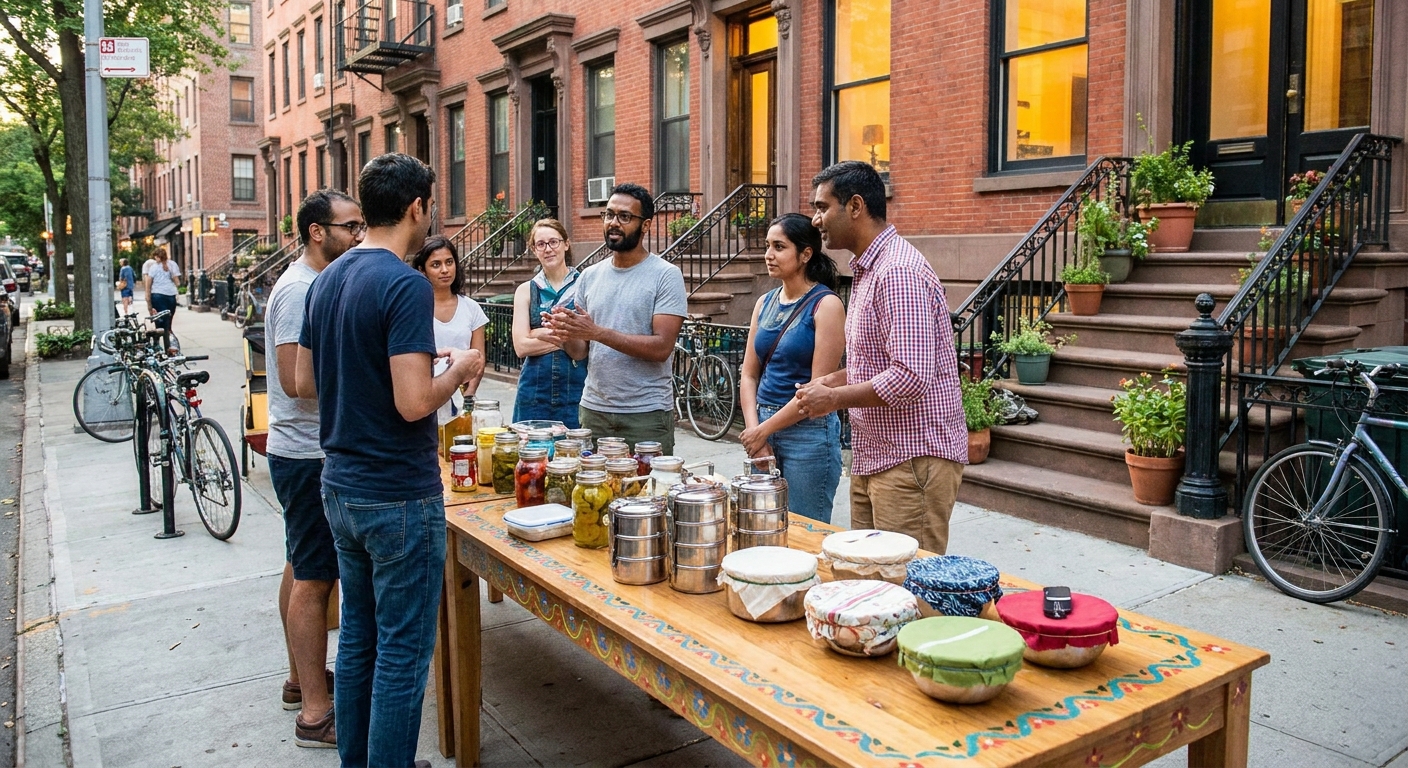
Leftovers & Pantry Potluck
Theme: “Bring something you already have at home—no special grocery trip needed.” - Encourages reducing food waste. - Low pressure, low cost.
Mend & Movie Night
Theme: “Bring something small to fix—sewing, gluing, etc. I’ll put on a movie.” - Someone will know how to sew; if not, you can all watch YouTube together. - Normalizes repair over replacing.
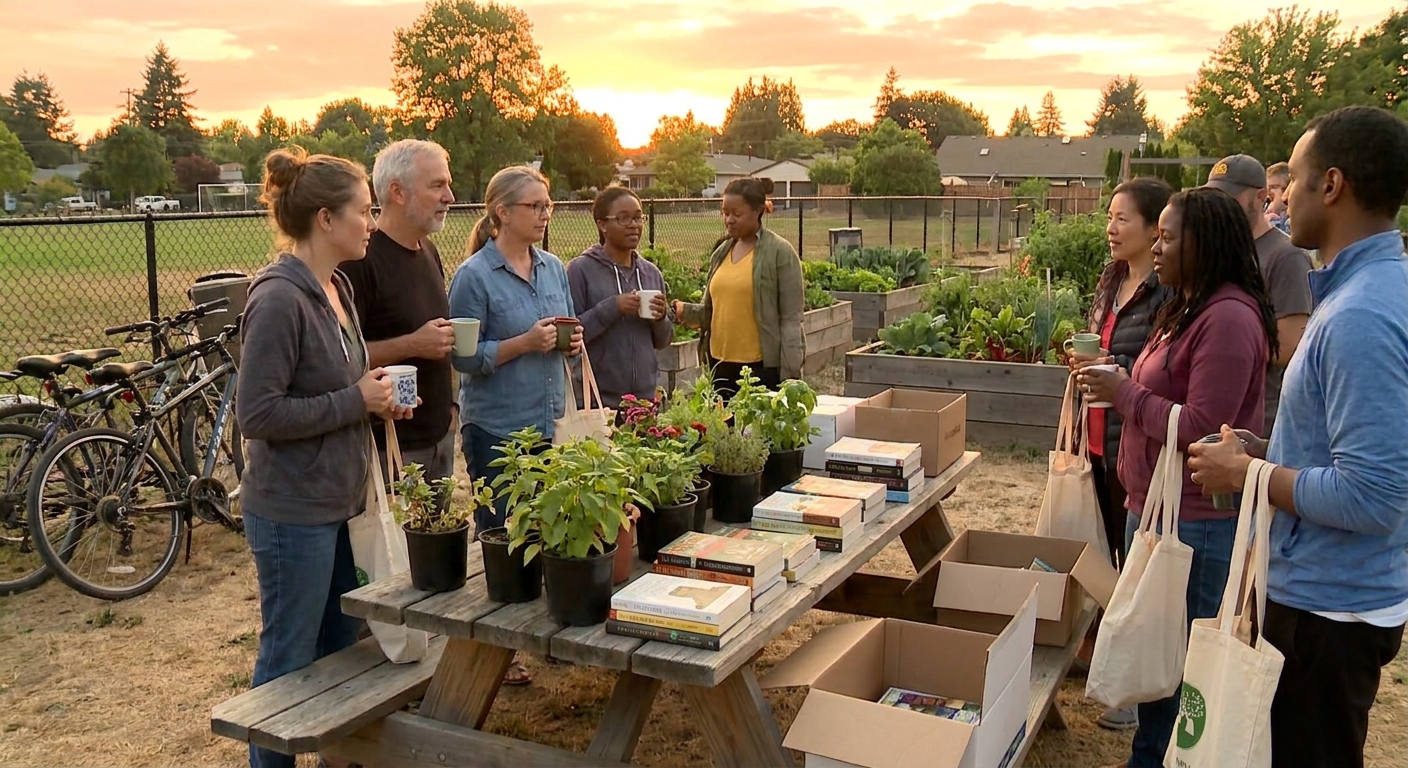
Plant or Seed Swap + Snacks
Theme: “Bring a cutting, seeds, or just curiosity. No one turned away for showing up empty-handed.”
You can openly say: “I’m trying to live a bit more sustainably, but I’m nowhere near perfect. Want to experiment with some ideas together?”
5. Share Practical Swaps, Not Moral Judgments
People shut down when sustainability feels like a moral test. They open up when it’s framed as helpful, doable, or fun.
Examples of Practical, Non-Judgey Swaps
- “We started splitting a CSA veggie box with neighbors—it’s actually cheaper than buying the same amount at the store.”
- “I found a refill shop where detergent is cheaper per load than my old brand. Want me to grab you a sample next time?”
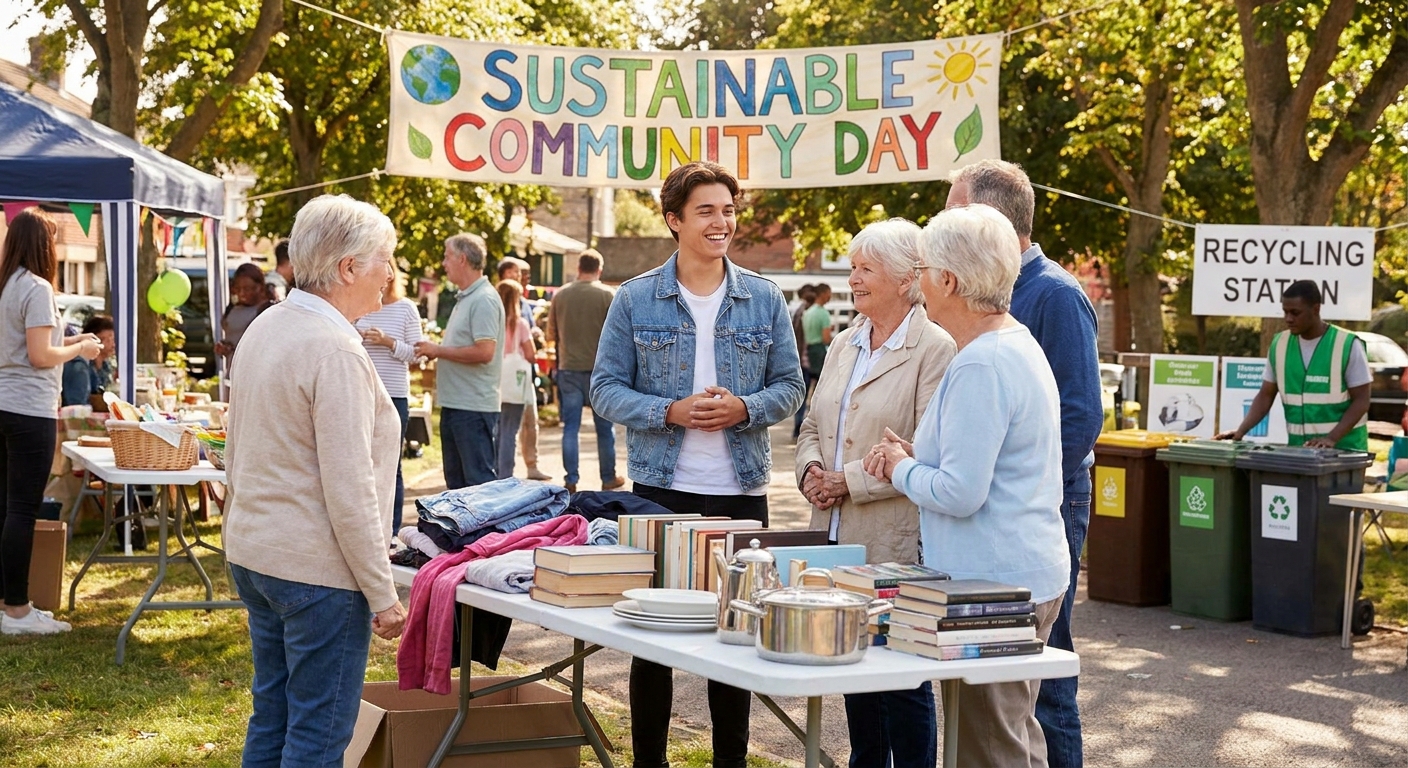
- “We did a toy/book swap instead of buying everything new. The kids didn’t care that it was secondhand—they were just excited it was new to them.”
Rough cost comparisons:
- CSA box split between 2–3 households: often $15–$25/week each vs. $20–$35/week for the same amount of organic produce at a supermarket.
- Bulk detergent: ~$0.09–$0.11 per load vs. $0.16–$0.24 for mainstream brands in smaller bottles.
Stick to “this worked for me” stories. People can decide for themselves if it fits their life.
6. Build Boundaries So You Don’t Burn Out
Community work can be uplifting—and draining—especially if you feel responsible for “saving” everyone.
Healthy boundaries look like:
- Time limits: “I’ll help organize two events this year, not ten.”
- Scope limits: “I’m focusing on food waste and sharing, not every sustainability issue at once.”
- Emotional limits: “It’s okay if some people don’t get on board. That’s not my failure.”
- Say no to events when you’re tired.
- Quit a group that feels toxic or demanding.
- Take breaks and just be a regular person who recycles and buys chips in a bag.
You’re allowed to:
7. Make It Easier for People to Say “Yes”
When you invite people into eco-actions, remove as many barriers as possible.
Better invitations sound like:
- “Join if you can; no worries if not.”
- “No experience necessary—we’re figuring it out together.”
- “Kids, pets, and half-finished projects welcome.”
- Offer flexible times (weeknights vs. weekends).
- Provide some basics (extra containers, scrap fabric, tools).
- Keep events short (1–2 hours) so they feel manageable.
Practical touches that help:
8. Accept That Community Will Be Imperfect—Just Like You
Here’s what sustainable community won’t look like:
- Everyone sharing the same beliefs.
- Perfectly sorted waste streams.
- All-local, all-organic food at every gathering.
Here’s what it can look like:
- People bringing store-bought hummus and homemade leftovers to the same potluck.
- Someone showing up with fast-fashion clothes to swap instead of tossing them.
- A neighbor who drives everywhere but is totally on board to share tools.
Imperfection doesn’t cancel out progress. It’s the environment in which real progress happens.
9. Let Some Things Be Just for Joy
Not everything you do with your community needs to have an eco-goal.
Joy and connection are sustainability work, because they:
- Make life feel more worth protecting.
- Strengthen the trust needed to try things together.
- Increase your resilience when the news feels heavy.
- Have the picnic with mismatched Tupperware.
- Go to the concert.
- Host a game night where the greenest thing that happens is that someone uses a reusable cup by accident.
So yes:
You’re allowed to be a whole human, not a sustainability robot.
10. One Tiny Step to Try This Week
Pick something low-stress, like:
- Post in a local group: “Anyone interested in a casual book or clothing swap next month?”
- Text a friend: “Hey, I’m trying to waste less food. Want to split a big bag of rice/beans/veggies sometime?”
- Ask a neighbor: “I have a drill and ladder you’re welcome to borrow anytime. Just knock or text.”
If one person responds, you’ve started something.
Your sustainability journey doesn’t have to be flawless or lonely. You can be the friend who composts, sometimes forgets their tote bag, and still gently helps weave a more sustainable community—one awkward invite and shared bag of rice at a time.