If you live in a studio, tiny home, or small apartment, you’re already ahead of the game on energy use. Less space means less area to heat, cool, and light. That’s a genuine climate win.
Tiny Space, Big Potential
But “small” doesn’t automatically mean “efficient.” Appliances, habits, and building design still matter. The good news: in a small home, every smart change has an outsized impact.
This guide is about making your compact space cozy, low-impact, and reasonably affordable to run—with ideas that respect the fact that you might be short on both square meters and spare time.
1. Right-Size Your Heating and Cooling
In a small home, it’s easy to overdo heating and cooling if the equipment isn’t matched to the space.
Check for Overpowered Units
- A huge space heater in a tiny room will:
- Cycle on and off frequently.
- Waste energy.
- Create hot/cold swings instead of steady comfort.
- The same goes for oversized window or portable AC units.
What You Can Do
- Choose heaters and AC units designed for your room size (check the recommended square footage on the box or spec sheet).
- Use the lowest setting that keeps you comfortable instead of blasting maximum power.
- Use a fan to circulate air so the unit doesn’t have to work as hard.
A well-sized unit operating steadily is usually more efficient than an oversized one constantly cycling.
2. Master the Art of Zoning (Even in One Room)
Zoning just means focusing comfort where you actually are.
In a studio or tiny home:
- Heat or cool the area you’re actively using (desk, bed, sofa corner), not every cubic meter of air.
Practical Zoning Tricks
- Use a small, efficient space heater near your work or lounging area instead of heating the entire room to a high temperature.
- In summer, position a fan to blow across you, not just generally in the room.
- Use room dividers, curtains, or bookcases to subtly separate zones. Smaller zones are easier (and cheaper) to keep comfortable.
You might be surprised how much you can lower the thermostat if the air is moving and you’re sitting in the warmest/coolest spot.
3. Multi-Use Appliances That Earn Their Footprint
Small space means everything you own has to justify the space and energy it uses.
Smart Choices
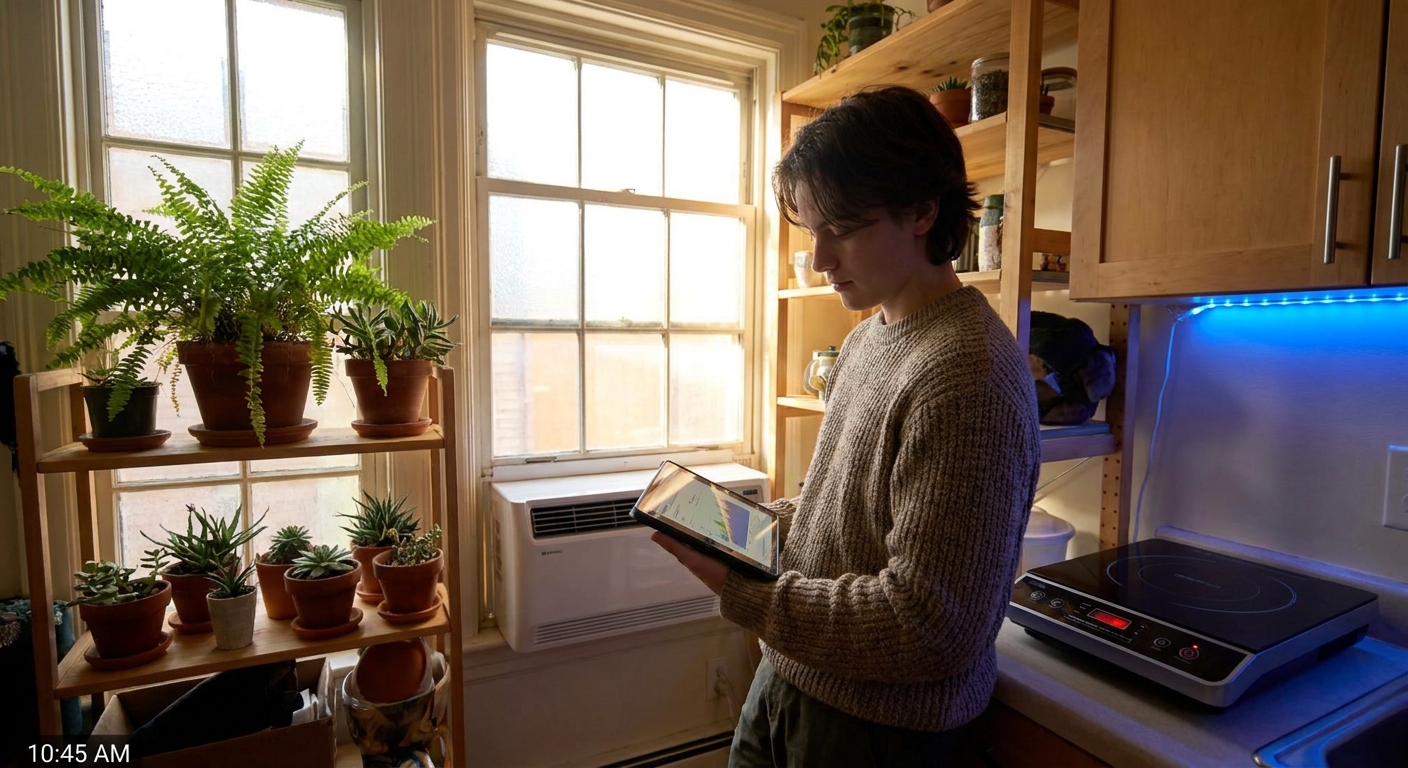
- Induction cooktop: Efficient, fast, and only on when your pot is on it.
- Combination microwave/convection oven: Can act as an oven without the bulk and energy use of a full-size range.
- Electric kettle: Uses less energy than boiling water on the stove and heats only what you need.
Cost vs. Energy
Yes, induction and efficient small appliances can cost more up front, but:
- They often use 30–50% less energy for daily cooking tasks.
- They take up less space.
If you cook at home a lot, the savings add up over a few years—and your future self will thank your past self for not heating the whole house with the oven on a summer day.
4. Lighting a Small Space Without Wasting Energy
Lighting has outsized emotional impact in small homes. It can make the space feel cozy instead of cramped—but it can also waste energy if you rely on one big, harsh overhead light.
Layered Lighting, Efficiently
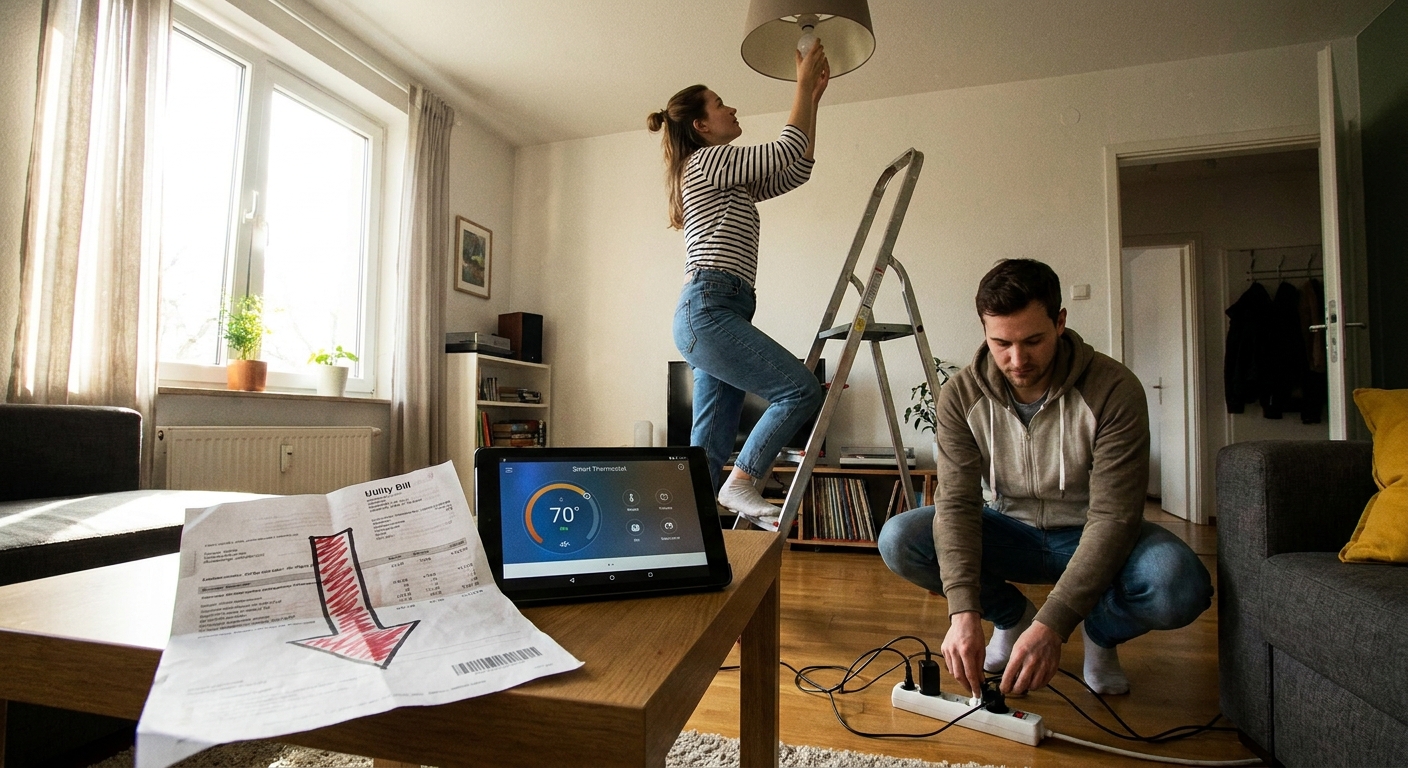
- Use LED bulbs in all fixtures and lamps.
- Use task lighting (desk lamp, reading lamp) instead of lighting the whole room for one activity.
Cost Snapshot
- LEDs: $2–$5 each.
- A small space might need 6–10 bulbs total.
Swapping them all can save around $50–$90/year, and they’ll likely last longer than your lease.
5. Tiny Laundry Habits with Big Payoff
You might not have in-unit laundry, but your habits still affect energy.
If You Have a Washer/Dryer
- Wash full loads, but don’t overstuff.
- Use cold or 30°C/86°F for most loads.
- Air dry on a folding rack that fits in your shower, over the tub, or on a balcony.
Even air-drying half your loads could save dozens of dollars a year and extend your clothes’ lifespan.
If You Use a Laundromat
You’re already sharing machines = more efficient than everyone owning one.
You can still:
- Wash in cold to reduce the laundromat’s energy use.
- Skip the dryer for quick-dry items and hang them at home.
It’s not about perfection, just better-than-before.
6. Make Your Fridge Work Smarter, Not Harder
In small homes, fridges are often small too—but they can still be inefficient.
Quick Optimization Checklist
- Set temperature to about 3–5°C (37–41°F).
- Keep the freezer around -18°C (0°F).
- Avoid cramming to the point where air can’t circulate.
- Don’t press the fridge right against the wall; leave a little room for air to flow behind it.
If you’re in the market for a new mini-fridge or compact unit:
- Check the kWh/year label and compare models.
- Small doesn’t always mean efficient—look for the most efficient model in the size you truly need.
Over 10 years, choosing a more efficient fridge can save hundreds of dollars and a surprising amount of emissions.
7. Hot Water: Tiny Tweaks, Real Savings
Even in a small home, hot water can be a major energy driver.
Low-Effort Tweaks
- Shorten showers by 2–3 minutes.
- Use a low-flow showerhead if you can change it.
- Soak dishes briefly instead of letting hot water run nonstop.
Simple Cost Comparison
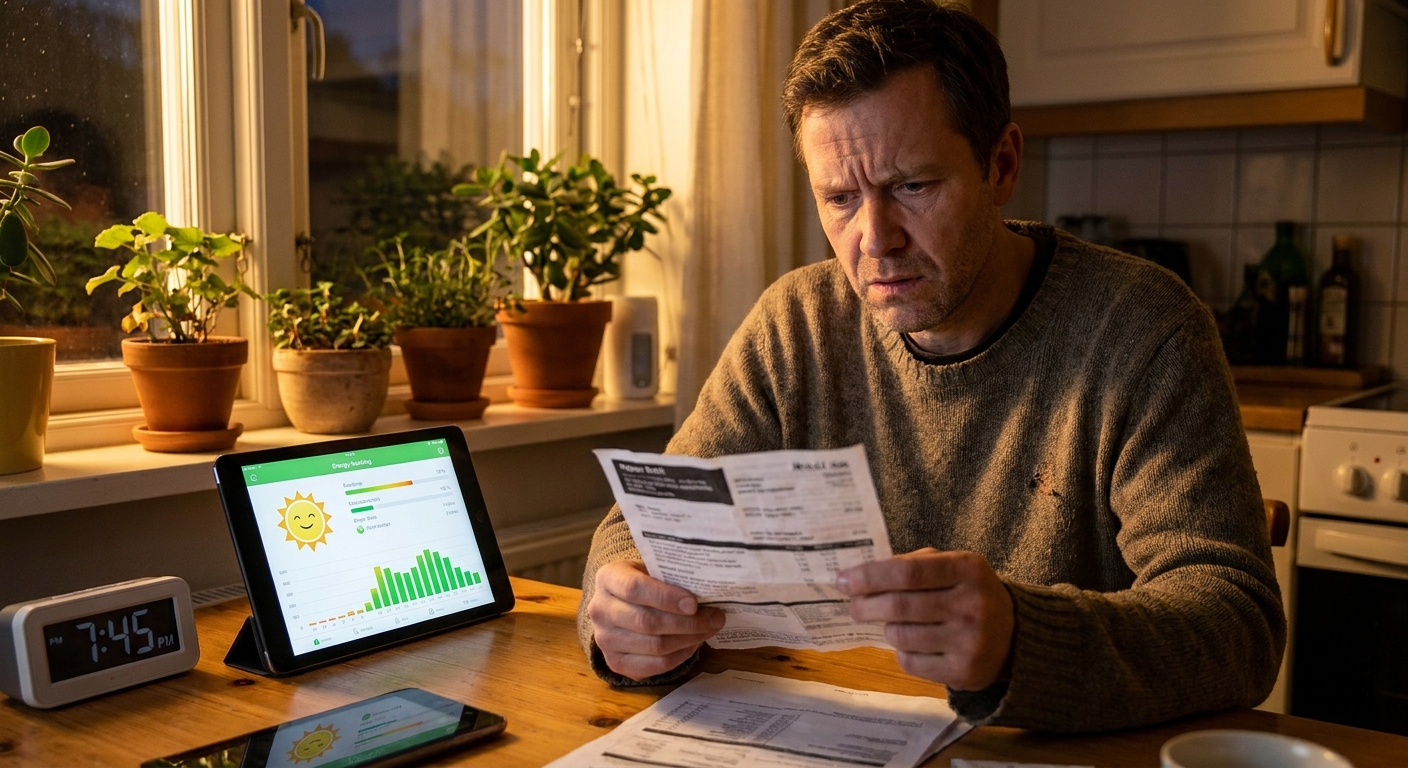
- One 10-minute hot shower daily can cost $70–$200/year in energy, depending on your heater and local prices.
- Trim that to 7–8 minutes and you immediately reduce that cost by 20–30%.
You don’t have to take cold showers—just slightly less epic ones.
8. Decluttering for Energy (Yes, Really)
Clutter isn’t just a visual issue; in tiny spaces it can also:
- Block heaters, vents, or radiators.
- Limit airflow around fridges and electronics.
- Make it harder to close doors and curtains properly, which affects temperature control.
A mini declutter session around energy-relevant areas—windows, vents, under windowsills, around the fridge—can sneakily improve comfort and efficiency.
9. A Realistic Tiny-Home Weekly Energy Routine
You don’t need a complex system. Consider a simple weekly check-in:
Once a week, ask yourself:
Thermostat or heater: Is it set as low/high as I’m comfortable with?
Windows and curtains: Am I using them to manage heat and light?
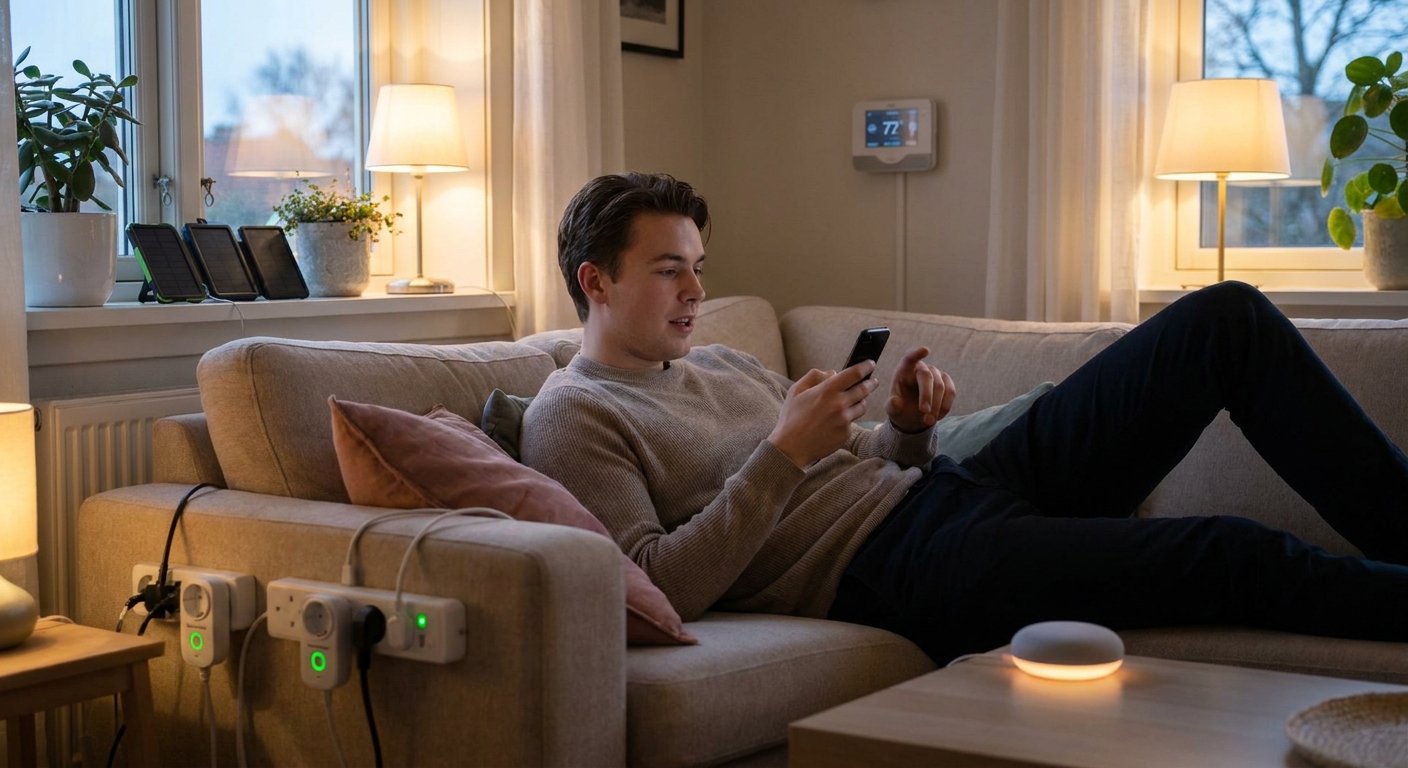
Power strips: Anything I can turn fully off when not in use?
Laundry and hot water: Is there one area I can trim a little this week (shorter shower, air-dry one load)?
That’s it. Five minutes, maybe while your tea steeps.
10. Let Go of the “Perfect Minimalist” Myth
Living in a small space can come with pressure to be perfectly minimal, perfectly organized, perfectly sustainable. Real life doesn’t look like that.
You might:
- Run the heater more during a rough week.
- Use the dryer because everything is damp and it’s been raining for days.
- Order takeout and reheat it in the microwave more often than you’d like to admit.
All of that is normal.
None of it cancels out:
- The LEDs you installed.
- The slightly shorter showers.
- The thought you put into choosing an efficient appliance.
- The care you take in a small space that already uses less by design.
Your tiny home or studio is already a quiet climate action. Every energy-smart habit you add is a bonus, not a requirement.
Aim for better, not flawless. In a small home, even small steps travel a long way.