If sustainability for you currently looks like remembering a reusable bag most of the time and composting some of the time, you’re in good company.
Sustainable Living Doesn’t Have to Be a Solo Project
Community can turn those “some of the time” habits into easier, more affordable, more satisfying routines—without demanding that you suddenly become a minimalist homesteader.
This guide is all about concrete, community-based “sharing hacks” that cut waste and costs while fitting into real life (including nights when you absolutely order delivery).
We’ll walk through practical ideas, what they realistically cost, and simple ways to start.
1. Item Sharing: Owning Less, Accessing More
Most of us own a lot of stuff we rarely use: drills, folding tables, camping gear, extra chairs, cake pans.
Why Item Sharing Helps
- Fewer things manufactured and shipped.
- Less clutter in everyone’s home.
- Lower costs for everyone involved.
Simple Ways to Start
Tool & Gadget List
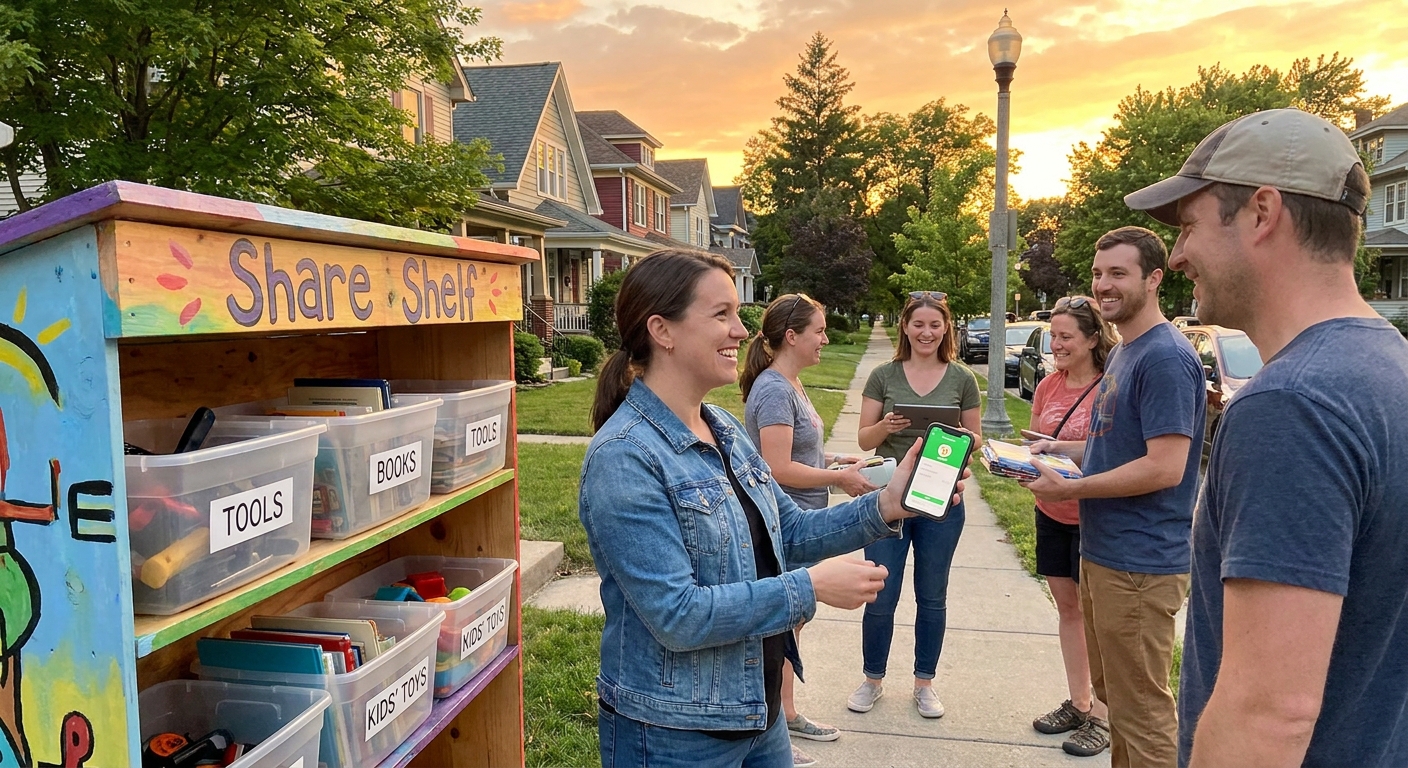
Create a shared document or chat in your building or friend group listing items people are willing to lend. - Drills, ladders, stud finders - Sewing machines, irons - Camping gear, folding tables, extra chairs
Specialty Kitchen Items
We don’t all need a Bundt pan, cake stand, or giant stockpot.
Cost comparison example:
- New drill: $60–$100.
- Borrowed drill: $0 + maybe a thank-you snack.
- If 10 households share 1–2 drills instead of buying their own, that’s hundreds of dollars and a lot of materials saved.
Beginner step: Post once in a chat: “I have a [tool/item] that people can borrow if you ever need it.” You don’t have to manage a whole library.
2. Food Sharing: From Waste to Community Fridge Moments
Food waste is a huge climate issue, but also a very fixable one at the community level.
Ideas That Don’t Require Perfect Meal Planning
Split Bulk Buys
You don’t have to choose between too-small packaging and way-too-much food.
- Big bag of rice or beans (10–20 lbs): often $0.50–$0.80/lb.
- Small bags (1–2 lbs): often $1–$1.50/lb.
Split one big bag among 3–4 households and everyone saves ~30–50%.
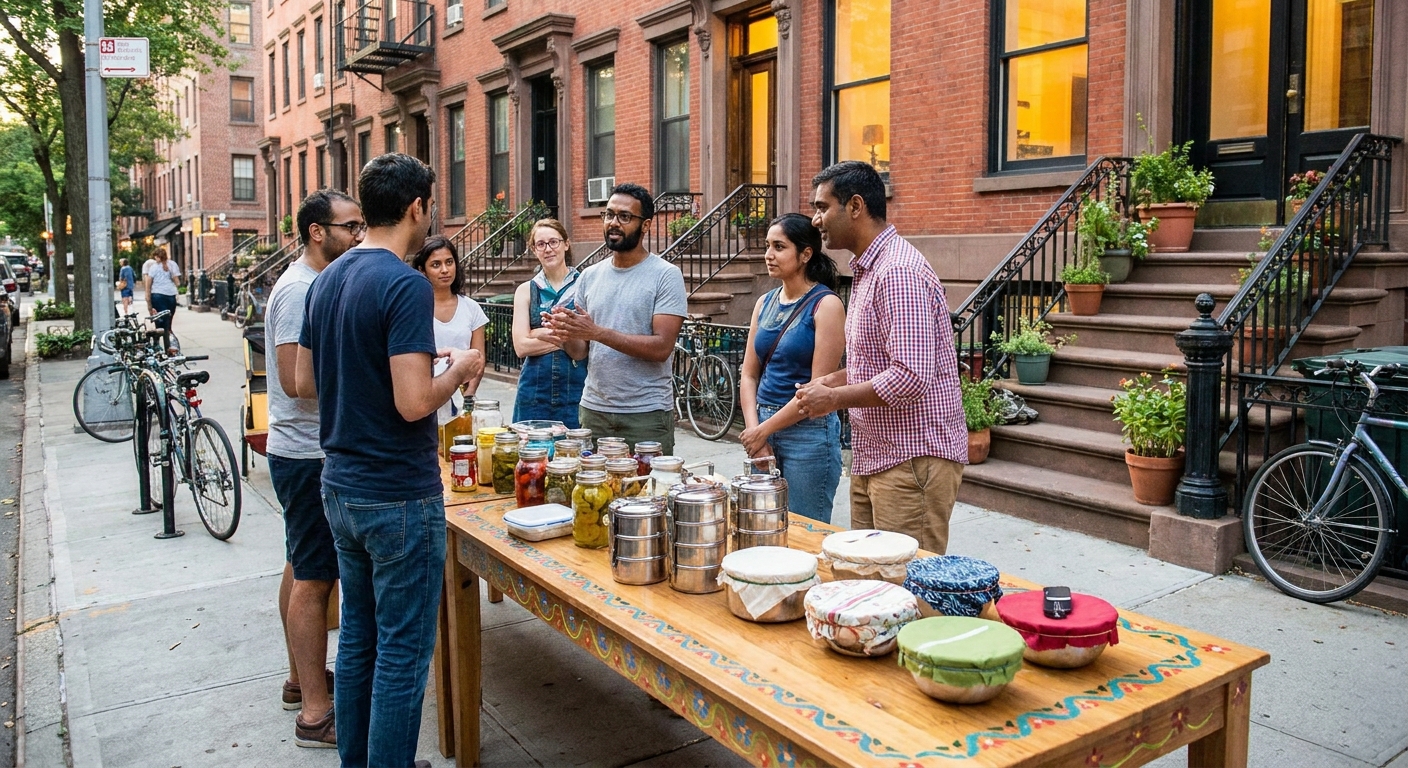
“I Overcooked” Group Chat
Create a small chat labeled “Extra Food.”
- “I made too much soup; anyone want a container?”
- “We’re going away tomorrow and have extra salad greens and yogurt.”
Community Fridge or Little Free Pantry (if your area has them)
Redirect safe, unopened food there instead of tossing it.
No one has to be a perfect meal planner; you’re just catching the overflow.
3. Ride Sharing: Less Fuel, Same Errands
You might not be ready to give up your car, and that’s okay. There’s still a lot you can do.
Everyday Ride-Sharing Ideas
Grocery Runs
Offer one neighbor or friend a ride when you’re heading to the store. They save a trip; you reduce total cars on the road.
School or Activity Carpools
If 4 kids live near each other, you don’t all need to drive every day.
Cost and impact:
- Fewer trips = less fuel, wear and tear, and emissions.
- Carpooling twice a week instead of driving solo five times can cut your weekly trip count by over half.
Bike & Transit Buddies
If safety or confidence is a barrier, join a neighbor or coworker on a trial run.
No one has to go full car-free to make a dent.
4. Skill Sharing: Fixing More, Buying Less
You probably know how to do something other people find hard—and vice versa.
Realistic Skill Swap Ideas
- Sewing or mending for someone in exchange for help setting up tech.
- Bike maintenance in exchange for home-cooked meals or childcare.
- Basic home repair in exchange for language help, tutoring, or pet sitting.
Cost comparison:
- Simple clothing repair: $10–$20 at a tailor vs. a neighbor doing it in 10 minutes while you chat.
- Tech support session: $50–$150 vs. a friend doing it in exchange for dinner.
Beginner step: Post something like: “I can help with [X], and I’m looking for help with [Y]. Anyone interested in swapping?”
5. Shared Services: Compost, Internet, and Beyond
Sometimes, the big barrier to sustainable options is cost or minimums. Community can lower that barrier.
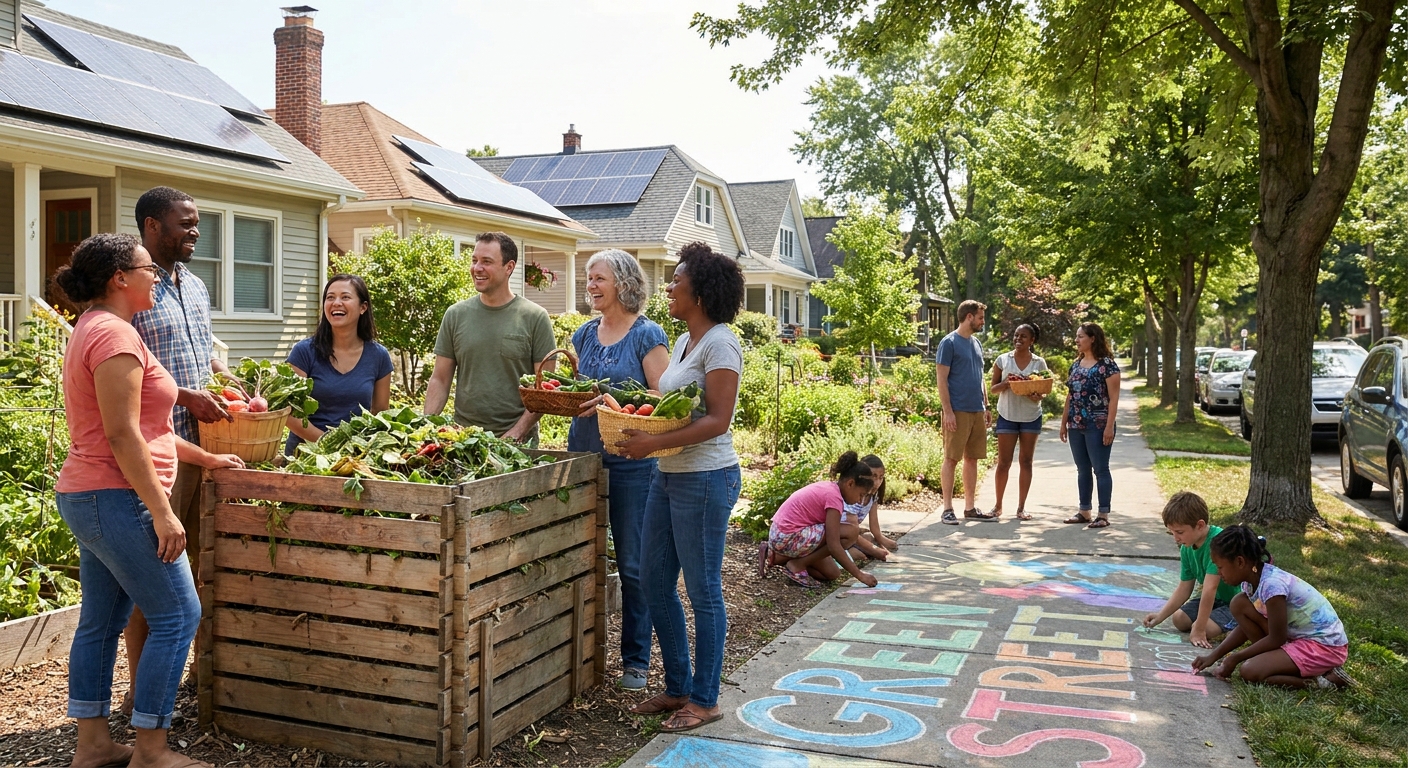
Compost Pickup
- Solo subscription: $20–$35/month.
- Shared among 3–5 households: $5–$12/month each.
- Pick a central bin spot.
- Label clearly.
- Share what can and can’t go in.
- Rotate basic cleaning/checking of the area.
How to make it work:
Shared Wi-Fi (Where Appropriate & Legal)
- Two apartments sharing a higher-speed internet plan instead of two separate mid-tier plans.
- Saves money and equipment, especially in places where ISPs push everyone into separate service.
Always check your contract and local rules; the goal is creative sharing, not headaches.
6. Community Events That Also Happen to Be Sustainable
Not everything has to be a “green event.” You can start with fun and layer in sustainability.
Low-Lift Event Ideas
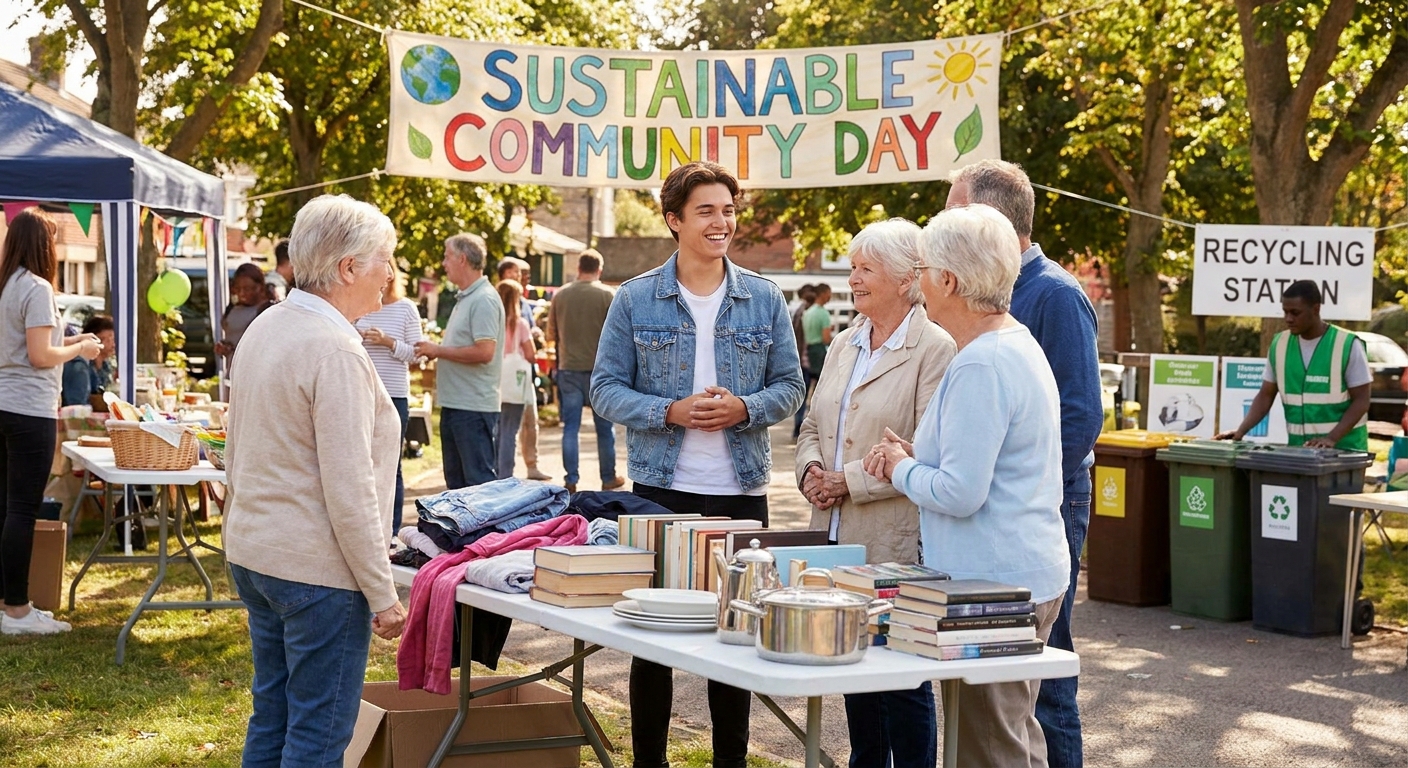
Porch or Hallway Swap Day
- Everyone leaves items they’re giving away outside their door for a few hours. - Neighbors can browse and take what they need.
DIY Fix-It Circle
- Invite a few people to bring broken or questionable items: lamps, jeans, toys. - Look up repair videos together, share tools, and see what you can rescue.
Themed Potluck: “Most Sustainable Dish I Can Manage”
- Some people will bring local, seasonal dishes. - Others might show up with simple homemade pasta. - All effort levels welcome.
You can be clear that this is about trying, not impressing.
7. Honest Barriers—and How Community Helps
Let’s be transparent: sustainable habits can clash with reality.
- You’re tired and default to takeout.
- You forget your bags and end up with plastic anyway.
- You don’t have money for pricey eco-branded gear.
Community isn’t a cure-all, but it can help with:
- Time: Sharing tasks (like bulk shopping) so no one person does it all.
- Money: Splitting costs of better-quality items or services.
- Motivation: Reminding each other why you care when it’d be easier to give up.
You’re allowed to be inconsistent and still belong.
8. Safety, Trust, and Common Sense
Sharing is powerful—but you don’t have to share everything with everyone.
Healthy boundaries:
- Start with low-risk items (tools, books, kitchenware) before moving to rides or home access.
- Use public or semi-public spaces when meeting new people from online groups.
- Trust your instincts; you can always say no.
It’s okay to keep some things just yours, whether that’s your car, your emotional bandwidth, or your favorite mug.
9. How to Start If You’re Shy, Busy, or Both
If You’re Shy
- Start online with a small neighborhood group.
- Offer something specific: “I have a ladder and a drill people can borrow.”
- Build trust slowly—repeat small interactions.
If You’re Busy
- Link sharing to what you already do: grocery runs, online orders, weekend chores.
- Suggest one-time experiments instead of ongoing commitments.
“I’m making a bulk order of detergent tabs—anyone want to add a box and split shipping?”
You don’t need to become the unofficial community manager. One helpful offer here and there is enough.
10. One Small Sharing Experiment to Try This Week
Pick one that feels realistic:
- Ask a neighbor or coworker if they want to split a bulk item you both use (toilet paper, rice, oats, detergent).
- Offer one item up for borrowing in your building or online group.
- Start an “extra food” chat with friends who also complain about food waste.
You can do all of this while still eating late-night pizza from a box and occasionally stuffing un-rinsed containers in the recycling.
Sharing isn’t about becoming perfect; it’s about making sustainability more practical, social, and affordable—one borrowed ladder and shared bag of beans at a time.