If you’ve been wanting to live more sustainably but feel overwhelmed, a 30-day plan can help—but not the kind that asks you to make your own toothpaste and grow all your food.
A Month of Small Changes (Not a Life Makeover)
This plan is built for real life: work, kids, takeout, tired evenings. Think one small eco swap at a time, layered over what you already do.
You don’t have to follow it perfectly. Use it as a menu, not a contract.
Week 1: Easy Wins at Home
Day 1: Take Inventory (10–15 Minutes)
Walk through your home with a curious—not judgmental—eye. Notice:
- Where trash builds up most (kitchen, bathroom, office).
- What single-use items you buy over and over.
Pick one area to focus on this week (most people choose the kitchen or bathroom).
Day 2: Set Up a “Reuse Station”
Gather things you already have:
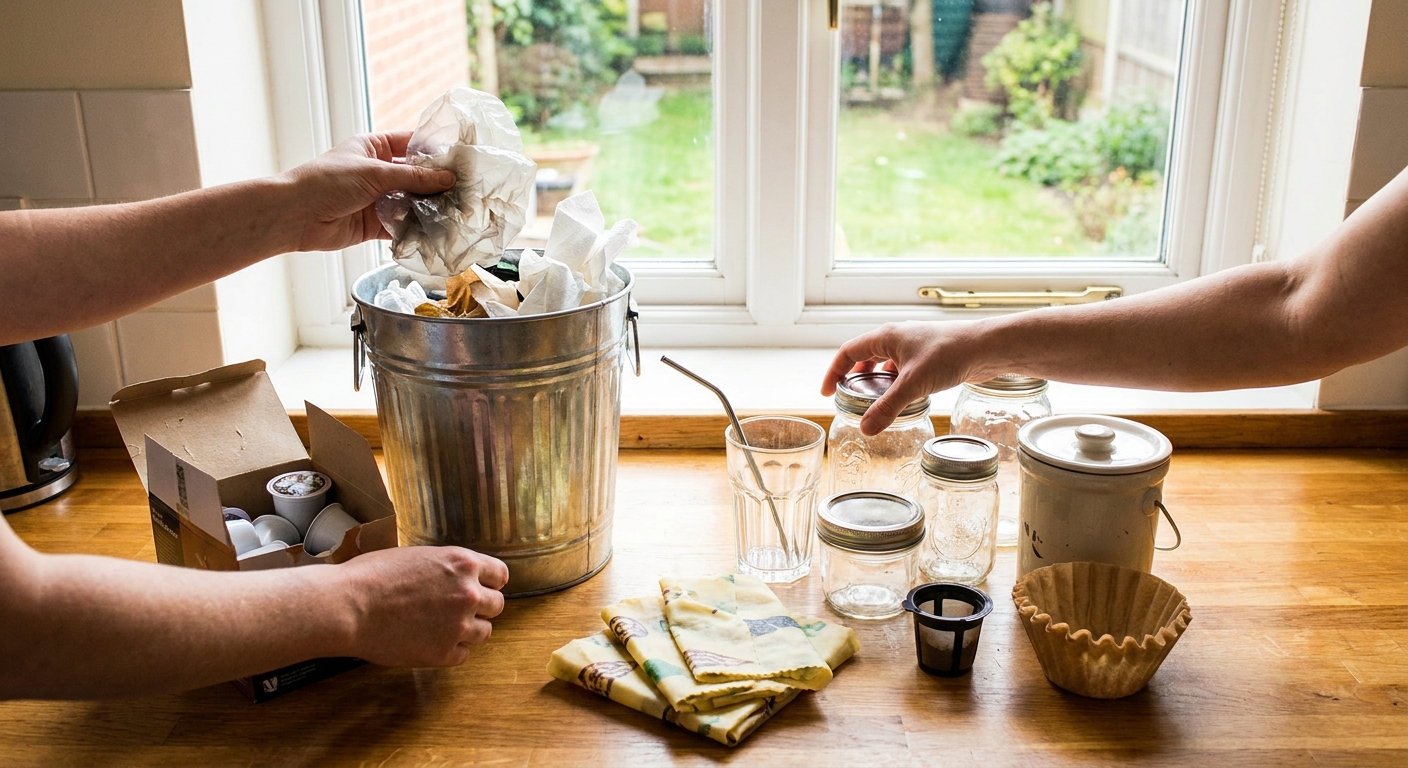
- Old T‑shirts or towels (cut into rags).
- Jars with lids.
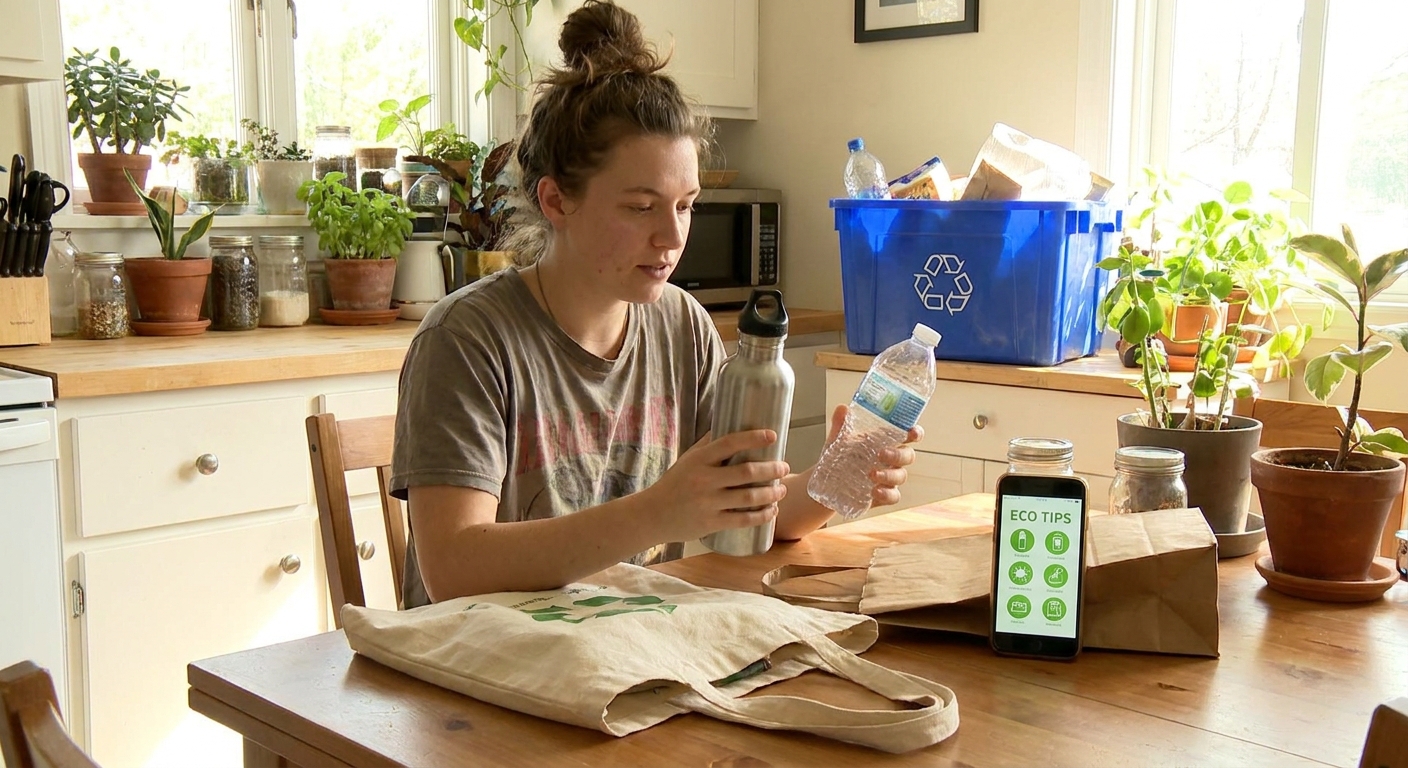
- Extra tote bags.
Designate a small spot (shelf, basket, or drawer) as your reuse station, so swaps are easy to grab.
Day 3: Replace One Roll of Paper Towels
Don’t throw away what you’ve got. Instead:
- Move the paper towels out of immediate reach.
- Put your new rags or cloths where the paper towels used to be.
- When the current roll runs out, challenge yourself to wait one week before opening a new one.
Day 4: Try a Low-Waste Cleaning Swap
When you next clean:
- Mix a simple cleaner: 1 part white vinegar, 1 part water (optional: a few drops of essential oil). Use on glass and many surfaces.
- Or, if DIY isn’t your thing, note what you’re about to run out of and plan to replace just that with a refill or concentrated cleaner.
Day 5: Declutter Single-Use “Stuff”
Open a drawer or cupboard and pull out:
- Extra plastic cutlery
- Napkins
- Sauce packets
Put them in a “use me first” container. Once they’re gone, you can start saying “no thanks” more confidently with takeout.
Day 6: Plan One Reusable Swap for Next Week
Look at your inventory from Day 1. Choose one item to upgrade when it runs out, such as:
- Dish soap → refill or concentrated version
- Body wash → bar soap
- Plastic scrubbers → wooden brush or compostable sponge
Day 7: Reflect, Don’t Judge
Take 5 minutes to ask:
- What felt easy?
- What felt annoying?
- What eco swap seems most natural so far?
Keep the easy ones. Adjust or drop anything that feels like a constant battle.
Week 2: Greener Food & Takeout Habits
Day 8: Make Reusable Containers Visible
Move your reusable containers to the most accessible shelf. If they’re buried, you’ll default to plastic wrap or bags.
Day 9: Leftovers Strategy
Commit to using containers instead of wrap for:
- Leftovers
- Cut fruits and veggies
- Snacks to-go
If you don’t have enough containers, wash a jar and start using it.
Day 10: Smarter Takeout Setup
Choose your favorite takeout place and add a note in your delivery app profile:
“No plastic cutlery, no napkins, please.”
Keep a takeout kit near your door:
- A tote bag
- A couple of containers (if your local spots allow them)
- A set of real cutlery
Day 11: One Plant-Based Meal
Plan a single plant-based meal this week:
- Pasta with tomato sauce and veggies
- Bean chili
- Veggie stir-fry with tofu or chickpeas
You don’t have to go vegan. Even one meatless meal a week lowers your footprint.
Day 12: Freeze Before It Spoils
Choose one perishable item (herbs, berries, bread) and freeze it before it goes bad. This simple habit dramatically cuts food waste.
Day 13: Grocery Bag Backup System
Put 2–3 bags:
- In your car or bike basket, and
- Folded in your everyday bag if possible.
If you still forget sometimes: accept the bag, reuse it, and try again next time.
Day 14: Celebrate What’s Working
Notice:
- Did you use fewer paper towels?
- Did you waste less food?
- Did you avoid extra plastic cutlery?
Small wins count. You’re building habits, not chasing perfection.
Week 3: Bathroom & Laundry Swaps
Day 15: Choose One Bathroom Swap
Look at what you’re close to finishing:
- Shampoo
- Body wash
- Toothpaste
- Disposable razors
- Bottle shampoo → bar shampoo or a refillable bottle
- Disposable razor → metal safety razor (if that feels comfortable)
Pick one item to swap when it runs out. For example:
Day 16: Towel & Cloth Rotation
Commit to using washable cloths instead of disposable wipes where possible. Add a small hamper or hook in the bathroom to collect them.
Day 17: Toothpaste & Toothbrush Check
If you’re ready:
- Next toothbrush: consider bamboo or a refillable head.
- Toothpaste: try tablets or a brand with recycling programs.
If not ready, that’s fine—make a note for when you need replacements.
Day 18: Switch to Cold Water Laundry (Most of the Time)
Set your washing machine default to cold for everyday loads. Hot water is only essential for heavily soiled items.
This simple swap cuts energy use and can lower your bill.
Day 19: Full Loads Only (When You Can)
Aim to wash only when you have a full (but not overstuffed) load.
- If you must wash something small, add towels or bedding.
Day 20: Rethink Dryer Use
If possible, try:
- Hanging at least part of a load to dry (jeans, shirts, or delicate items).
- Using lower heat settings.
Line-drying even one load per week can save energy and extend clothing life.
Day 21: Review & Reset
Ask:
- Which bathroom or laundry swaps felt natural?
- What annoyed you? Can it be tweaked (different product, different spot)?
Keep refining instead of forcing what doesn’t fit.
Week 4: Long-Term Habits & Mindset Shifts
Day 22: “Secondhand First” Rule
For the next week, before buying something new, ask:
Can I find this secondhand or borrow it?
Try this with:
- Books
- Clothing
- Kitchen gadgets
- Tools
If you don’t find what you need, buy new—no guilt.
Day 23: Unsubscribe & Unfollow Overwhelm
Reduce eco decision fatigue by unsubscribing from:
- Promo emails that drive mindless shopping
- Influencers whose “perfect” sustainability stresses you out
Curate a few sources that offer realistic eco inspiration instead.
Day 24: Start a Tiny “Eco Fund”
Take money saved from small swaps (fewer paper towels, less takeout, thrifted items) and set aside even $5–$10.
Use it to:
- Try higher-quality eco products
- Support local sustainable businesses
- Invest in a durable item you’ve been eyeing
Day 25: One Low-Impact Leisure Choice
Pick one activity this week that’s lower impact than your usual:
- Picnic at a park instead of a long drive
- Library visit instead of new book orders
- Streaming a movie night in instead of a shopping trip
Day 26: Talk About Your Swaps (Lightly)
Share one swap that worked for you with a friend or family member:
- No preaching
- No guilt
- Just “Hey, this made my life easier/cheaper/better.”
Normalizing these conversations can create ripple effects.
Day 27: Check Your Trash Can
Peek at your main trash can. What do you see most?
- Food packaging?
- Paper towels?
- Takeout containers?
Let that guide your next round of swaps, after this month.
Day 28: Choose 3 “Forever Swaps”
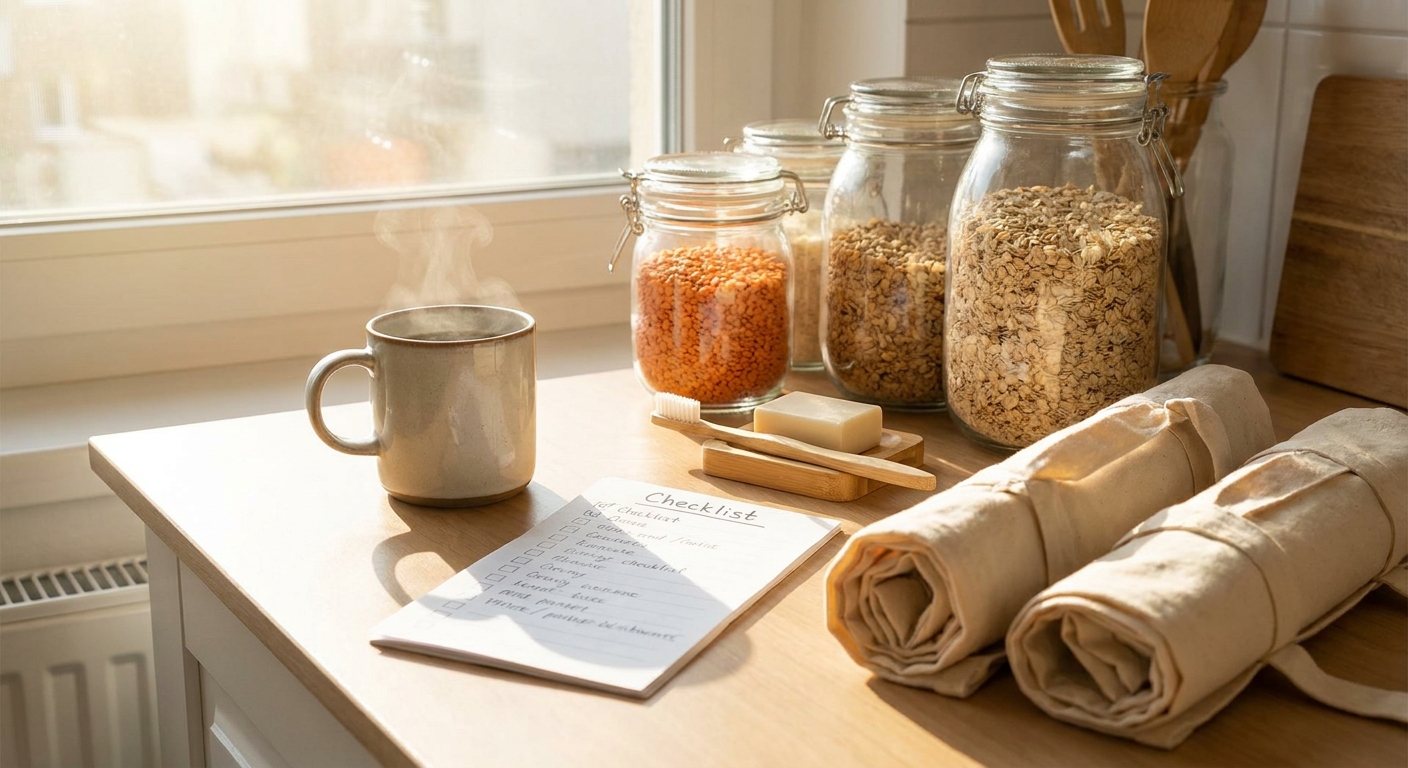
From everything you’ve tried, pick three that felt easy enough to keep long-term. Examples:
- Using cloths instead of most paper towels
- Always bringing reusable bags
- Ordering takeout without cutlery and extra napkins
Day 29: Make Peace with Imperfection
Write down (or just admit to yourself):
- One thing you’re not ready to change yet.
- One eco “rule” you’re going to stop stressing about.
You’re allowed to set boundaries, even in sustainability.
Day 30: Plan Your Next Gentle Step
Instead of another 30 rules, choose one new focus for the next month:
- Reduce food waste further
- Focus on clothing choices
- Improve your commute habits
You’re building a sustainable lifestyle at a human pace.
The Real Win: Feeling Capable, Not Perfect
After 30 days of eco swaps, you won’t have a zero-waste home—and you’re not supposed to.
What you _will_ have is:
- A handful of new habits that feel natural.
- A clearer sense of what matters most in your life.
- Proof that you can change things without burning out.
You can still order takeout, forget your bags sometimes, and buy the occasional non-eco product. None of that cancels out the good you’re doing.
Sustainability isn’t a finish line; it’s a relationship with your stuff, your habits, and the planet. Start small, stay honest, and let your eco swaps grow with you.