If you’ve ever tried to go zero-waste overnight, you probably ended up:
The Problem with “Perfect” Sustainability
- spending too much,
- feeling overwhelmed, and
- back to your old habits a month later.
Instead of aiming for perfection, let’s aim for “better than before.” These 10 eco swaps are designed to be realistic, affordable, and easy to keep using—like a friend’s tip you actually adopt.
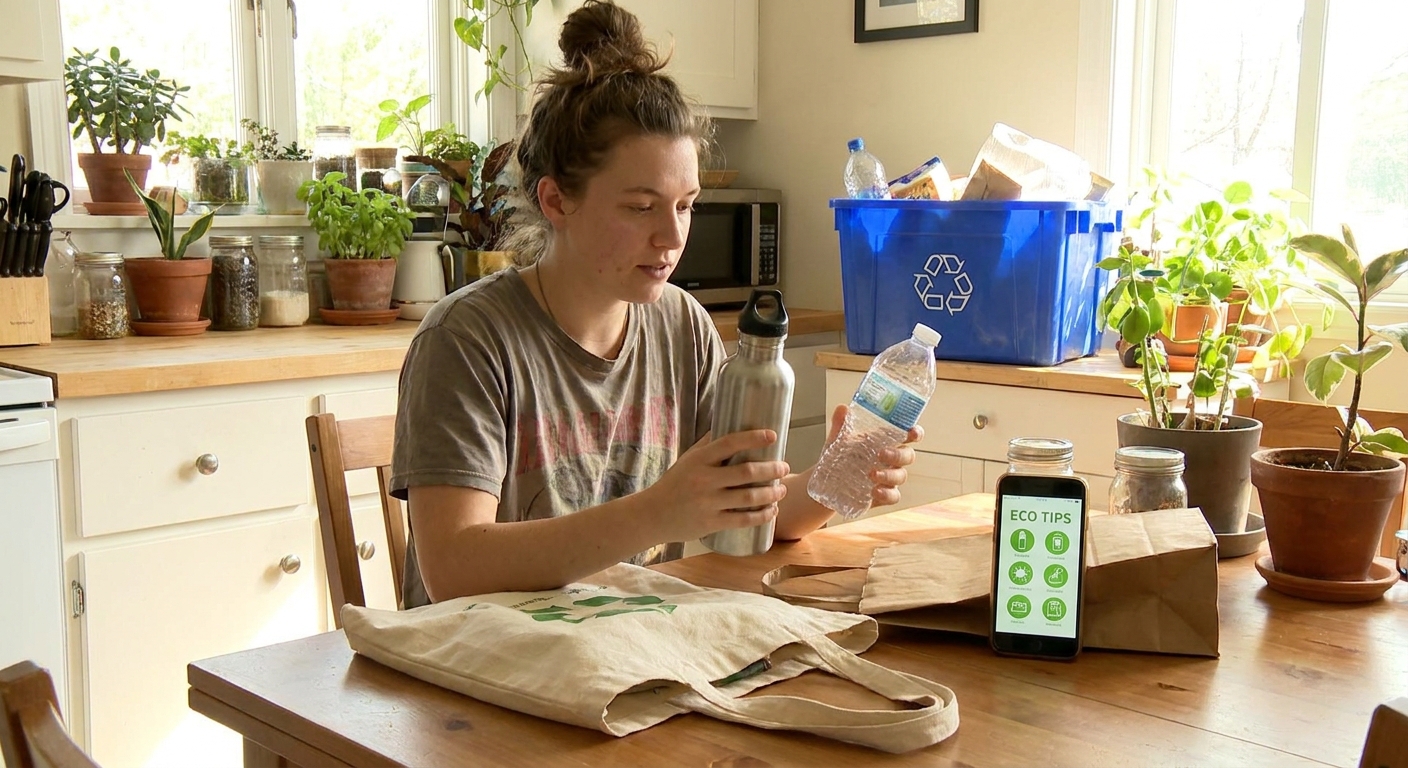
1. Grocery Bags → A Stash of Reusables (Plus a Backup Plan)
Swap: Single-use plastic or paper bags → reusable bags.
Why it sticks: You don’t have to remember them every time for them to matter.
Tips to Make It Stick
- Keep 2–3 bags in your car, bike basket, or near the door.
- Fold one into your everyday bag.
- If you forget, say yes to paper, then reuse it for recycling or packing.
- Reusable tote: often free or $1–$5.
- Plastic bag fees where they exist add up over time.
Cost Check
2. Produce Bags → Bare Produce or Reusable Mesh
Swap: Thin plastic produce bags → no bag or reusable mesh bags.
Beginner Moves
- Skip bags for sturdy items like apples, oranges, potatoes.
- Use 1–2 mesh bags for smaller items (green beans, mushrooms).
Reality Check
Some stores still push plastics. Do what you can. Each bag you skip is a tiny win.
3. Coffee Cups → Reusable Mug (When You Remember It)
Swap: Disposable coffee cups → a reusable cup.
How to Start
- Choose a mug that fits your go-to order and cup holder.
- Keep it at your desk or in your bag.
- If you forget, just enjoy the coffee and try again tomorrow.
Cost Perks
Many cafes offer 5–10% discounts or a flat cents-off for bringing your own cup. Over a year of daily coffee, that can be $20–$50 back in your pocket.
4. Zip-Top Bags → Reusable Silicone Bags & Jars
Swap: Disposable plastic bags → reusable silicone bags, glass jars, or containers.
Easy Entry Point
- Start with the foods you re-pack often: snacks, chopped veggies, freezer fruit.
- Use clean jars (pasta sauce, jam) as containers for leftovers or dry goods.
- Box of 100 zipper bags: $5–$8, often replaced every few months.
- Reusable silicone bag: $10–$20, lasts for years.
Cost Comparison (Approx.)
You don’t need to ban disposables. Even swapping for half your usual uses is progress.
5. Single-Use Soap Bottles → Bars & Refills
Swap: Body wash, hand soap, and shampoo in single-use bottles → solid bars or refills.
Beginner-Friendly Steps
- Try one bar soap in the shower instead of body wash.
- Swap one pump soap at a time for a refillable bottle.
- If bar shampoo feels intimidating, start with a refillable liquid instead.
- Bar soap: $3–$8, lasts as long (or longer) than a bottle.
- Refills: Often 10–20% cheaper than buying a new bottle each time.
Cost Angle
6. New Sponges → Compostable Cloths & Brushes
Swap: Plastic kitchen sponges → compostable sponge cloths or wooden brushes.
Why It Helps
Plastic sponges shed microplastics down the drain and into waterways.
Practical Approach
- Use a brush for scrubbing and a sponge cloth for wiping.
- When they’re worn out, many natural options can be composted (check packaging).
- Regular sponge: $1–$2, replaced monthly.
- Sponge cloth: $4–$6, can last months and replace several rolls of paper towels.
Cost Comparison
7. New Decor → “Shop Your Home” & Secondhand Treasures
Swap: Buying new decor → rearranging, upcycling, or buying secondhand.
Beginner Moves
- Before buying, ask: _Do I already own something that could fill this role?_
- Swap pillows, blankets, or plants between rooms.
- Visit a thrift store with one specific item in mind.
Cost Benefit
Secondhand decor often costs a fraction of new—plus, you’re keeping items in use instead of sending them to landfill.
8. Tossing Food Scraps → Low-Effort Composting
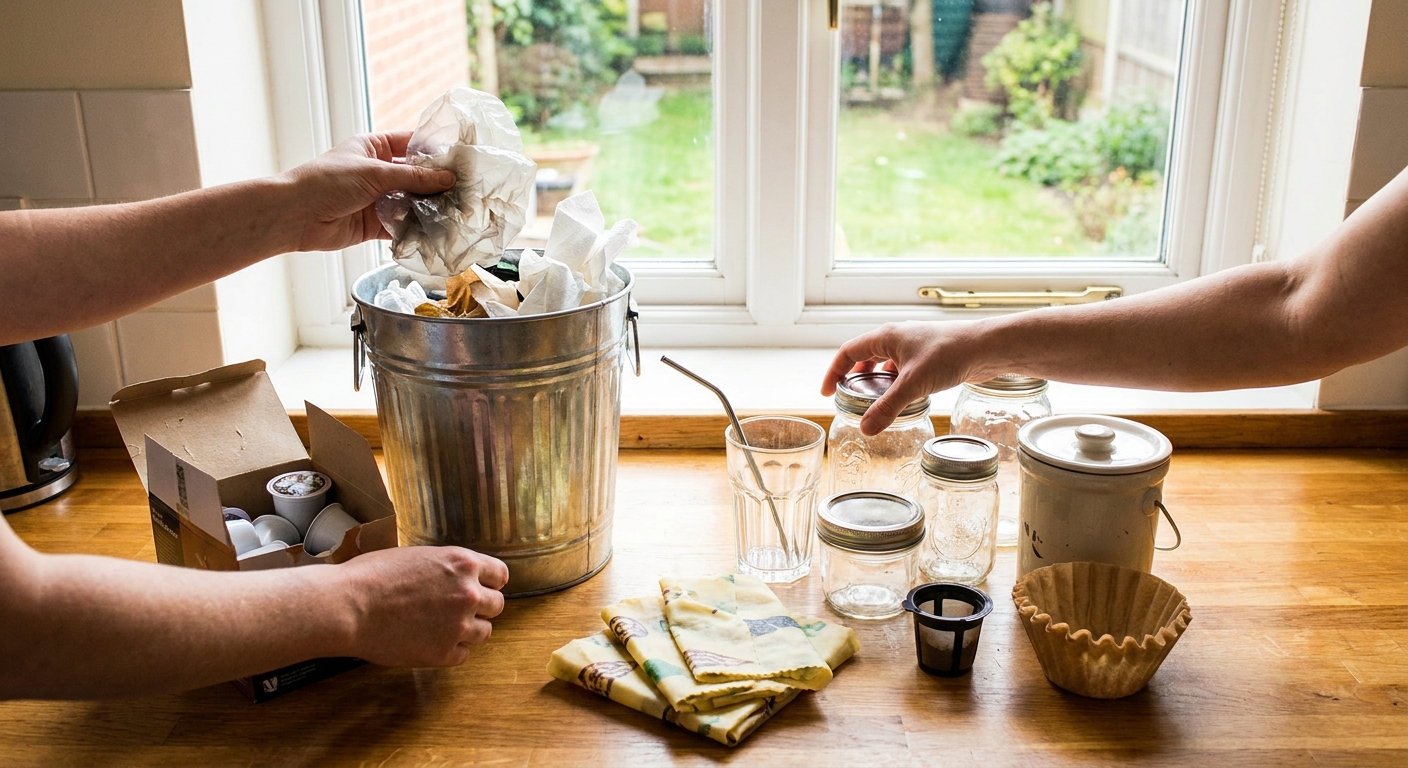
Swap: Trash bin → compost bin or local program.
Composting can feel intimidating, but it doesn’t have to be a science project.
Simple Options
- Apartment: Check if your city has a food-scrap program, or use a countertop compost bin and drop scraps at a local collection site.
- House: Start with a small outdoor bin or pile. Add food scraps + yard waste and let nature do the rest.
Money Angle
Using compost in your garden reduces the need for store-bought fertilizers and soil amendments.
And if your compost goes a bit funky sometimes? Welcome to the club. Adjust and keep going.
9. Impulse Fashion → The 24-Hour Rule & Wishlists
Swap: Spur-of-the-moment fast-fashion buys → slower, more intentional choices.
How to Do It
- When you see something you want, add it to a wishlist.
- Wait 24 hours before buying (longer for big purchases).
- If you still want it and it fits your budget and values, go for it.
Why It’s Eco
Fewer, better-chosen items mean less production, shipping, and eventual waste.
Bonus: You’ll likely save money by avoiding “wore it once” regrets.
10. Doing It Alone → Swapping in Community
Swap: Solo efforts → sharing, borrowing, and trading with others.
Ideas to Try
- Start or join a swap group for clothes, books, or kids’ gear.
- Borrow tools from neighbors instead of buying new.
- Share eco tips that actually worked for you, without judgment.
Community swaps keep stuff in use longer and make sustainability feel less lonely and more normal.
How to Choose Your First (or Next) Swap
Ask yourself three questions:
What annoys me the most? (Overflowing trash? Too many plastic bags?)
What do I buy over and over? (Coffee, paper towels, bottled drinks?)
3. What feels doable this month? (Not your dream version of you—_you right now_.)
Pick the swap that lands at the intersection of annoying, frequent, and doable. That’s where habit change sticks.
You Don’t Have to “Earn” Your Eco Card
You can:
- compost at home and still toss a pizza box now and then,
- bring your own bags and still forget your coffee cup,
- thrift your wardrobe and still buy the occasional new thing.
Eco swaps are tools, not tests. Choose the ones that fit your real life, adjust as you go, and remember: every single swap that sticks is better than a dozen you quit after a week.