A lot of “eco” marketing quietly suggests that sustainability means buying a whole new set of matching jars, bamboo everything, and pricey gadgets. That’s not only unrealistic—it’s the opposite of what low-waste living is about.
Sustainable… But Make It Affordable
You don’t need a perfect aesthetic; you need practical, budget-friendly habits that work with your real life. Think: rinsed-out pasta jars instead of a $100 set of containers.
Let’s walk through eco swaps that are genuinely good for the planet and your wallet.
Rule #1: Use What You Already Have First
Before we dive into swaps, the most powerful (and cheapest) eco move is:
Don’t replace something that still works.
- Finish the products you have, even if they’re not “eco-branded.”
- Repurpose containers before buying new ones.
- Wear out your clothes; then repair or upcycle them when possible.
Buying a new “sustainable” product to replace something that’s still fine is… just more consumption.
Kitchen Swaps That Cut Costs
1. Paper Towels → Rags from Old Clothes
Swap: Stop buying as many paper towels. Cut up old shirts, socks, or towels into cleaning rags.
Savings:
- 1–2 rolls/week at ~$1.50 each → $75–$150 per year.
- Rags: free.
- Wiping counters
- Dusting
- Drying hands or small spills
Use rags for:
Keep a small bin for dirty rags and toss them in with your regular laundry.
2. Plastic Wrap & Bags → Containers & Jars
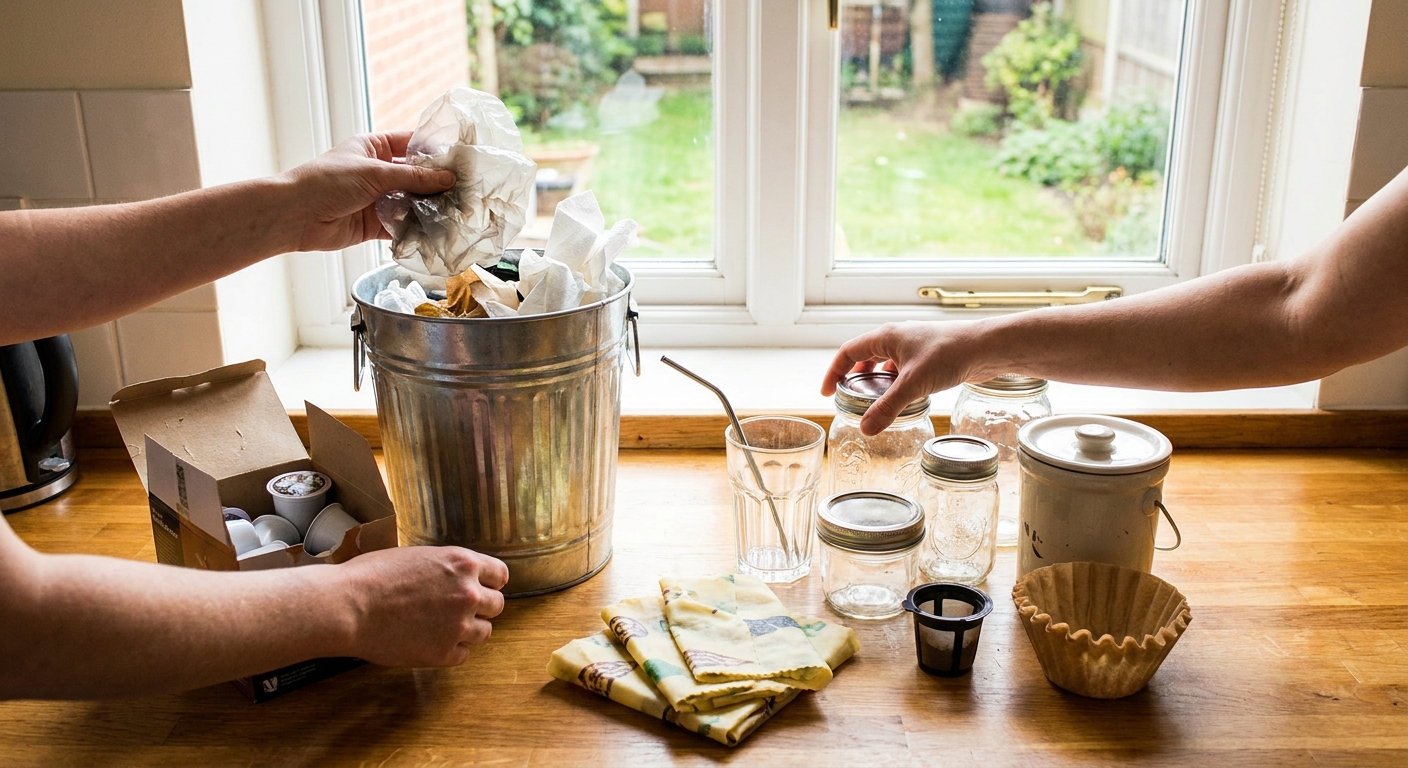
Swap: Buy fewer zipper bags and rolls of plastic wrap. Use old containers and glass jars instead.
Savings (Approx.):
- Zipper bags & wrap: $5–$15/month → up to $180/year.
- Using containers you already own: $0.
- Pasta sauce or jam jars → leftovers, snacks, homemade dressing.
- Washed takeout containers → meal prep boxes.
Ideas:
You don’t need to ban plastic bags completely; just dramatically reduce how often you reach for them.
3. Coffee Shop Habit → Home Brew (Most of the Time)
Swap: Instead of buying coffee out every day, shift some of those drinks to home-brewed.
Savings Example:
- Cafe coffee: $4 x 5 days/week = $80/month.
- Home coffee: ~$0.50/cup = $10/month for the same number of cups.
Even swapping 3 café coffees/week for home brews saves ~$40/month—almost $500/year.
Eco bonus: less cup waste, more control over packaging (buying beans in bulk, choosing recyclable packaging, etc.).
Bathroom & Laundry Swaps That Pay Off
4. Disposable Razors → Safety Razor
Swap: Cartridge or disposable razors → one metal safety razor with replaceable blades.
Costs (Approx.):
- Disposable razors/cartridges: $10–$20 every 1–2 months.
- Safety razor: $20–$40 once; blades are ~$5 for a year’s supply.
You’ll likely save money within the first year, then keep saving.
5. Liquid Body Wash → Bar Soap
Swap: Body wash in plastic bottles → bar soap.
Savings:
- Body wash: $4–$10 per bottle, used quickly.
- Bar soap: $2–$6, often lasts longer.
Bar soap is also easy to find with minimal or plastic-free packaging.
6. Brand-Name Detergent → Concentrated or Bulk Detergent
Swap: Standard bottled detergent → concentrated formulas or bulk buys.
Savings:
- Regular detergent: often more water than soap, so you’re paying to ship water.
- Concentrates/bulk: lower cost per wash.
- Wash in cold water for most loads to cut energy bills.
- Measure detergent—many of us use more than needed.
Bonus savings:
Clothing & Lifestyle Swaps
7. Trendy Fashion → Thrift & “Wear Again” Wardrobe
Swap: Frequent new clothing from big-box/fast fashion → thrifting + wearing what you already own more.
Savings Example:
- New jeans: $40–$80.
- Thrifted jeans: $8–$20.
- Try the “30 wears” rule: before buying, ask if you’ll wear it at least 30 times.
- Host clothing swaps with friends.
Strategies:
You’ll save money, avoid clutter, and reduce the environmental cost of new garments.
8. Impulse Buys → The 48-Hour Rule
Swap: Clicking “buy now” as soon as you see something → waiting 48 hours.
How It Saves Money & Resources
- Many impulse buys are forgotten or lightly used.
- Waiting lets you decide if you truly need and love it.
- Realize you have something similar.
- Find a secondhand option.
- Decide you’d rather keep the money.
In those 48 hours, you might:
9. Entertainment Shopping → Free & Low-Cost Fun
Swap: “I’m bored, I’ll go buy something” → activities that don’t revolve around purchases.
Ideas:
- Library visits
- Walks, hikes, or picnics
- Community events
- Game nights
Spending less by default means more leftover budget for higher-impact eco choices when you truly want or need them.
Food Waste: The Eco Swap You Can Feel in Your Wallet
Food waste is a huge environmental issue and a budget drain.
10. “Eat Me First” Box in the Fridge
Swap: Forgetting about produce → a visible “eat me first” section.
How:
- Designate one shelf or bin for food that needs to be eaten soon.
- Move older produce, leftovers, or opened items there.
- If you toss even $10 of food/week, that’s $520/year in the trash.
Savings:
11. Simple Meal Planning (But Really Simple)
You don’t need a binder or a color-coded system.
Try this:
- Pick 2–3 dinners you’ll definitely cook.
- Make a short list for those meals.
- Buy flexible ingredients (rice, pasta, frozen veg, eggs) that can combine in multiple ways.
Less food waste = fewer emergency takeout orders = money saved.
When “Eco” Costs More Upfront
Some eco swaps do cost more at the beginning but pay off over time.
Examples:
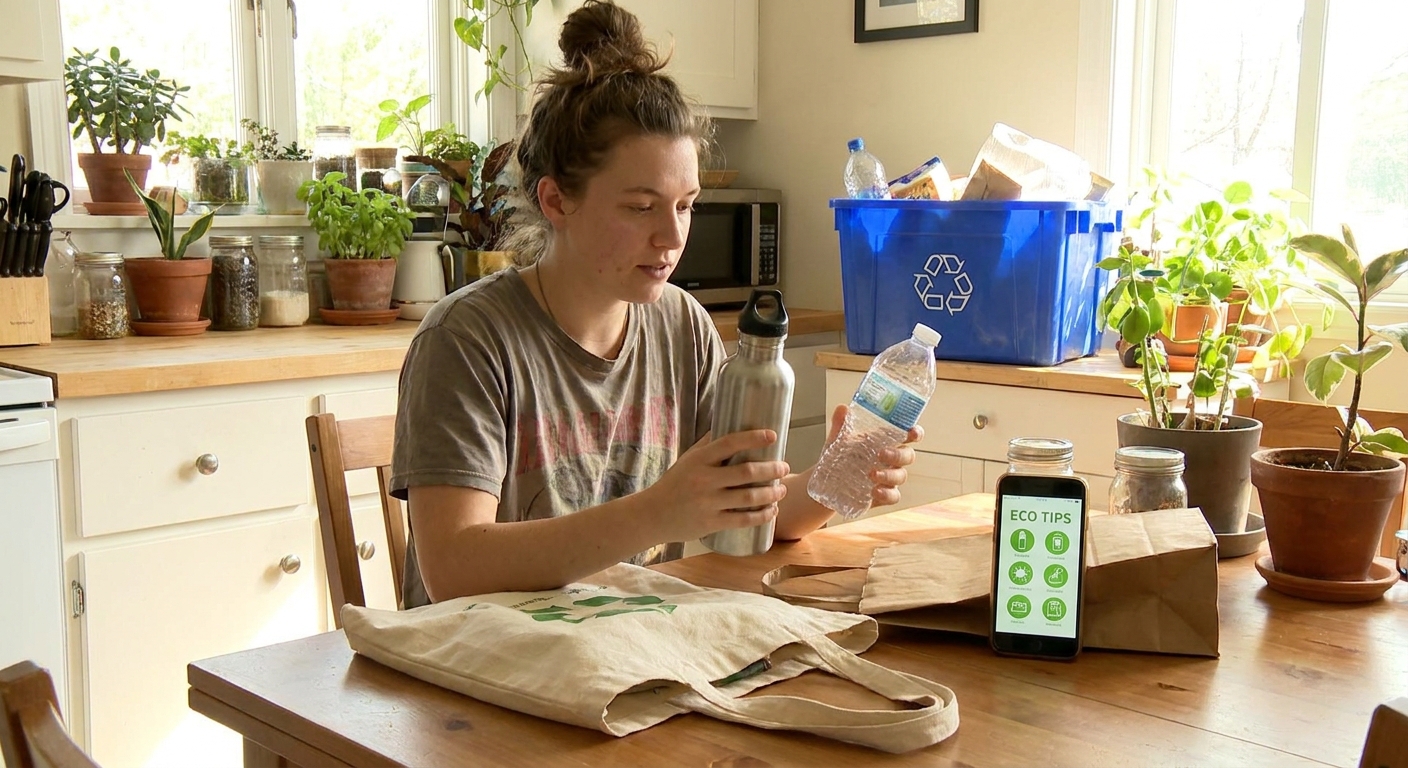
- Quality reusable bottle vs. ongoing bottled drinks
- Durable lunchbox vs. disposable bags
- LED bulbs vs. cheaper incandescents
How to decide if it’s worth it:
Will I use this regularly for at least a year?
Does it replace something I currently buy frequently?
Can I afford the upfront cost without financial stress?
If “no” to any of these, it’s okay to wait. Sustainability has to be sustainable for your budget too.
Drop the Guilt, Keep the Gains
You can:
- Use rags instead of paper towels and sometimes grab a roll for a big mess.
- Thrift most clothes and buy that one new item you really want.
- Brew coffee at home and still enjoy a café treat.
- Spending less on things you don’t care about,
- Having more room (financially and mentally) for what you do care about,
- And reducing waste along the way.
None of this is about passing or failing an eco test. It’s about:
Start with the swap that feels most annoying to ignore (like constantly buying paper towels or tossing spoiled food). Save your money, lighten your footprint, and let the cute jars come later—if you still want them.